

Advance border filing in Russia: what your buyer will ask you to send before the truck reaches the crossing
If you ship goods to Russia by road, the most important change of the coming years is not a new duty rate and not a new fee: the document set for crossing the border will have to be complete before the truck reaches the crossing point. The bill on advance notification of state border crossing has passed its first reading, the second and third are expected in October–November, and the rule itself starts to apply from 2027. The carrier will be able to upload documents remotely, customs, Rostransnadzor, Rosselkhoznadzor and other state control authorities will see them, and feedback on any deficiencies will come in advance. The practical conclusion for a shipper is simple: the quality of the shipping and permit documents you issue starts to affect delivery time long before the cargo comes anywhere near the border — and your Russian buyer will start asking for scans much earlier than today.
What changes for your shipment at the border
Today documents for crossing the border are presented on arrival. If the weight in the waybill is wrong, the product name in the invoice does not match, or a permit document has been issued in the name of a different company, the truck is already standing in the control zone — and the problem is sorted out there, costing hours and sometimes a full day. Almost all of these errors are made at the shipping end: the invoice, the packing list and the transport documents are issued by you, not by your buyer, but the consequences land on a driver who is thousands of kilometres away from your office.
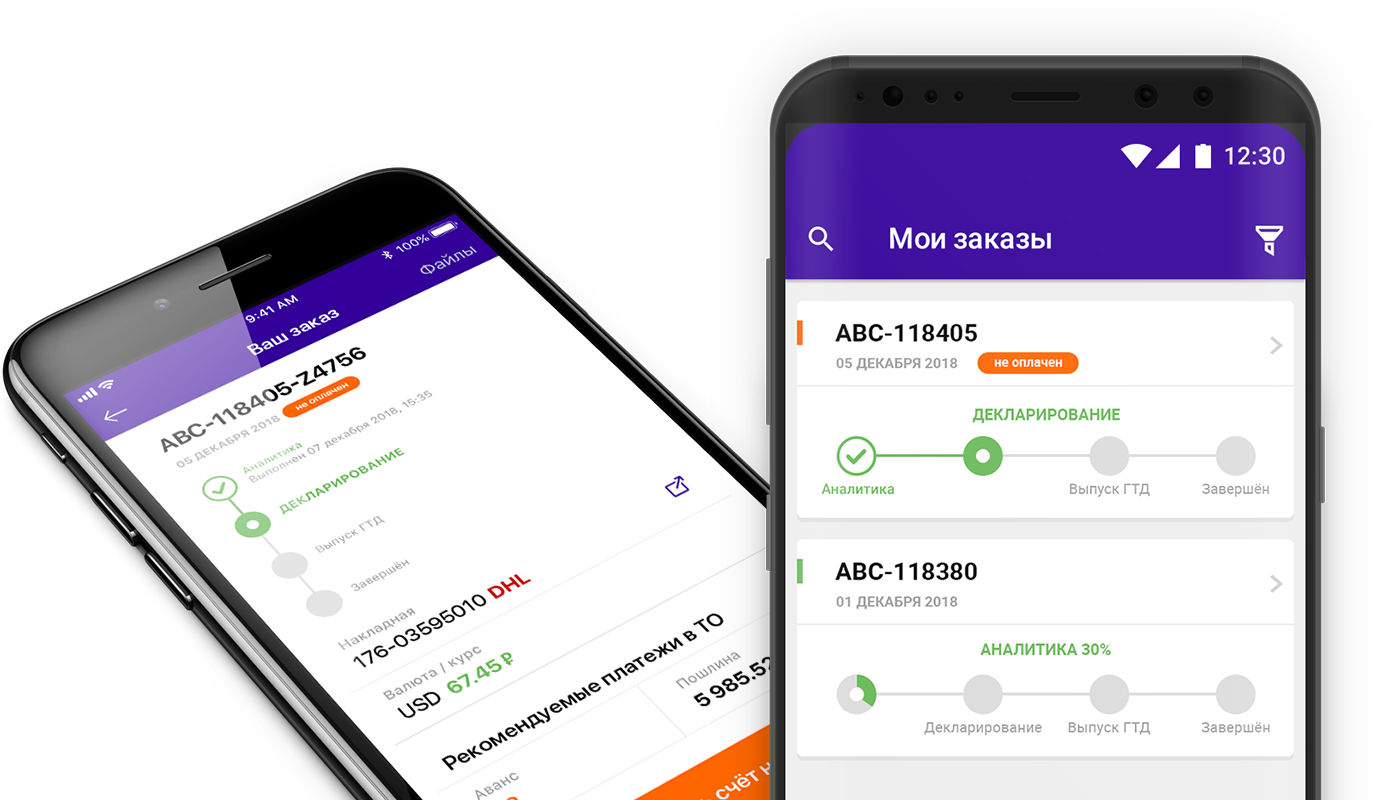
The new mechanism moves that check back up the chain. The carrier notifies the authorities of the border crossing in advance and uploads the documents, the controlling agencies see them before the vehicle arrives, and the company receives feedback on problems and can correct them in advance. The crossing itself then becomes essentially seamless, without on-the-spot paperwork procedures.
For you as a shipper this changes when the work has to be done, not how much of it there is. Waiting time at the border is one of the cost items carriers price into their rates — and that cost ends up in the landed price of your goods on the Russian market. The earlier your documents are fit for filing, the less of that risk is built into the delivery of your consignment. One important detail: at the first stage the mechanism will be voluntary and will operate at selected crossing points only, with the full system deployed later as part of the national transport and logistics platform. So for some time both scenarios — the old one and the new one — have to be planned for.
Which documents go in advance and who sees them
What goes into the advance package is determined less by the mode of transport than by which agencies control your product at the border. There are four blocks to work from.
- Transport documents. The international consignment note, documents for the vehicle and the driver, and for container shipments the container and seal details.
- Commercial documents. The foreign trade contract and its annexes, the invoice, the packing list. This is where discrepancies in weight, number of packages and product description appear most often — and all three of these documents are issued on your side.
- Permit documents. Certificates and declarations of conformity, state registration certificates, notifications — depending on the product group. Your buyer is normally the applicant, but the product wording in these documents has to match the wording in your invoice, so check the texts against each other before shipment. If you are not sure which of them your goods require, our certification team can tell you what applies to your product range.
- Veterinary and phytosanitary documents. For goods of animal and plant origin these are checked by Rosselkhoznadzor, and on such consignments a mismatch in the paperwork stops the truck more often than anything else.
Advance filing does not make documents correct — it only reveals the error earlier. If a permit document has been issued in the name of another consignee, or the invoice shows a product name that does not match the description of the goods, the cargo will stop exactly as before; the only difference is that you will find out while the truck is still at your warehouse, not after it has reached the border.
Dangerous goods deserve separate attention: they have their own requirements for accompanying documents and those requirements differ by mode of transport — the rules for carrying dangerous goods by sea do not coincide with the requirements for road delivery, and a single "universal" set prepared once will not work here. If you ship to Russia on several routes at the same time, it is worth comparing them by paperwork in advance rather than by transit time alone.
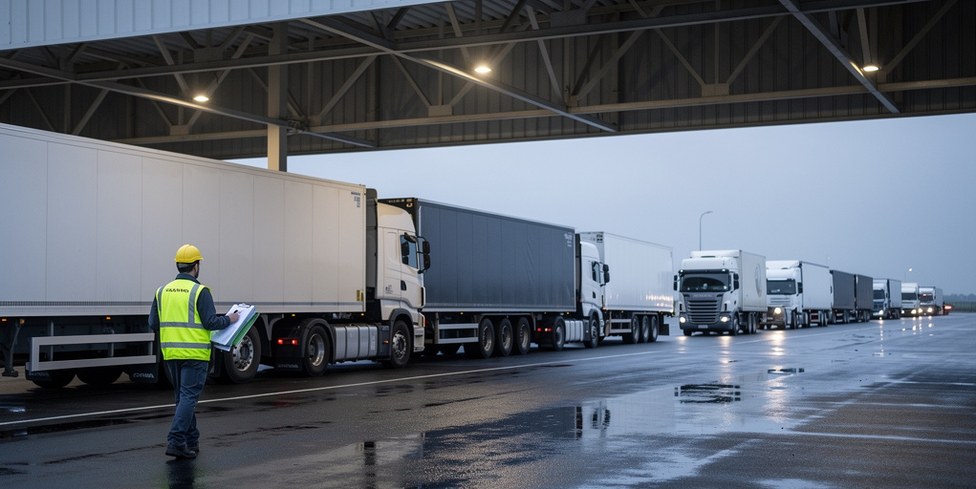
From 2027 the document set for crossing the Russian border will be uploaded before the vehicle arrives at the crossing point
Now and later: how the crossing point will work
Below is a comparison of typical situations. It shows what to prepare for in advance, and it matters especially if your goods travel as consolidated road cargo, where one vehicle carries the documents of several consignees at once and one incomplete set holds up everybody's goods.
| Situation | How it works now | How it will work with advance filing |
|---|---|---|
| Error in the shipping documents | Found at the crossing point, the truck waits while it is corrected on the spot | Found before the vehicle arrives, corrected from your office in advance |
| Checks by several agencies | Documents are presented one agency after another at the border | The uploaded set is available to customs, Rostransnadzor, Rosselkhoznadzor and other control authorities |
| Feedback on documents | Through the driver and only on arrival | The carrier receives information about possible problems in advance |
| Coverage of crossing points | One and the same procedure everywhere | At the first stage — voluntary and at selected crossing points |
| Delivery time planning | Buffer time is reserved for queueing at the border | Buffer time moves to document preparation before dispatch |
Look closely at the last row: the overall delivery time does not disappear, it is redistributed. The time that used to be spent waiting will now be spent assembling a correct package — but calmly, and before the truck leaves, which is the part of the process you control.
Air via Kazakhstan, sea and CIF: what changes on other routes
The advance notification mechanism is built around crossing the state border and the crossing points, so it primarily concerns overland transport. But the principle "documents ready before the cargo arrives" pays off on any route, and the preparation logic is the same everywhere.
If you use air freight via Kazakhstan as a transit leg, or send urgent consignments directly — for example air shipments from India to Russia with samples and components — the critical factor is not the flying time but the speed at which you, the shipper, hand over the documents. A set assembled after the aircraft has departed eats up the entire time advantage you paid for.
At sea the situation is similar, with the delivery term added on top. CIF is used when the seller concludes the contract of carriage himself and pays freight and insurance to the port of destination. That is convenient for the buyer, but it means the transport documents are issued by the line you engaged — and your buyer receives them with a delay, which under the new rules directly affects how quickly the consignment can be filed. On this term the contract needs a separate clause: within what time and in what form you send copies of the bill of lading, the invoice and the packing list. The same question should be settled in advance for container shipments from India to Novorossiysk and other long-transit directions, where documents physically fail to keep up with the cargo. If you are choosing between sea freight and overland routes, compare them by document turnaround as well as by rate.
What the exporter should do
- For each product line, draw up a list of the documents your particular cargo needs at the Russian border: transport, commercial, permit, and where required veterinary and phytosanitary.
- Check who in your chain physically issues each document: you, your forwarder, the shipping line, or the buyer. The weak link is whoever hands the documents over last.
- Write the deadlines for sending document copies into the sales contract and into your agreement with the carrier: before dispatch, not on arrival.
- Reconcile the description of the goods across the contract, the invoice and the permit documents — mismatches in the product name and weight cause the most delays.
- Ask your buyer for copies of the permit documents and make sure they are valid, issued in the name of the right company and cover exactly your product range.
- Ask your carrier whether it plans to join advance filing and at which crossing points — participation is voluntary at the first stage.
- For 2027 shipments, build your schedule around document preparation and correction before departure, not around queueing at the border.
If you would like a second opinion on the package before the truck loads, our specialists handle customs clearance for these shipments on the Russian side every day and see where the sets usually break.
Frequently asked questions
Does advance notification replace customs declaration?
No. It concerns the documents for crossing the border and the control performed at the crossing point. Declaration, determination of customs value and payment of duties are handled separately and under the existing rules, by the importer in Russia.
When does the mechanism start working?
The second and third readings of the bill are expected in October–November, and the rule starts to apply in 2027. At the first stage it will be voluntary and only at selected crossing points.
Who uploads the documents — me or the carrier?
The carrier will be able to upload them. But most of the package — the commercial and permit documents — is produced on your side and on your buyer's side, so the preparation has to be synchronised in advance.
What does the feedback on documents give me?
Transport companies will be able to receive information about possible problems with the documents and correct deficiencies before the vehicle reaches the border. It is not a guarantee of unimpeded passage, but it removes the most common delays — those caused by an incomplete or incorrectly issued package.
Summary
The mechanism of advance notification of state border crossing is expected to be adopted in October–November and to take effect from 2027: the carrier uploads the documents remotely, the controlling authorities see them in advance, and deficiencies can be corrected before the vehicle arrives. At the first stage participation is voluntary and limited to selected crossing points; later the system becomes part of the national transport and logistics platform. For an exporter shipping to Russia and the CIS this means that document work moves earlier — to the moment of dispatch rather than the moment of arrival. Request a consultation and we will go through your specific shipment with you.
Send us your document set and we will check it against Russian border requirements before your truck leaves the warehouse.
Read also:
- SPOT checks at the Russian border: what your buyer in Russia will now require from your shipping documents
- Shipping to Russia and the CIS: What Customs Practice Teaches Exporters
- Niobium-Aluminium Master Alloy: New EAEU HS Code, Zero Import Duty and VAT at the Russian Border
- Pet Food Marking in Russia: Batch Tracking Replaces Unit-Level Tracking — What It Means for Your Shipment