

Baltic Grain Transit Ban: What the Route Shift Means for Your Shipment to Russia
Riga is discussing a 300% duty on grain cargo from Russia and Belarus. The measure is aimed at outbound grain, not at your inbound shipment — but it targets the corridor your cargo shares: the same Baltic ports, the same rail approaches, the same terminal slots. For a manufacturer or supplier shipping into Russia and the CIS this is not a headline to watch but a planning input. Your buyer will re-open the delivery terms, ask who carries the cost of a longer leg, and ask you to reissue documents that were written for a port your cargo may no longer use. Below — what actually changes on the route, what your Russian buyer will now require from you, and where consignments start losing days at the border.
What the closure of the Baltic corridor changes
A 300% rate on grain cargo from Russia and Belarus is not a fiscal measure but a de facto ban: at that level the economics of transit disappear completely. Riga is already discussing the initiative with Estonia, and talks with Lithuania are next. That means the risk should be assessed not port by port, but across the Baltic direction as a whole — including the ports your own consignments call at.
The scale matters. In 2025, 46 million tonnes of grain moved out through Black Sea and Azov ports — up to 90% of all seaborne exports — while the northern direction handled around 1 million tonnes. After major grain terminals in the Azov–Black Sea basin were damaged in 2026, the Baltic route stopped being a fallback and became a working corridor: by mid-August, transport requests in that direction had reached 5 million tonnes. Latvian and Lithuanian ports could potentially handle several million tonnes a year, and it is exactly that volume that is now left hanging.
The practical consequence for your delivery is the cost of the leg. Re-routing to the Baltic on its own was already adding $40–50 per tonne; closing the corridor means recalculating freight, transshipment and storage all over again. Terminal slots, rail approaches and vessel schedules on that direction are shared infrastructure — when several million tonnes look for a new exit, queues build for everyone using it. And if your contract is written on terms where the seller arranges carriage, that difference lands on you, not on your buyer.
How duties are calculated — and why your paperwork drives the amount
Changing the port does not change the rate itself, but it changes the date the customs declaration is filed — and therefore the rate and the exchange rate that apply. That is why a duty calculation should be rebuilt from scratch for each consignment rather than copied from the previous shipment.
Many agricultural and bulk positions — grain of HS group 10 (wheat 1001, barley 1003, corn 1005) is the clearest example — are charged at a specific rate. A specific customs duty is a payment tied not to the customs value of the consignment but to its physical characteristic: net weight in tonnes. Hence a simple rule: the specific rate is multiplied by the actual net weight, and the contract price does not directly affect the amount payable.
The calculation works like this: take the net weight shown in the declaration, multiply it by the rate in force on the date the declaration is registered — that is the sum due. If the rate is set in a foreign currency, it is converted at the Bank of Russia rate on the date of registration. An online duty calculator is fine for a margin estimate, but it accounts for neither weight discrepancies after transshipment nor a rate change between the contract date and the release date.
This is where your documents matter directly. The net weight in your packing list and weighing certificate is the figure the payment is built on; if the cargo is reweighed after transshipment and the numbers diverge, the declaration is corrected and release is held. On the Russian side, payments run through a single personal account with the Federal Customs Service, and the advance funds must be on the balance before the declaration is filed — otherwise the goods are not released, even though nothing is wrong with your shipment. If you want the mechanics checked against your specific product and HS code before you sail, that is the work of customs clearance support on the receiving side.
Consignments rarely stall because of the rate. They stall because documents were issued for a port the cargo no longer goes to, or because the buyer's account balance was short at the moment of filing — and the vessel waits at the berth on demurrage. Both are fixed before departure, not at the border.
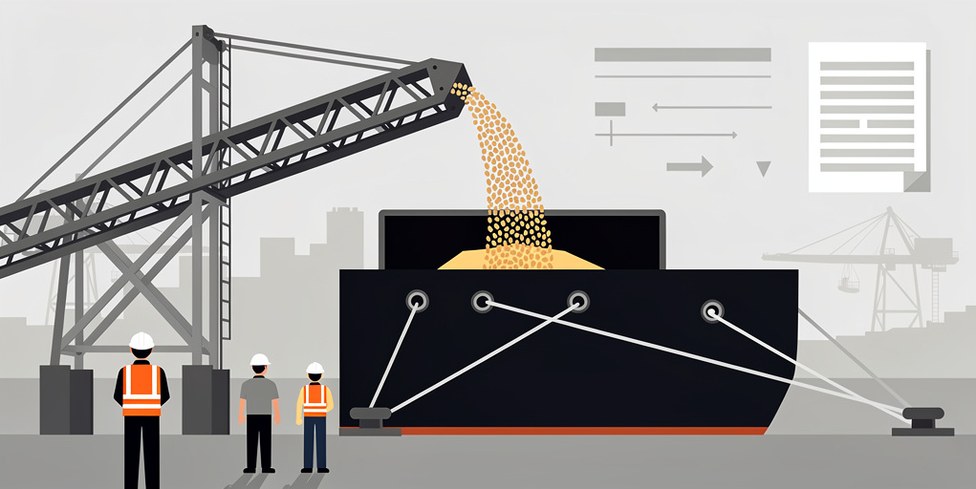
Baltic ports: one corridor closing reshapes routes, documents and lead times for cargo moving both ways
Where shipments are being re-routed: comparison of directions
There is no full-scale replacement for a high-tonnage Baltic corridor — only a combination of solutions, each with its own limit on volume and lead time. When choosing, look beyond freight to the throughput of terminals and rail approaches: the bottleneck is usually on land, not at sea. If part of the route runs through third countries, work out the transit procedure in advance — a change of transit country can add permits your original documents never mentioned.
| Direction | How it was | What it means for your shipment |
|---|---|---|
| Ports of Latvia and Lithuania | The main working alternative corridor, with potential of several million tonnes | Do not book new sailings without a change-of-port clause; check the sanctions and force majeure wording in your contract |
| Azov–Black Sea basin | 46 million tonnes in 2025, up to 90% of seaborne trade | Book slots early and budget longer waiting time for transshipment; see sea freight options |
| Northern and Baltic ports of Russia | Around 1 million tonnes through the northern direction | Split consignments to match the real capacity of the terminal and agree rail placement in advance |
| Far East | Used on a limited scale for bulk agricultural cargo | Price the inland leg and rail delivery to the port — it often decides the final figure. For smaller volumes, road groupage and air freight stay open |
Factor in the price background as well: wheat quotations have risen roughly 30% since June and reached their highest level since July 2023. For anyone trading into or out of the region this means a stronger contract price, more expensive security, and buyers who are far stricter about vessel nomination dates. Expect your Russian counterparty to push those tighter dates down the chain to you.
Documents your buyer will ask you to reissue
A change of route almost always drags part of the documentation with it: papers are issued for a specific consignment, a specific means of transport and a specific point of entry or exit. Assume your buyer will come back with a request list that looks like this:
- the foreign trade contract and invoice — your buyer registers them with their bank once the amount crosses the reporting threshold, so any addendum on port or delivery terms has to be signed, not just agreed by email;
- a packing list with accurate net and gross weight per lot — this is the figure the duty is calculated on;
- a phytosanitary certificate for food and plant products — issued for a specific consignment and destination country, and requiring reissue if the consignee or the route changes;
- a declaration of conformity under the applicable technical regulation — your buyer cannot obtain it without your manufacturer's documents, specifications and, in many cases, samples; see certification;
- quality and origin documents, where the contract or the destination country requires them;
- transport documents: rail waybill, bill of lading, shipping order — all issued against a named port.
On restrictions: grain is not on the prohibited list. The limits that apply to it are of a different kind — temporary quotas and regulatory measures on individual positions, plus the requirements of the destination country. An export control permit is an instrument for dual-use goods, not for agricultural raw materials. But the moment your consignment carries something else alongside the main cargo — equipment spare parts, laboratory samples or catalogues, chemical products — those items are screened separately, and one unlisted box can hold the whole shipment.
What to do as the shipper
- Pull your live contracts and read the delivery terms. Where carriage and the port are on you, the risk of a changed point of loading sits with you — close it with an addendum naming an alternative port.
- Recalculate the economics of the consignment on the new leg: freight, transshipment, storage, and the $40–50 per tonne that re-routing had already added before this measure.
- Ask your buyer to confirm, in writing, that advance funds are on their single personal account with the Federal Customs Service before you nominate the vessel — not on the day of release.
- Fix the net weight documentarily at loading, with a weighing certificate, and give your buyer a figure that will survive reweighing after transshipment.
- Reissue the phytosanitary certificate and transport documents for the new port and new mode of transport — old ones cannot simply be carried over.
- Have slots at the terminal and rail placement booked in advance: on an overloaded direction the queue, not customs, becomes the governing lead time.
- Add a clause on prohibitive measures by third countries, so that a foreign government's decision does not turn automatically into your penalty for late delivery.
Frequently asked questions
Does a transit duty imposed by a third country change what is payable in Russia?
No. A transit country's duty is a cost on the route; it has no connection to the customs duty due in Russia, which is paid in the normal way before the declaration is released. The two show up in different lines of your landed-cost sheet.
What happens if the actual weight differs from the contract weight?
Under a specific rate the payment is calculated on the actual net weight recorded at loading and declared in the customs declaration. A discrepancy discovered after transshipment is a classic trigger for corrections and delayed release — which is why weight must be documented, not estimated.
Can we budget from an online duty calculator?
As an estimate for the deal, yes. For the actual payment your buyer needs a calculation made on the date the declaration is registered, using the rate and the central bank exchange rate in force that day; anything else produces an underpayment and a hold.
Why does it matter who files the declaration on the Russian side?
Only a customs representative entered in the Federal Customs Service register bears joint liability for the payments and may file declarations on the importer's behalf. Without that entry it is an ordinary intermediary, and the declaration risk stays with your buyer — which in practice means it comes back to you as delays, claims and re-issued paperwork. Ask who files before you ship.
Summary
Prohibitive duties on grain transit close the largest alternative corridor that was actually working, and the shockwave reaches every shipper using the Baltic direction — in both directions. For your specific delivery this is a question of route, documents and recalculated payments. Check your delivery terms and the clauses in the contract, reissue permits and transport documents for the new port, fix net weight at loading, and make sure your buyer's account is funded before the vessel is nominated. That is where days are lost most often. Send us a request and we will work through your particular cargo, route and document set.
We handle customs clearance, certification and door-to-door delivery of your cargo to Russia and the CIS by sea, rail, road and air.
Read also:
- Russian Container Imports Up 17%: What It Means for Your Shipment, Your Documents and Your Transit Time
- Transport unions synchronise their work along the Middle Corridor: what it means for your shipment to Russia
- Unregistered Medicines for Research in Russia: Permits, Documents and the Paperwork Your Buyer Will Ask You For
- Shipping to Russia and the CIS: export declaration, proof of export and the papers your buyer will now ask for