

Customs clearance in Russia through 2030: what faster border control and post-release audits mean for your shipments
The practical meaning of Russia's updated customs course for a foreign supplier comes down to three things: your document set has to be complete before the cargo reaches the border, because the target time for control at a crossing point is being cut to 10 minutes; the declaration your buyer files may be processed by a customs post other than the one where the goods physically stand; and the main weight of control moves to the period after release. The Russian government has approved a new edition of the Customs Service Development Strategy through 2030 — the document updates the agency's goals in light of the geopolitical situation and the development of foreign trade, while keeping continuity with the previous course. For anyone shipping machinery, electronics, chemicals or consumer goods to Russia and the CIS, this is not a new set of bans but a different distribution of risk over time: fewer arguments at the border, more questions about the paperwork months later — and those questions land on your buyer, who will pass them straight back to you. Below is what changes and what is worth putting in place at your end before the next shipment.
What changes in the customs approach
The adjusted directions of the Strategy fall into four clear blocks. First — speed: the benchmark for the time spent on control at border crossing points is set at 10 minutes. Second — large-scale digitalisation: the creation of EAIS TO 2.0, a new generation of the unified customs information system built on domestic technology, through which declarations and document exchange pass. Third — the control itself: a mechanism of inter-post dispatching has already been introduced, and the modernisation of post-release control continues. Fourth — partnership with business: strengthening the institution of the authorised economic operator (AEO) and expanding electronic interaction.
For you as the shipper, the shift is simple to describe. The bottleneck used to be the queue and the discussion at the border, where a missing paper could sometimes be sorted out on the spot. The logic now is different: let the goods through quickly, and check the accuracy of what was declared later and in more depth. Inter-post dispatching reinforces that shift — when a declaration is distributed to another customs post, nobody at the crossing point is in a position to interpret your invoice informally. Only what is stated in the documents and supported by them works.
Timing: what the 10-minute target really covers
The figure has to be read correctly: 10 minutes refers to passing control at a border crossing point, not to the whole customs clearance. The full cycle — from filing the declaration to release and removal from the warehouse — still consists of document preparation, verification of the declared information, payment of duties and taxes and, where required, physical inspection or a request for additional information. Speed at the border rests on two resources: the equipment installed at crossing points and the electronic data on the cargo transmitted in advance. You have no influence over the first. Over the second you have almost complete influence, because that data originates with you.
What actually determines speed in your case:
- The HS code and its justification. Multi-component shipments — machine tools with tooling, server and network equipment, mixed consignments of clothing and accessories — generate the largest share of classification disputes. The technical description, specification and composition that make the code defensible come from the manufacturer, not from the importer.
- The commercial document set. Contract and annexes, invoice, packing list and transport documents must agree with each other on weight, quantity, article numbers and product description. A packing list corrected by hand at the warehouse after the invoice was issued is the classic cause of a hold.
- Permits and conformity documents. EAEU technical regulation declarations and certificates for electronics and home appliances, safety documents for cosmetics and food products, notifications and permits for products with encryption functionality, safety data and composition sheets for chemical products and raw materials. All of them are built on factory data and samples you supply.
- Payment readiness on the buyer's side. Funds must be on the account before filing. You cannot control this, but you can ask for confirmation before dispatch, because the resulting delay is charged to your cargo.
The 10-minute benchmark does not speed up a shipment whose paperwork is incomplete: a single mismatch between the invoice and the packing list sends the consignment to a temporary storage warehouse, where the clock no longer runs in minutes but in days of storage and vehicle demurrage — and which side pays that bill is decided by your contract, not by customs.
It is also worth remembering the mechanism of release of goods before the customs declaration is filed — it exists today and fits the drive for speed well, but it demands discipline: the declaration must be filed afterwards within the deadline, and the actual consignment must match what was declared in full. In practice that discipline is on you: no unannounced promotional items in the box, no substituted article numbers, no “we added two extra units as a bonus”. Any difference between the container and the paperwork turns a fast-track shipment into an inspection. How the document set is built for specific product groups is set out in our customs clearance section, and the transport side — sea, road, rail and air — in the corresponding services pages.

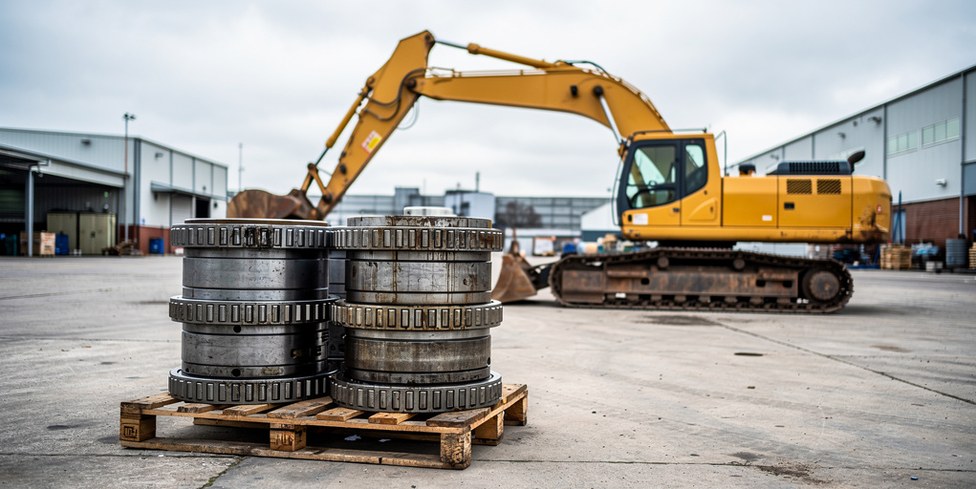
A shipment at a Russian border crossing point: the faster the release, the more depends on the paperwork the exporter prepared before departure
Digitalisation: the new IT system and electronic document exchange
The expansion of electronic interaction means the channel of communication with the authority moves online for good: the personal account of the foreign trade participant and electronic document exchange become the main working mode rather than a convenient option. Most of that administration sits with your buyer — a valid electronic signature, staff access rights, a rule on who answers requests and within what time. What it changes for you is the form in which documents are expected. Scans arriving as photographs taken on a phone, invoices without the contract number, specifications in a format nobody can read — all of that used to be fixable by courier. Now it holds up an electronic request in a queue where the clock is already running and the cargo is waiting.
The migration to EAIS TO 2.0 on domestic technology also implies a period of adapting formats and integrations. If you send data to your buyer's system automatically — EDI, ERP exports, structured packing lists — it is worth asking, well ahead, how the changeover is planned on their side, and not scheduling your largest or most time-critical shipment for that window. The same question is a fair one to ask a customs broker: readiness for technical transitions varies a great deal between companies and is exactly the criterion that never appears in a price list. The broader direction is a supply chain that can be traced end to end, where the invoice, the payment and the goods actually match — the only scheme that works reliably for shipments into Russia today.
Post-release control and AEO status: what your buyer will ask you for
The modernisation of post-release control is the most underestimated point for a foreign supplier, because on the surface it is not your problem at all. Quick release does not close the matter: a check on the accuracy of the declared information may arrive after clearance, when the goods have been sold and the correspondence about that particular shipment has been kept by nobody. The answer has to be given using the same documents that justified the code, the value and the origin in the first place — price lists, the discount agreement, payment documents, the email thread about the special terms. Every one of those originates on your side of the deal. Expect your buyer to start asking for them at the moment of shipment rather than a year later, and expect retention and disclosure clauses to appear in supply contracts.
Treat release not as the end of the deal but as the start of the period during which the declared value, code and origin have to be provable: if the price list, the payment documents and the correspondence about the discount were never saved, there is nothing to argue customs value with — and the evidence lives in your files, not your buyer's.
| Situation on the exporter's side | What to do before shipment | What it gives the shipment |
|---|---|---|
| Documents follow the cargo, scans are sent “as we go” | Complete the set before departure and send electronic copies in advance | The fast border-control benchmark becomes applicable to your cargo at all |
| Classification is arguable: machines with tooling, assemblies, sets, spare parts | Supply a full technical description, composition and drawings; let the buyer obtain an advance classification decision | Removes the main risk of reassessment and additional duty after release |
| The price includes a discount, a bonus or special delivery terms | State the reason for the discount and the terms in the contract and invoice, and keep the price lists | The customs value position is supported by documents |
| Goods require an EAEU conformity declaration, certificate or notification | Start certification weeks before dispatch, provide samples, factory data and test reports | No hold at the border for a missing permit |
| Correspondence about the deal sits in personal mailboxes of sales staff | Keep an electronic file per shipment: contract, invoice, payments, correspondence | A request arriving a year later is answered in days, not weeks |
| Supplies are regular and the product range repeats | Fix stable article numbers, descriptions and document templates with the buyer | Your buyer can realistically work towards AEO simplifications |
The course of strengthening the AEO institution is an offer of an exchange: simplifications in return for verifiable transparency. If your buyer is heading that way — and a buyer with a steady flow and a repeating nomenclature has a genuine reason to — their documentation standard becomes yours as well. In practice that means identical descriptions from order to invoice, traceable payments and a supplier able to confirm the terms of a deal concluded two years ago.
What the exporter should do
- Agree the HS code with your buyer for the whole current range, especially for complete installations and for goods classified “by analogy” several years ago. Provide whatever technical evidence supports it.
- Reconcile the contract, invoice, packing list and transport documents against each other on weight, quantity and description — before dispatch, not on arrival.
- Close the conformity documents in advance: EAEU certificates and declarations, safety documents, notifications and permits for specific categories. Send samples and factory files early; this is a matter of weeks, not days.
- Ship exactly what is declared. No unlisted extras, samples or promotional items in the container, and no article numbers substituted at the last minute.
- Keep an electronic file for every shipment: the basis for the price and the code, price lists, payment documents, correspondence with the buyer. A clear folder structure, not a mailbox.
- Put document retention and support in the contract: who supplies what, and within what deadline, if the goods are checked after release.
- Confirm with your buyer, before the goods leave, that funds for duties and taxes are in place and that the broker is ready for the IT changeover — so that the transition does not coincide with your peak shipment.
Frequently asked questions
Does this mean customs clearance in Russia now takes 10 minutes?
No. The benchmark concerns the time spent passing control at a border crossing point. Full clearance is the filing and verification of the declaration, payment of duties and taxes and, where needed, inspection and additional requests. How long it takes for your cargo is determined by document readiness and the complexity of classification, not by speed at the border alone.
Is the Strategy the same thing as the customs service's own regulations?
No. The Strategy sets the goals and directions of the agency's development through 2030. Internal regulations describe how the service itself works. The obligations of the declarant are established by the EAEU Customs Code and subordinate legislation, and that is what has to be followed. The strategic document shows where control practice is heading; it does not replace the legal base.
Will duties or customs fees change because of the new edition of the Strategy?
The Strategy does not set rates. The types of customs payments remain the same, and they are calculated under the rules in force on the date the declaration is filed. Any discussion of the cost of a specific shipment has to rest on current legislation, not on strategic benchmarks.
We are the supplier, not the declarant. Why does post-release control concern us?
Because the evidence does. The documents used to justify the code, the customs value and the origin are issued by you: invoices, price lists, discount agreements, specifications, correspondence. If a check arrives a year after release and your sales manager has left without leaving a trace of the deal, your buyer has nothing to answer with — and the commercial consequences come back to the relationship.
Our buyer is applying for AEO status. Does that change anything for us?
Yes, in terms of discipline. Simplifications are granted against confirmed transparency of accounting and documents, so the buyer will need consistent descriptions, traceable payments and a supplier who keeps records. In return, your shipments move through the border with fewer interruptions.
Shipping to Russia or the CIS? Send us your invoice, packing list and product description and we will check the set and the HS code before your cargo leaves the factory.
Expert opinion
 |
Yaroslav Loginov — expert in logistics and customs clearance with 40 years of experience.
|
“The mistake I have watched for years is treating release as the end of the story. The cargo leaves the warehouse, the sales manager closes the deal, and the folder with the correspondence is saved by nobody. A year later a check comes on that very consignment, and it turns out there is nothing to confirm the supplier's discount with, or to justify the code chosen. It is not bad faith — it is simply the absence of a habit of collecting the evidence at the moment of shipment, when it takes half an hour.
The second thing is time. Everyone wants to be fast at the border, but nobody budgets time for preparation: certification, an advance classification decision, reconciling documents between supplier and buyer — these take weeks, and they sit before dispatch, not after. The logic of Russian customs today is exactly that: let it through quickly and check it carefully afterwards. The sooner an exporter starts working in that logic, the fewer surprises there will be in the chain — and the fewer awkward calls from the buyer months after the invoice was paid.”
Summary
The updated Customs Service Development Strategy through 2030 moves control away from the border and into the period after release, and makes speed at the border a function of how ready the documents are. For a supplier shipping into Russia and the CIS the conclusion is straightforward: agree the HS codes, close the conformity documents before dispatch, send the cargo exactly as declared, and keep a file on every shipment that can still answer a question a year from now. Acceleration rewards those whose set is complete before departure and punishes those who send documents after the truck. Request a consultation and we will review your specific shipment.
Read also:
- Russia replaces post-release audits with customs monitoring: what it means for your shipments
- Automatic Release Before the Customs Declaration in Russia: What Your Shipping Documents Must Show
- Secondary US tariffs: what changes for exporters shipping to Russia and the CIS
- Semi-trailer tarpaulin kits at Russian customs: how HS 8716 was defended against "other plastics" — and what it means for your shipment