

Customs payments when shipping to Russia: how the money really moves, and what your buyer will now ask you for
If you manufacture or supply goods that move to Russia and the CIS — vehicles, machinery, spare parts, consumer goods — a message asking you or your Russian buyer to wire a "special compensation fee" to the bank details in an attached letter is a reliable sign of fraud: no such payment exists in EAEU or Russian law. The real customs payments — import duty, VAT, excise and customs fees — are written off from the payer's personal account held with the customs authorities, and are never transferred to an individual's card or to some "account for urgent payment". The reason for this review is a wave of fake notifications carrying customs-service branding, signatures of "heads of customs offices" and attached photographs of car carriers standing in a customs control zone. Below: how payment actually works on the Russian side, how any demand can be checked in a couple of minutes, and what this means for your documents, your lead times and your risk of a shipment sitting at the border.
How customs payments are actually made in Russia
The list of customs payments is closed: import customs duty, VAT, excise (for excisable goods) and customs fees. For vehicles a recycling fee is added — it is administered separately, but it too is paid against official bank details, not against details that arrived in a messenger app. There are no "compensation", "pass-through" or "storage in the customs control zone" charges payable to a customs authority via private bank details.
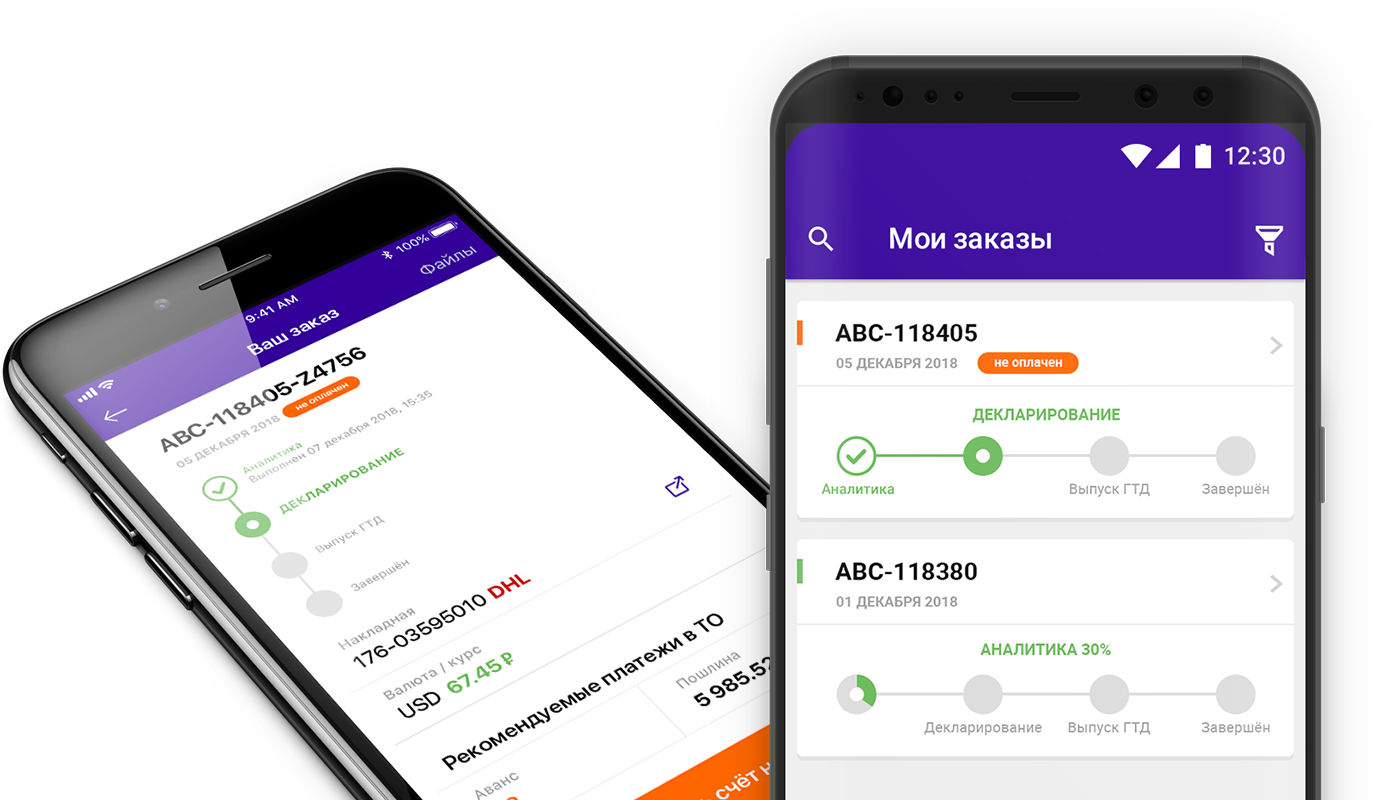
The mechanics look like this: the payer deposits advance payments into its personal account opened with the customs authorities, and then disposes of that money when the declaration is filed — the sums are written off against specific payments under a specific declaration. The movements on the account, the balance and the write-offs are visible to the payer in the online account of a foreign-trade participant. That is why any genuine payment obligation is always reflected in the system, not only in a letter sitting in someone's inbox.
For you as the shipper this matters in one very practical way: you are not the payer of Russian import duties. The declarant is your buyer, or the customs representative acting on their behalf, and even on delivered terms the money moves through that personal account. So nobody at the Russian border can legitimately ask a foreign supplier to transfer anything anywhere.
Customs authorities do not send payment notifications through messengers, e-mail or any other private communication channel — settlements go only through the system of payers' personal accounts. Any letter quoting an individual's card or an unfamiliar account is fraud, however official the letterhead looks.
How to tell a fake demand from a real obligation
The forgeries are made convincingly: agency branding, the signature of a "head of customs", attached photos of a car carrier with vehicles at the border, even fake stamps about an "import ban". A separate scheme involves bogus intermediaries: after a contract and a partial prepayment they tell the client that the goods are already inside the EAEU, send fake photos and video, and then demand urgent payment of "customs duties" or the recycling fee. What has to be checked is not how the document is laid out, but whether it leaves any trace in the official systems.
The amount can also be verified by arithmetic — and that arithmetic starts with your paperwork. The customs value is determined on the basis of the price actually paid or payable for the goods, to which the additions provided for by law are added — for example, the cost of transport to the place of arrival. Duty and VAT are calculated from that base. In other words, your invoice and your freight documents set the figure your buyer has to have on the account in advance; anything demanded on top of it is visible as an anomaly immediately.
| Situation | Why it is a forgery | What the exporter does |
|---|---|---|
| A letter about a "special compensation fee" | No such payment exists in EAEU or Russian law | Do not pay, do not forward it to your finance department; keep the letter and the bank details and warn the buyer |
| The demand arrives in a messenger or to a personal mailbox | Customs do not use private channels for payment notifications | Ask the buyer to check the declaration status and the account balance in their online account |
| The bank details are an individual's card or an unfamiliar account | Settlements go only through the payer's personal account with customs | Make no payment, whatever "deadline by end of day" is quoted |
| Photos of a car carrier or cargo "in the customs control zone" | Photos and video are easy to fake and prove nothing about import | Ask for the declaration number and have it verified through official channels |
| A scan of a document with an "import ban" note | Such decisions are taken procedurally and communicated to the declarant | Have the buyer call the Central Customs Directorate hotline: +7 (499) 975-16-03 |
When the consignment is a commercial one, the risk is removed even more simply: customs clearance is handled by the declarant or by a customs representative who has access to the personal account and to the declaration status — so any "urgent demand" from an outside party is disproved with a single phone call.

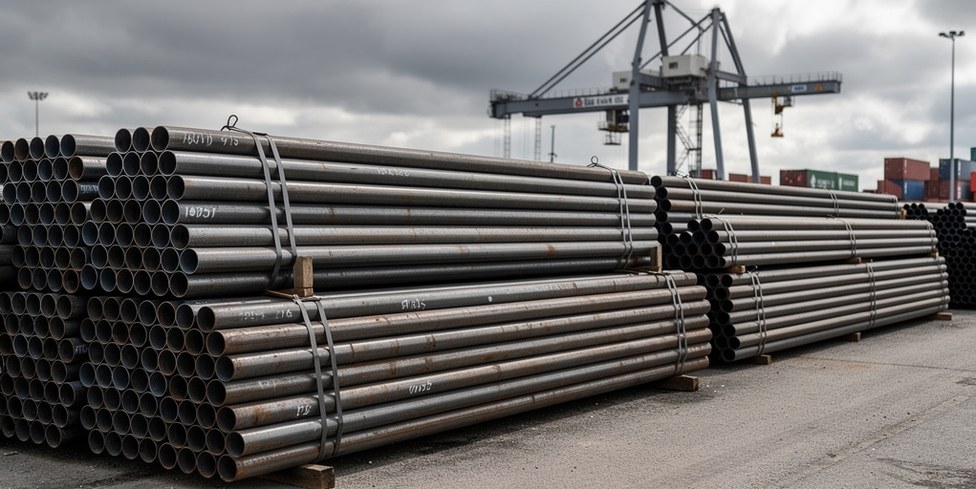
Vehicles inside a customs control zone: real customs payments are settled only through the payer's account with the customs authorities.
Advance payments, deferral and bank guarantee: why the timing is your problem too
Fraudsters press on urgency precisely because the legal ways of solving a money problem are not widely known. They do exist, and all of them work through the customs authority rather than through private transfers.
- Advance payments. The money is placed on the personal account in advance and sits there until it is disposed of. It is topped up before the declaration is filed, not while the truck is standing at the crossing point.
- Deferral and payment by instalments. Granted on the grounds expressly set out in law, for a limited period, against security and with interest. It is a decision of the customs authority on application, not an arrangement with an "intermediary".
- Security for payment. Where payments have to be guaranteed (conditional release, carriage under customs control, a disputed classification), a cash deposit, a bank guarantee, a surety or a pledge of property is used.
- A bank guarantee as a form of security. It is issued by a bank from the list maintained by the customs service and is registered with the customs authority. Nobody buys "a piece of paper" from a private person and nobody transfers money for it to a card.
Why this concerns the sender: every one of these instruments is arranged against a specific declaration and takes time. If your documents arrive late, or the final invoice value changes after the goods have already been dispatched, your buyer loses exactly the working days they needed to register the security — and the cargo waits at the border at your joint expense.
Security and deferral are arranged before the declaration is filed, not at the moment the cargo is already standing at the border. Allow several working days for a bank guarantee to be agreed and registered — which means the final invoice, the freight cost to the place of arrival and the technical description have to reach your buyer well before the estimated time of arrival.
What your buyer in Russia will now ask you for
Everything the declarant needs in order to calculate the payments in advance and to fund the personal account comes from you. The more of it arrives before dispatch, the smaller the chance that the consignment stops on arrival and that somebody gets the opportunity to sell a "quick solution".
- The contract and the commercial invoice that agree with each other. The customs value starts from the price actually paid or payable, so a discount, a credit note or a corrected invoice that appears after shipment turns into questions about the customs value and into lost days.
- Freight and insurance shown separately, up to the place of arrival. The transport cost to the place of arrival is a statutory addition to the customs value; if it is buried in a single "delivered" figure, it has to be reconstructed from carrier documents.
- Packing list and transport documents with weights, seats and marking that match what is physically loaded.
- A technical description for the classification code — composition, function, capacity, model, year of manufacture, and for vehicles the VIN and engine data. The code determines the duty rate, so a vague description is a direct route to a customs query.
- Conformity documents, if your product is subject to mandatory assessment in the EAEU. They have to exist before the goods are declared, not after; the technical file and product samples normally come from the manufacturer — see certification.
For heavier or more regulated categories it is worth agreeing the document set with your buyer's broker in advance: the requirements differ noticeably for machinery and production equipment and for automotive parts and components.
What a customs broker does and why there is no such thing as a "customs licence"
Bogus agents like impressive formulas: "we hold a customs licence", "we are accredited with the customs service". That is easy to check, because no such document exists. Companies entitled to carry out customs operations on a client's behalf are entered in the register of customs representatives of the Federal Customs Service of Russia; the register is public and can be checked by company name and tax number (INN). The conditions for inclusion are security for the performance of obligations and a liability insurance contract — not the purchase of a permit. That is why the question "how much does a customs broker's licence cost" has no substantive answer: what is paid for is the security and the insurance.
What a broker actually does: selects and substantiates the HS code, calculates the payments, prepares and files the declaration, disposes of the advance payments held on the personal account, answers queries from the customs authority and sees the goods through release. A customs clearance company bears liability for the payments jointly with the declarant — which is exactly why a customs representative cannot be "impersonated" with a letter carrying a logo. If someone contacts you directly as your buyer's "clearing agent", start not with the price but with the certificate number and a check against the register.
What the exporter should do
- Treat any payment demand addressed to you as suspicious by default: as a foreign supplier you are not the payer of Russian import duties, and the customs authority has no reason to write to you at all.
- Before transferring anything to a "clearing agent", check the company in the register of customs representatives by its tax number and ask for the certificate number stated in the contract.
- Send the full document set before dispatch — contract, invoice, packing list, transport documents, technical description — so that your buyer can calculate the payments and fund the personal account in advance.
- Show the freight and insurance to the place of arrival separately from the goods price; this is what the customs value and therefore the duty and VAT are built on.
- Fix the price and the specification before shipment. A corrected invoice sent after departure is one of the most common reasons for a consignment to be held.
- Give the estimated time of arrival early and confirm changes in writing: a bank guarantee or a deferral on your buyer's side needs several working days and has to be in place before the declaration is filed.
- Never wire "customs payments" to an individual's card or to an account received in a messenger, however official the attached document looks; on delivered terms the money still goes through the personal account of the declarant or the customs representative.
- If someone claims your goods are being held, ask for the declaration number and have your buyer verify it in the online account, or call the Central Customs Directorate hotline on +7 (499) 975-16-03; keep the correspondence, the files and the bank details.
Frequently asked questions
Can Russian customs write to me, a foreign supplier, demanding payment?
No. Payment notifications are not sent through messengers, e-mail or other private channels, settlements are made through the system of payers' personal accounts, and the payment obligation lies with the declarant in Russia, not with the sender.
Does a "special compensation fee" exist on import into Russia?
No. The list of customs payments is set by EAEU and Russian law and contains no such charge. A demand to pay it is a sign of fraud.
My buyer says the cargo is being held until an extra payment is made. What do I do?
Ask for the declaration number and have it checked in the online account of a foreign-trade participant: a genuine obligation is always tied to a specific declaration and is visible as a write-off from the personal account. Photos of the cargo in a customs control zone prove nothing.
Who pays the duties if I sell on delivered terms?
The payments are still made through the personal account of the declarant or of the customs representative entered in the register of the Federal Customs Service — the delivery terms change who bears the cost, not the mechanism of payment.
What if the money has already been transferred?
Keep all documents, correspondence and the recipient's bank details, and contact your bank and the law enforcement authorities. Deception carried out using the names of state officials is a criminal offence.
Summary
Customs payments in Russia are made only through the payer's personal account with the customs authorities, and no "compensation fees" payable to private bank details exist. As the sender, your part is to send a consistent document set before dispatch, show the freight to the place of arrival separately, fix the price and the specification early, and give your buyer enough time for advance payments or a bank guarantee. Any demand addressed to you should be checked against a declaration number, and any "clearing agent" against the register of customs representatives. Send us a request and we will go through your particular consignment.
We will calculate the Russian customs payments for your consignment and clear it through the customs representative's own account with the customs authorities.
Read also:
- Overpaid Customs Duty in Russia: What Your Buyer Will Reclaim and Which Documents They Need From You
- Russian Ministry of Finance Order No. 58n: how your buyer's customs payment can hold your shipment at the border
- Parallel Imports to Russia in 2026: What Your Shipment Needs Now That the Minpromtorg List Keeps Moving
- Air cargo via Petropavlovsk-Kamchatsky airport: what your Russian buyer will need from you