

e-CMR in the EAEU: how the electronic consignment note changes the paperwork on your road shipments to Russia
Road freight into the Eurasian Economic Union — Russia, Belarus, Kazakhstan, Armenia and Kyrgyzstan — is moving into an electronic document loop, and the first document to change is the one your shipping department fills in: the international consignment note, CMR. For an exporter this is not a carrier's technical detail. The CMR confirms the fact and the route of carriage, ties the cargo to your contract and invoice, and feeds the transport costs that your buyer uses to build the customs value in Russia. The Eurasian Economic Commission's pilot project on electronic consignment notes in international road haulage inside the Union was named “Project of the Year” at the PKI Forum in St Petersburg in September 2026 — a sign that the direction is fixed for the long term and will keep expanding. The document loop has to be rebuilt by the consignor, the carrier and the consignee at the same time; otherwise a gap opens at the border between what the system holds and what the driver carries in his folder. Here is what to check on your side of the shipment.
What changes in the document set for a road shipment
The CMR is not a formality for the driver — it is one of the documents the customs authority compares against the declaration your buyer files. A standard road shipment travels with the foreign trade contract, the invoice, the packing list, the consignment note, documents of origin and permit documents for the goods — certificates and declarations of conformity, where the product falls under EAEU technical regulations. A discrepancy between the CMR and the invoice in the number of packages, the gross weight or the consignee is a textbook ground for an additional check and a request for explanations. That request lands on your buyer's desk first, and on yours the same day, because the data in question originated with you.
The point of the EEC pilot is to give electronic transport documents legal force and later to extend the approach to all modes of transport. The load-bearing element here is the electronic signature: a signature applied in one country of the Union has to be recognised in another without re-issuing or duplication. Information security was stressed separately at the forum — cross-border services raise the bar for infrastructure protection and for the durability of cryptographic algorithms, in other words for the specific signature tools used along the lane.
The practical conclusion for a consignor is simple: preparing for the e-CMR is first of all a question of who signs transport documents on your behalf and under what authority, and how ready your carrier or forwarder is to work in an electronic loop rather than simply hand out a stamped sheet of paper at loading.
After the border: your cargo moving inside the Union
Once goods have the status of Union goods, moving them between Belarus, Russia, Kazakhstan, Armenia and Kyrgyzstan requires no customs declaration — there is no internal customs border. The transport document, however, does not disappear: it proves that the carriage actually happened, supports the accounting of transport costs and is often the first thing requested during a tax audit at the receiving company. That is why the electronic consignment note matters not only to international hauliers, but to every exporter whose cargo is broken down at a consolidation warehouse in Minsk, Brest or Almaty and then moves on to the final buyer.
A separate case is cargo that crosses an internal border not as a Union good but as a good previously imported from a third country. What matters there is not the crossing itself but the status of the goods: were they released for free circulation, which payments were made in the country of import, and are there documents to prove it. For an exporter this has a direct consequence — if your buyer takes delivery from a warehouse in another Union country rather than at the border, they will come back to you for the full trail of the original import. A sales contract on its own will not close that question.
The same logic applies to industrial consignments. When your cargo travels as groupage by road through neighbouring Union countries, the status of every line item has to be documented, not assumed. The issue is most visible on multi-jurisdiction routes with transshipment — typically when machinery and production equipment is shipped in parts from several plants under one contract.
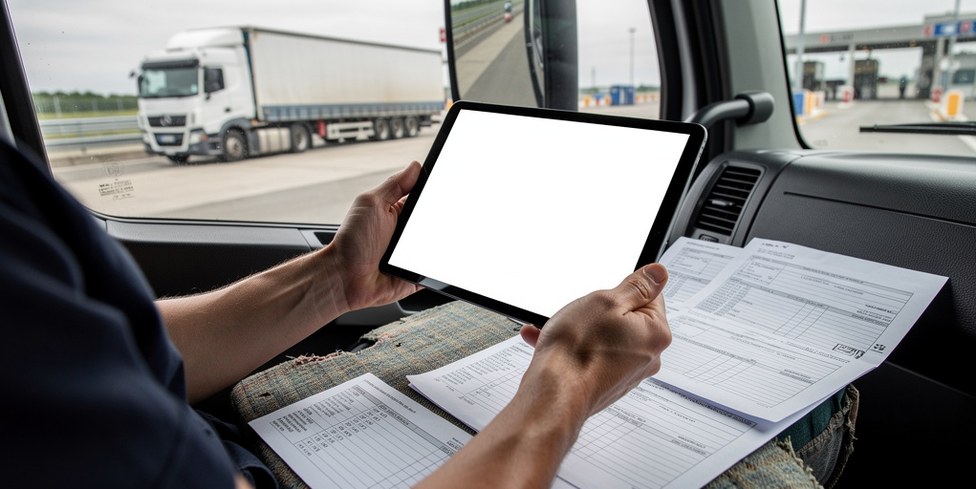
Electronic consignment notes in the EAEU: the CMR is the first document in a road shipment to go digital
Paper CMR and e-CMR: where the work actually changes
The electronic consignment note does not change what the document says — it changes how it is created, transmitted and checked. Below is what to expect at each stage and what to prepare in advance, so that customs clearance on the Russian side does not stall over two versions of the same document.
| Stage | Paper CMR | Electronic consignment note (e-CMR) |
|---|---|---|
| Issuing | Filled in by hand, copies are split between the parties to the deal | Created in the system, all parties see one current document |
| Signing | Signature and stamp, checked visually | Electronic signature recognised in another Union country without duplication |
| Corrections | A corrected copy is sent afterwards, with the risk of two versions in circulation | Changes are recorded in the system with a mark of who made them and when |
| Control in transit | Data available only when the driver's folder is inspected | Cargo data travels ahead of the truck and is available to the parties in advance |
| Storage | A paper archive; a lost copy is restored through written requests | The document is kept in the system and exported on request by the authorities |
While the project is still a pilot, do not drop the paper original and do not rewrite your shipping instructions “for the electronic document” ahead of time: in practice a truck is held not because of the consignment note as such, but because the electronic version and the paper in the driver's folder disagree on weight, number of packages or the consignee's name.
Grey imports, the digital trail and interagency agreements
Grey import schemes live in the gaps between documents: the consignor changes on paper, the route is described differently from the one actually driven, the invoice value does not match the real one, and the consignment note is re-issued at an intermediate warehouse. As long as the transport document exists only on paper, each of those edits is technically free and leaves almost no trace.
The electronic note changes the economics of that scheme. The document is signed, versions are recorded, and carriage data reaches the controlling authorities before the truck arrives at the checkpoint. A discrepancy between the note, the invoice and the declaration stops being a matter of an inspector's attention and becomes a matter of data matching. For an honest exporter this is mostly good news: a transparent route removes part of the questions about customs value, and the declared price of your goods is easier to defend. But it also means that the opaque links in the supply chain — re-invoicing, a change of consignor, a warehouse with no supporting paperwork — will start to surface, including retroactively during post-clearance audits. And the trail leads back to the export documents your company issued.
It is worth understanding the legal mechanics too. Cross-border recognition of a signature is not built on arrangements between companies but at the level of states and agencies: an interagency international treaty is, for example, an agreement between the transport or customs authorities of the participating countries on mutual recognition of electronic signatures and on the exchange of carriage data. Those are the documents that make an electronic note issued in one country full evidence in another. The practical rule for a shipper follows directly: until the relevant agreement is live on your particular lane, the electronic document is an internal convenience, not a substitute for paper.
What the exporter should do
- Ask your carriers and forwarders whether they take part in the electronic consignment note pilot and on which lanes — readiness differs even between branches of the same company.
- Establish who issues and signs the transport document on your behalf. On most lanes the electronic note is created by the carrier or forwarder registered in a Union country, on the basis of the data you supply; make sure the power of attorney and the signing rights are current. A change of responsible employee without re-issuing the authority is the most common cause of idle trucks.
- Align your templates. The consignee's legal name, the unloading address and the company details in the note must match the contract and the invoice character by character, including the spelling in Russian — not “in substance”.
- Plan a double loop for the transition period: the electronic document plus the paper original, until there is unambiguous confirmation on your lane that the electronic version alone is enough.
- Review the chain for opaque links: transshipment without documents, a change of consignor, warehouses for which you hold no supporting papers.
- For goods that need permit documents, agree with your buyer early which EAEU technical regulations apply and check that the certificates and declarations of conformity are valid. The electronic note speeds the cargo up; it does not replace a document that is missing.
- Build an archive. If a carriage was documented electronically, make sure you can still export the document on request from the tax or customs authorities a year or more later.
- Add the preparation time to your lead time, not to the transit time. Signatures, powers of attorney and alignment with the carrier are what actually take weeks.
Frequently asked questions
Is the electronic consignment note mandatory right now?
No. This is an EEC pilot project on electronic consignment notes in international road haulage within the EAEU. It does not by itself introduce a compulsory transition for all market participants, but it sets the direction worth preparing for.
We are based outside the EAEU. Does this concern us at all?
Yes, because the data in the note originates with the consignor. Whoever creates the electronic document does it from your invoice, your packing list and your loading data — and any mismatch is visible to all parties at once. In practice your Russian buyer will start asking for stricter consistency between the contract, the invoice and the shipping documents.
Is a CMR needed between EAEU countries if there is no declaration?
The transport document is needed. Moving Union goods does not require customs declaration, but the note proves the carriage took place, substantiates transport costs and is requested during audits.
Will our electronic signature work for a cross-border document?
It depends on the signature tools and on whether they are recognised on that particular lane. Cross-border trust and the durability of the cryptography are settled at intergovernmental and interagency level, not in the settings of your ERP system.
What if the electronic note and the paper copy diverge?
Do not dispatch the truck until the discrepancy is resolved. Correct the document at the consignor's end and fix the correct version with every party — a difference in weight, package count or consignee almost guarantees an inspection at the border.
We will check the shipping document set for your road consignment to Russia and handle the customs declaration on the buyer's side.
Expert opinion
 |
Yaroslav Loginov — expert in logistics and customs clearance with 40 years of experience.
|
“Over the years I have seen dozens of delays where the cause was neither the goods nor the duty rate, but the consignment note: the wrong unloading address, a gross weight copied from another batch, a consignee written under the company's former legal name. Paper forgave those mistakes — they were corrected on the spot. The electronic document will not forgive them: there is one copy for all parties, and any divergence from the invoice is visible immediately. So the first thing I advise a shipper to do now is not to look for a platform, but to put the templates in order and to settle who in the company has the right to sign transport documents.”
“The second point is timing. Companies budget time for transit and for clearance, but not for preparing signatures, powers of attorney and alignment with the carrier. In practice that is what takes weeks, especially when the chain includes several forwarders in different countries. And check separately those links in the chain for which you do not hold a complete set of documents: when data starts moving ahead of the cargo, those are the places that show up first.”
Summary
The electronic consignment note in the EAEU is no longer an experiment but a working instrument: the EEC pilot has been recognised as “Project of the Year”, which means the roll-out will continue, including to other modes of transport. For an exporter this means a harder requirement for consistency between contract, invoice and consignment note, an agreed signing procedure with the carrier, and preparation time built into the schedule. International delivery, logistics and customs clearance become more transparent — and so does every gap in the paperwork. Request a consultation and we will go through your specific shipment.
Read also:
- Electronic Consignment Note in International Transport: The Documents Your Shipment to Russia Will Need
- Electronic Transport Documents in Russia from 1 September: What Changes for Your Shipment
- Repair or Upgrade Abroad: How a Service Visit Turns Into a Customs Bill for Your Russian Buyer
- Food shipments to Russia: how to prove country of origin and avoid a refusal of release until 2028