

No phytosanitary certificate for marked wood packaging, no PepMV requirement for tomatoes: what changes for shipments to the EAEU
If you ship fresh tomatoes, peppers or eggplants to Russia or another EAEU country, or send any cargo on wooden pallets, in crates or braced with timber dunnage, your buyer will ask you for fewer phytosanitary documents this autumn. For these vegetables, the special requirement to confirm freedom from pepino mosaic virus (PepMV) is being dropped. Wood packaging and dunnage that bear a treatment mark will be allowed into the Eurasian Economic Union (EAEU), and between its member states, without a phytosanitary certificate. The Council of the Eurasian Economic Commission (EEC) adopted these amendments to the Unified Quarantine Phytosanitary Requirements and to the List of Regulated Products on 9 September 2026. They take effect 30 calendar days after official publication. The main risk for shippers during the transition comes in two forms. One is dispatching a consignment “under the new rules” that reaches the border before they apply. The other is loading it on pallets whose marks can’t be read.
Before and after: what changes in the EAEU phytosanitary requirements
The amendments cover two core EAEU documents. The first is the Unified Quarantine Phytosanitary Requirements, from which the PepMV requirements for vegetable fruit have been removed. The second is the List of Regulated Products subject to quarantine phytosanitary control at the customs border and within the customs territory of the EAEU. Its note on wood packaging and dunnage has been amended.
For a foreign supplier, the key point is that these rules are set at union level by EEC Council decisions. They are the same for Russia, Kazakhstan, Belarus, Armenia and Kyrgyzstan, so one change applies to deliveries to a buyer in any of these countries. CIS countries outside the EAEU are not covered and keep their own national rules.
| Item | Before | After entry into force | What your buyer will ask you for |
|---|---|---|---|
| Fresh or chilled tomatoes, peppers, eggplants | Special requirement: freedom from PepMV | PepMV requirement removed; all other quarantine phytosanitary control stays | Phytosanitary certificate from your country, with no PepMV statement |
| Seeds and planting material of PepMV-susceptible crops | Freedom from PepMV required | No change: the requirement stays | PepMV confirmation, as before |
| Pallets, crates, crating and dunnage made of wood and marked for heat treatment through the full thickness or fumigation | Phytosanitary certificate required | May enter the EAEU and move between member states without a phytosanitary certificate | Marked packaging and photos of the marks before loading |
| Unmarked wood packaging and dunnage | Phytosanitary certificate required | The exemption does not apply | Either a phytosanitary certificate for the packaging or replacement with marked packaging |
The decisions take effect once 30 calendar days have passed since official publication. Until then the current rules apply, so consignments that arrive at the border in the coming weeks will be cleared under the old procedure. For goods already on the road, on the rails or at sea, keep sending the documents you would have sent anyway.

Wooden pallets with a treatment mark: once the change takes effect, a legible mark replaces the phytosanitary certificate for packaging entering the EAEU
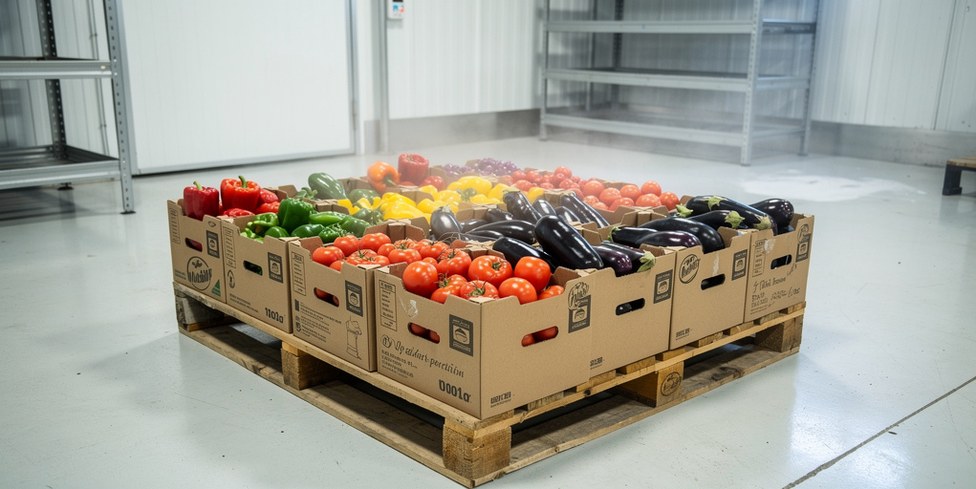
Tomatoes, peppers, eggplants: the document set your buyer will need
It helps to be clear about what has not changed. The vegetables have not been removed from the List of Regulated Products, because the amendment to the List concerns only the note on wood packaging. So the phytosanitary certificate issued in your country and the quarantine phytosanitary inspection at the border crossing point both remain. Only one specific requirement goes: you no longer need to confirm that the fruit is free from PepMV. For the shipper, this means fewer approvals with the buyer, fewer laboratory tests and fewer disputes over the wording of the certificate.
A standard set for a consignment of fresh vegetables looks like this:
- foreign trade contract, commercial invoice and packing list (from you);
- transport document: CMR, bill of lading or rail waybill;
- phytosanitary certificate issued in the exporting country (from you);
- a document confirming conformity with the EAEU technical regulation on food safety;
- the goods declaration and proof of payment of customs duties, handled on the buyer’s side.
The buyer or their customs representative files the declaration using the data in your contract, invoice and packing list. Any mismatch between these documents and the phytosanitary certificate is a common reason for questions at the border. You can find more on how perishable goods are cleared on our food products customs clearance page.
For seeds and planting material of tomatoes, peppers, eggplants and other susceptible crops, the PepMV requirement stays in place. If you ship both fruit and seed, or supply greenhouse growers, don’t apply the relaxation to seed consignments. Keep providing PepMV confirmation for them.
Wood packaging and dunnage: a mark instead of a phytosanitary certificate
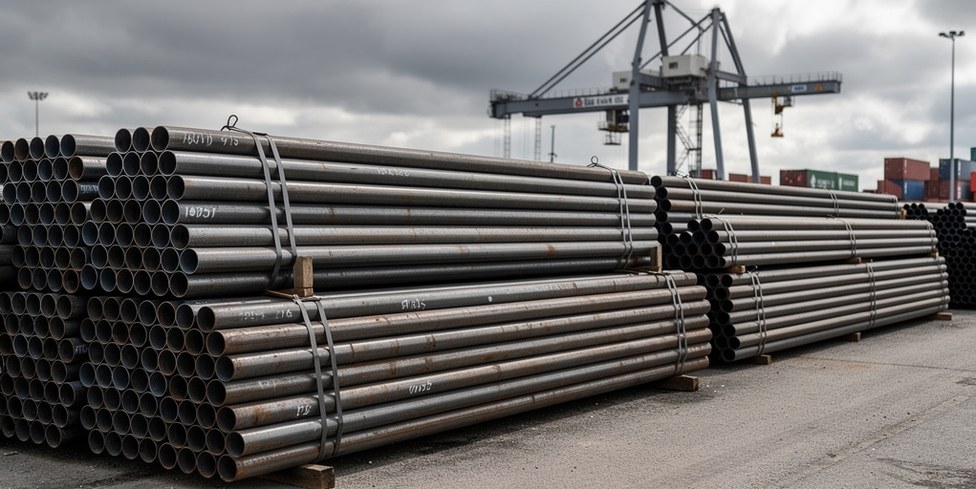
This change affects far more shippers than the vegetable amendment. Wood packaging travels with machine tools, equipment, rolled metal, building materials and crated machinery. The rule covers pallets, crates and crating. It also covers dunnage: the blocks, spacers, braces and wedges used to secure cargo inside a container or truck.
If the wood bears a mark in one of the forms set out in the Unified Requirements, no phytosanitary certificate is needed for that packaging. The mark confirms that the wood was heat-treated through its full thickness or fumigated, both internationally recognised phytosanitary measures. It is usually the international-format mark, the same type used under ISPM 15, with the country code, the packaging producer’s code and the treatment code, for example HT for heat treatment and MB for methyl bromide fumigation.
The difference matters most for heavy crated cargo. In shipments of equipment and machine tools, wooden crates and bracing come with almost every consignment, and their phytosanitary status regularly becomes an issue at the border.
The rule also applies inside the union: goods in marked packaging can move from one EAEU country to another without a phytosanitary certificate. If your buyer in Russia sends part of the consignment on to Kazakhstan, Belarus, Armenia or Kyrgyzstan, marked pallets save everyone an extra document.
The exemption only works if the mark is on the wood itself and is clearly legible. Pallets with a worn or painted-over stamp and improvised braces cut from untreated timber do not qualify, and they can get the cargo held at the border crossing point.
What to do as a shipper
- Identify which of your shipments to the EAEU are affected: fresh vegetables, seeds and planting material, and any cargo on wooden packaging or braced with timber.
- Agree with your buyer on the official publication date and count 30 calendar days from it. What matters is when the goods arrive and are cleared, not when they leave your warehouse. Consignments arriving before that date go through under the old rules.
- For tomatoes, peppers and eggplants arriving after the changes take effect, you don’t need to confirm freedom from PepMV in the fruit. A phytosanitary certificate is still mandatory.
- For seeds and planting material, keep the existing contract terms on PepMV confirmation.
- Use only marked pallets, crates and dunnage that have been heat-treated or fumigated. Expect your buyer to write this requirement into the contract or specification.
- Before dispatch, send your buyer photos of the marks on the packaging and the dunnage. This matters most for containers with bracing and for consolidated shipments, where packaging from different sources ends up together.
- If you can’t provide marked packaging, get a phytosanitary certificate for the packaging in advance so the cargo isn’t stopped at the border. Our customs clearance team can check the document set before shipment.
FAQ
From what date can goods on marked packaging enter the EAEU without a phytosanitary certificate?
From 30 calendar days after the EEC Council decisions are officially published. The exact date depends on the publication day, and the current rules apply until then.
Do I still need to issue a phytosanitary certificate for tomatoes?
Yes. Only the requirement to confirm freedom from PepMV in fresh and chilled fruit has been removed. Tomatoes, peppers and eggplants remain regulated products and undergo quarantine phytosanitary control.
Does the change apply only to Russia?
No. EEC Council decisions apply directly in all EAEU member states: Armenia, Belarus, Kazakhstan, Kyrgyzstan and Russia. Go by the date the decisions themselves take effect.
What happens if the mark on a pallet is hard to read?
The exemption from the certificate depends on the mark. If it can’t be read, the packaging may be found not to meet this condition, and the cargo will be held until the issue is resolved. That’s why it pays to check the packaging from photos before dispatch.
Summary
The EEC Council has simplified two phytosanitary rules. For fresh tomatoes, peppers and eggplants, the PepMV requirement has been removed. Wood packaging and dunnage with a treatment mark no longer need a phytosanitary certificate to enter the EAEU. Seeds and planting material still need PepMV confirmation, and the vegetables still need a phytosanitary certificate and still undergo quarantine phytosanitary control. The changes take effect 30 calendar days after official publication, and the current rules apply until then. Send us a request and we’ll review your specific shipment.
Send us your shipment details and we will check the documents and the wood packaging requirements before your cargo leaves.
Read also:
- New Khasan road crossing into Russia: what changes for your shipment and what your buyer will ask you for
- Baltic Grain Transit Ban: What the Route Shift Means for Your Shipment to Russia
- Shipping to Russia: How to Check That Your Buyer's Customs Broker Is on the Register Under the New Ministry of Finance Rules
- iCustoms launches a blog on vc.ru: the customs questions your Russian buyer will ask you next