

Rail to Russia via Mongolia: what the Naushki upgrade means for your shipment and your buyer's paperwork
If you ship goods into Russia by rail, the next thing worth reviewing is not your price list but your document set. On the Russian leg of the Russia - Mongolia - China corridor, works have been completed that increase carrying capacity between Ulan-Ude and the Naushki border station, and part of the volume that traditionally moved through Zabaikalsk will logically be redirected there. For you as the shipper this is not just another dot on the map: the border crossing named in the waybill changes, so does the customs office of arrival, the way advance information is submitted and the place where the customs transit procedure is closed. Your Russian buyer will come back to you with new requirements for the invoice, the waybill and the contract - and a mistake in any of them means a wagon standing at the border, not a saving on the rate. Below is what to prepare before loading and where time is most often lost.
What the Ulan-Ude - Naushki upgrade changes in practice
On the Russian side, the receiving and departure yard tracks have been extended and the complex at Naushki station has been reconstructed, along with measures to increase traffic volumes on the section from Ulan-Ude to the border crossing. The Russian investment is around 40 million US dollars. The Chinese side is building up capacity of its own: by 2030 Erlian station will handle more transit container trains and more trains carrying export cargo from Mongolia. The corridor itself is operated by the Ulaanbaatar Railway, a 50/50 joint venture between Russia and Mongolia with a network of about 1,800 kilometres.
What follows from this for you as the cargo owner on the selling side. Naushki is a rail border crossing point, and longer yard tracks mean trains are split up less often and wait for a free track less often. That speeds up arrival formalities and the closing of transit - but it does not remove the ordinary reasons for delay: discrepancies in the waybill, missing permit documents, weight and package counts that do not match the actual load. Every one of those originates in your export department, not in Russian customs.
Capacity on the Russian leg is not the same as capacity across the whole corridor. The bottleneck shifts to the Mongolian section and the Zamyn-Uud - Erlian crossing, so any transit time you promise your buyer should be calculated to the destination station, not to Naushki.
Documents and customs transit: what to prepare before dispatch
A rail shipment moving through Mongolia travels under an SMGS consignment note, and it is the data in that note that becomes the basis for the customs transit procedure up to the inland customs office in Russia. This is the practical set that has to be complete before loading - most of it is produced by you, not by the consignee:
- the foreign trade contract and the specification for the consignment;
- the commercial invoice and the packing list broken down by line item, net/gross weight and number of packages;
- the SMGS consignment note with a goods description that matches the invoice word for word;
- the export declaration of the country of departure;
- technical documentation, samples and labelling artwork that your buyer needs to obtain EAEU permit documents - conformity certificates and declarations under the technical regulations, and, for radio-electronic goods, an FSB notification;
- information sufficient for classification: composition, materials, intended use, technical parameters, brand and model.
Classification decides a lot. HS chapters 84 and 85 (machinery, machine tools, electronics and components), 87 (automotive parts), 39 (plastic articles) and 94 (furniture and lighting) carry different duty rates and different certification requirements in the EAEU. The declaration is filed electronically with an electronic declaration centre, which works only with the document set uploaded to it and cannot walk up to the wagon and look at the goods. That is why a datasheet you consider self-evident is often the single document that unblocks a shipment. How clearance works at each stage of a carriage is covered in detail in Customs clearance of carriages and its specifics.
If you are still choosing a transport mode and comparing rail with sea and road, start with our overview of delivery options from China - it explains which volume and which cargo type actually pays off on each mode. Booking the wagon and organising the dispatch itself is part of our rail freight service, and the EAEU permit documents your goods will need can be arranged through certification.
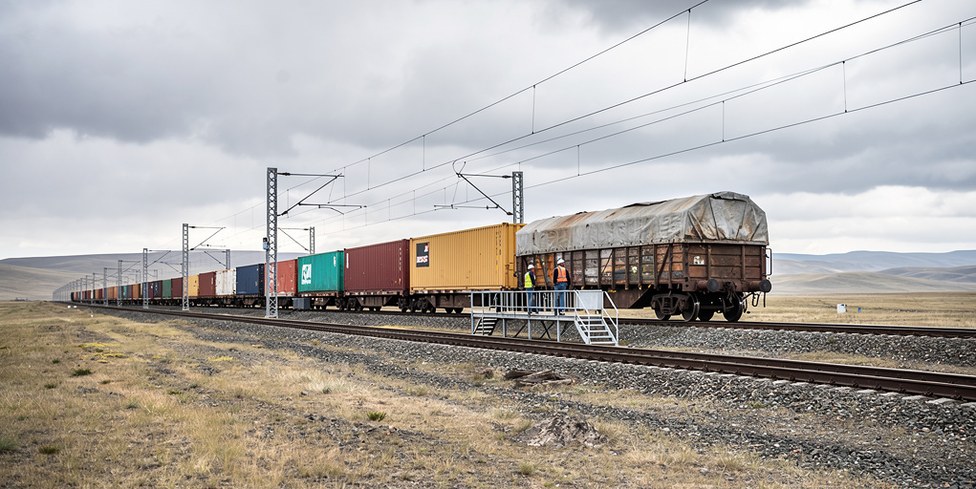
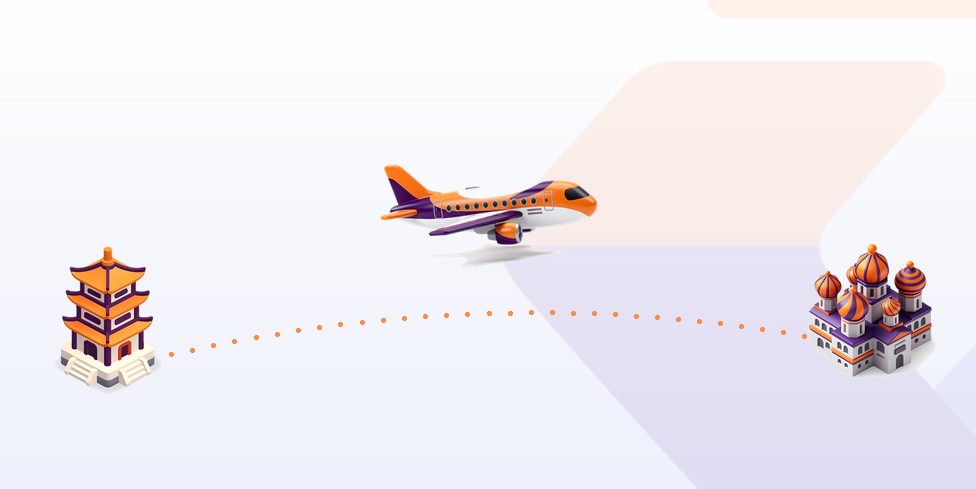
The Russia - Mongolia - China rail corridor: the Naushki border crossing is taking over part of the volume that used to move through Zabaikalsk
Main carriage: how your freight quote affects your buyer's duty
Main carriage is the transport of the goods from the place of departure to the place of arrival in the customs territory of the EAEU - in other words, up to the border crossing. Those costs are included in the customs value if the buyer bears them under the delivery terms and they are not already part of the transaction price. So when a route moves from sea to rail via Mongolia, the whole cost structure is recalculated: the carriage charge up to Naushki goes into the base for duty and VAT, while the leg from Naushki to a warehouse in Moscow or Novosibirsk does not - provided it is shown as a separate line in the carrier's invoice and supported by documents.
Hence the classic mistake, and it is usually made on the seller's side: a single through door-to-door rate. If the carrier has not split it into the pre-border and post-border legs, customs is entitled to include the entire amount in the customs value. Your buyer then pays duty and VAT on delivery inside Russia - and comes back to you asking for a corrected invoice while the goods sit in storage. The split has to exist in the contract and in the invoice, not in a verbal understanding.
Separately, on the delivery basis. CIF is a term for sea and inland waterway transport: the seller pays freight and insurance to the port of destination. For a rail shipment through Mongolia this basis is simply wrong - the terms that work here are CPT, CIP or DAP with a named station. A contract that states CIF for a rail consignment will almost certainly trigger questions during customs value control, and the request will land on your desk as a demand for explanatory documents. Transit times and how to compress them without losing the cargo are covered in Fast and safe delivery of goods from China.
| Situation | Risk for your shipment | What to do |
|---|---|---|
| Through rate quoted as one lump sum with no split by leg | The full amount enters the customs value; your buyer overpays duty and VAT and demands a re-issued invoice | Ask the carrier for an invoice that separates the leg up to the EAEU border |
| The contract for a rail shipment states CIF | Document requests and adjustment of the customs value, with the queries coming back to the seller | Replace it with CPT, CIP or DAP naming the destination station |
| The goods description in the SMGS note differs from the invoice | Transit cannot be registered; the wagon stands at the crossing | Reconcile the wording before loading, including brand and model |
| Samples and technical documents for certification are sent after dispatch | The goods arrive but cannot be released; storage costs accrue | Send samples and datasheets while the consignment is still in production |
| The route has switched to Naushki but your quotation still assumes the old leg | Planned and actual landed cost diverge; a price renegotiation mid-shipment | Recalculate the cost to the border and rebuild the cost structure in the offer |
What the exporter should do
- Confirm with your forwarder and your buyer the actual routing: which border crossing the train uses and where customs transit is planned to be closed.
- Check the delivery basis in the contract - it must match the mode of transport, not be copied from an earlier sea contract.
- Ask the carrier to split transport costs into the leg up to the EAEU border and the leg after it, with supporting documents.
- Send technical characteristics early so the HS code is confirmed from the specification, not from the wording on the invoice.
- Ship samples and supply manufacturer documentation for certification in parallel with production: EAEU conformity documents are issued on samples, not on the arrived consignment.
- Reconcile goods descriptions, weights and package counts across the invoice, the packing list and the SMGS note - discrepancies here cause more delays than congestion at the crossing.
- Provide the data needed for advance information before the train reaches the border station, and name one person in your export department who can answer the customs broker within hours, in the Russian working day.
- Quote your buyer a transit time to the destination station, with a buffer for the Mongolian section and the Erlian crossing, not a time to the border.
Frequently asked questions
Why are rail rates rising if capacity is growing?
A rate is more than the carriage charge. It also reflects the availability of flat wagons and containers for a specific direction, seasonal demand, terminal handling costs and the exchange rate of the settlement currency. Infrastructure expansion reduces the risk of standing still, but it does not directly move the freight rate.
Do we as the manufacturer have to obtain EAEU certification ourselves?
No - conformity certificates and declarations are issued in the EAEU, and the applicant is a locally registered entity, usually your importer. But they are issued on the basis of your samples, technical documentation, composition or material data and labelling artwork. In practice the timeline depends on how fast you supply those, so treat it as part of the production schedule.
Can we split a consignment: part by rail through Mongolia, part by sea?
Yes, if the specification provides for it and each part travels with its own complete document set. What matters is not to split a single product line in a way that raises questions about understated value or circumvention of permit requirements.
What if the shipment is held at the border station?
The first thing to establish is the grounds: a document discrepancy, a request for inspection or a classification question. That determines whether a document has to be sent, data in the declaration amended, or a justification of the code prepared. Most of these are resolved by a signed scan from the seller, so keep your export file to hand until release - the earlier the wording from customs reaches you, the less storage cost accumulates on your buyer's account, and the fewer commercial arguments follow.
Summary
The completed works on the Ulan-Ude - Naushki section make the Mongolian corridor a more predictable option for goods moving into Russia, but the benefit goes to the shipment whose documents were built for rail rather than for sea. Check the delivery basis, the split of transport costs at the EAEU border, the HS codes and the permit documents before dispatch - all four originate with the seller. Calculate your transit time buffer across the whole route, including the Mongolian leg and the Erlian crossing. Request a consultation and we will go through your specific cargo with you.
Send us your shipment details and we will plan the rail route via Mongolia and prepare the customs declaration on the Russian side.
Read also:
- Shipping to Russia via Mongolia: what the Naushki and Kyakhta corridor changes for your consignment
- China–Moscow Container Freight Up 6% to $9,531: What It Means for Your Shipment to Russia
- War Risk Insurance in Russian Customs Value: What Your Buyer Will Ask You For
- Electronic Waybills for Shipments to Russia: The Carriage UID, Codes 02015 and 02016, and What Your Buyer Will Ask You For