

Russia bans sulphuric acid exports until the end of 2026: what it changes for your shipments to Russia and the CIS
If you ship chemicals to Russia and the CIS, or move acid-based cargo in transit across Russian territory, the document to read this week is not a market report but the decree itself: the date of its official publication, the classification of your product, the force majeure wording in your contract and the delivery terms. The Russian government has introduced a temporary ban on exports of sulphuric acid from Russia. It enters into force 10 days after the decree is officially published and applies until 31 December 2026 inclusive. The purpose of the measure is to keep the raw material inside the country: the acid is needed by industrial plants and mineral fertiliser producers. For a foreign supplier the effect runs in two directions — Russian-origin acid stops being an option in your own sourcing, while buyers in Russia and the CIS will be looking for volumes elsewhere and will ask you for a tighter document pack than before. Below is what to check in your paperwork and where shipments usually get stuck.
What the ban covers and how to count the 10 days
The ban applies to goods being taken out of Russia and runs until the end of 2026. The clock starts from the official publication of the decree — not from the date it was signed and not from the news coverage. Fix that date in writing: it determines how much time is really left for any consignment that still has to cross the Russian border, and it is the date your Russian counterparty will refer to when they suspend deliveries to you.
The exceptions are listed as a closed set: shipment is possible on the basis of decisions of the Prime Minister or the Deputy Prime Ministers, within international transit carriage and intergovernmental agreements, and to support the activities of Russian organisations on the Svalbard archipelago. Nothing in the text creates a general licence for other cases, so planning a shipment on the assumption that an individual decision will come through is risky — no one will guarantee you the timing. If your contract for Russian acid does not sit on one of those grounds, treat the volume as unavailable rather than delayed, and start looking for replacement supply now.
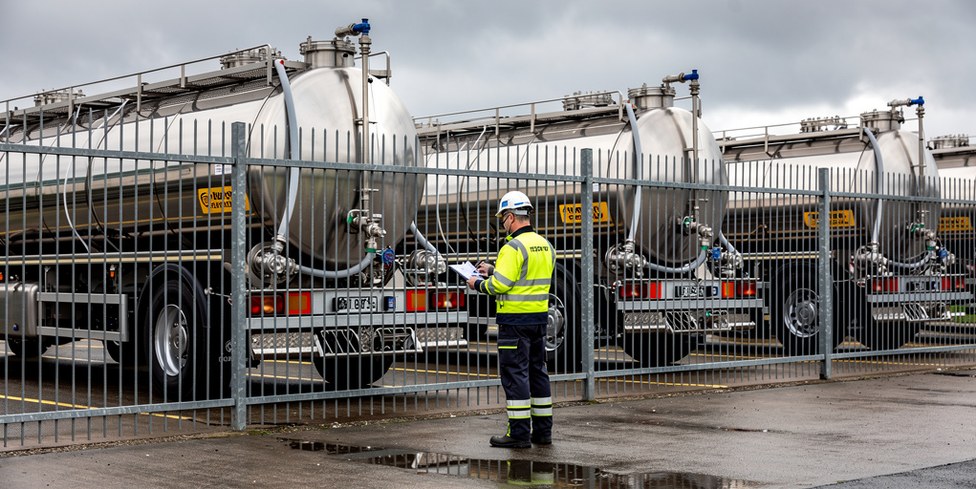
The usual failure point is not the ban itself but the logistics leg: if wagons or tank containers reach the border after the ban takes effect, the cargo stops, and demurrage and storage costs for a dangerous good land on whoever owns it at that moment. Count the time to the border, not to the shipper's warehouse — and check which of you carries that risk under your delivery terms.
Check the text of the decree separately for the treatment of consignments already placed under the export customs procedure. Anyone trading chemical raw materials with Russia has to keep amendments to government decrees under review: lists and deadlines are adjusted in a targeted way, and a decision taken under the previous wording may be inapplicable a month later.
HS codes, documents and moving a dangerous good
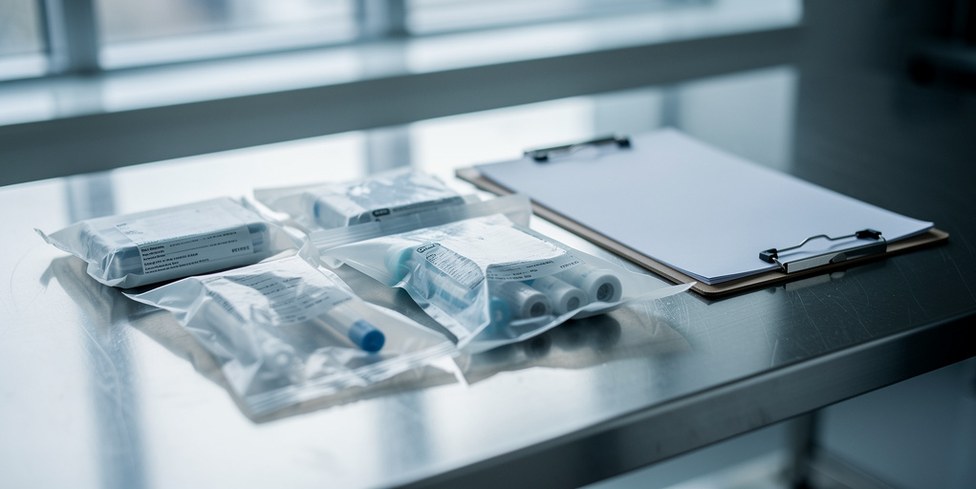
Sulphuric acid and oleum are classified in chapter 28 of the nomenclature (inorganic chemistry), heading 2807. Classification should never be checked against the product name in the contract alone: adjacent headings cover solutions and mixtures, battery electrolyte, spent acid, and goods in which the acid is one of the components. Whether a consignment falls under the restriction depends on the code and the actual composition — so borderline items are best confirmed with a test report and the manufacturer's quality passport before the declaration is filed, rather than after an inspector's query. In practice this part is yours: your buyer cannot generate composition data for your product. If chemicals are your regular nomenclature, it pays to build a standing process for customs clearance of chemical products and raw materials instead of reassembling the file for every shipment.
The basic document set for this nomenclature is wider than for general cargo: safety data sheet (MSDS/SDS), concentration data, the manufacturer's certificate of quality, an emergency card, and packaging and marking that meet dangerous-goods requirements. Sulphuric acid is a class 8 corrosive, and the IMDG rules for carriage by sea, ADR for road transport and the rail regulations each add their own documents and compatibility limits with other cargo. Build those approvals into your schedule rather than into the week of loading — on sea freight and rail carriage the dangerous-goods paperwork, not the freight itself, is what usually moves the sailing or the dispatch date. Where your product needs conformity documents for the EAEU market, your buyer will also expect them before arrival: see certification.
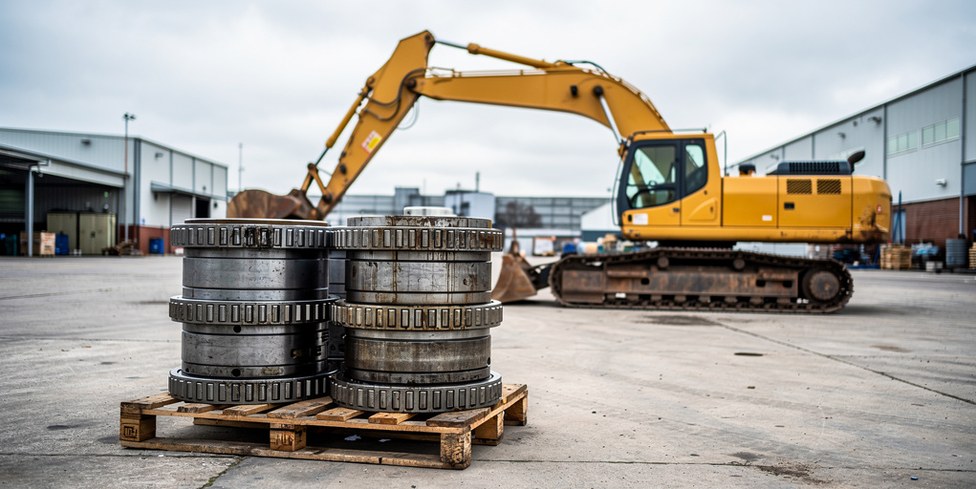
There is a separate scenario worth knowing about. Where a Russian plant decides to process the acid on site instead of exporting it, it buys installations and vessels for that purpose, often not new. In those cases ordinary clearance is joined by expertise and valuation — relevant if second-hand plant is part of what you sell into the region: see customs clearance of equipment and machines.
Yaroslav Loginov — expert in logistics and customs clearance with 40 years of experience
Uzbekistan and the CIS: origin, preferences and proof of export
The near abroad raises the most questions. Plants in the Urals and the Volga region have long-standing relationships with buyers there, and shipments go out rhythmically, by rail — those flows are the ones now being cut. If those buyers turn to you, note how the paperwork differs. A shipment from Russia to Uzbekistan is handled as an ordinary export outside the EAEU: an export declaration is filed, and for tariff preferences the buyer needs a CT-1 certificate, issued by the chamber of commerce on the basis of documents proving the origin of the goods. CT-1 rests on origin within that zone, so goods produced outside it will not carry one: your buyer should budget duty on general terms, and you should hand over a clean, consistent origin file so the calculation is not contested at the border.
Proof of export for the zero VAT rate is built on the customs declaration with the relevant stamps and on transport documents, and completeness is checked formally and strictly. Inside the EAEU the mechanism is different: the zero rate is confirmed by the buyer's statement of importation of goods and payment of indirect taxes, and a missed filing deadline creates a problem for both parties. The practical point for you as the sender is the same in either case — your counterparty's tax and customs position depends on documents that you issue. Invoice, packing list, transport documents, certificate of origin and quality passport have to agree with one another. A mismatch in description, weight or concentration between two of them is exactly what turns into a query at the border and a delayed delivery.
The ban attaches to goods leaving Russia, not to the buyer's country: a contract with a CIS buyer does not by itself take a Russian consignment out of scope, and the exceptions are drafted narrowly around specific grounds. Equally, the measure does not restrict what you ship into Russia and the CIS — it runs in one direction only.
Before and after: typical situations
| Situation | Before the ban | What it means for you now |
|---|---|---|
| You buy sulphuric acid from a Russian producer | Deliveries on the agreed schedule | Expect suspension: ask for written confirmation of the ground your supplier relies on, and start qualifying alternative sources |
| A consignment is loaded and heading for the Russian border | Routine declaration on schedule | It has to be shipped and declared before the ban takes effect — count the transit time to the border, not to the plant gate |
| Your cargo moves in transit across Russia | Standard transit procedure | International transit carriage is named as an exception — make sure your forwarder uses the transit procedure strictly and holds the full document set |
| You ship acid or acid-containing goods into Russia and the CIS | Ordinary import clearance | Unchanged in principle, but expect closer scrutiny of composition and code: supply the test report and quality passport before the declaration is filed |
| Borderline classification (solution, mixture, spent acid) | Code taken from the contract description | Confirm composition and concentration with a test report and verify the code within chapter 28 in advance |
| Your buyer switches to processing on site | Part of the volume went for export | Demand shifts towards installations and vessels, often second-hand — expect expertise and valuation in the clearance file |
What to do as a supplier
- Establish the date of official publication of the decree and count 10 days from it — that is the cut-off for anything that still has to leave Russia.
- Pull every open contract and order in which sulphuric acid, oleum, or solutions and mixtures containing it appear, and mark the consignments that physically cannot reach the border in time.
- Check the classification of each item you supply: composition, concentration, code within chapter 28, and consistency between the contract description, the invoice and the quality passport.
- Assemble the dangerous-goods file before you book space: safety data sheet, emergency card, and confirmation that packaging and marking meet the requirements of the mode of transport.
- Notify your counterparties in writing and agree a revised schedule or termination before a default arises on your side.
- For anything moving in transit across Russia, confirm with your forwarder that the goods travel under the transit procedure with a complete document set — and do not plan shipments on the assumption of an individual decision.
- Close the paperwork loop on shipments already made: stamped declarations, transport documents, certificates of origin, and the buyer's statements of importation where the consignee is in the EAEU.
Frequently asked questions
Does the ban cover every kind of sulphuric acid?
The decree refers to sulphuric acid; mixtures, solutions and goods in which the acid is a component have to be assessed on actual composition and HS code. For your own product, the composition file is your evidence — confirm borderline items with a test report before the declaration is filed.
Can a permit be obtained to ship despite the ban?
Shipment is allowed on the basis of decisions of the Prime Minister or the Deputy Prime Ministers, within international transit carriage and intergovernmental agreements, and to support Russian organisations on Svalbard. This is not an application-based procedure, so a delivery schedule should not be built on it.
Does this restrict what I ship into Russia?
No. The measure concerns goods being taken out of Russia. Your shipments into Russia and the CIS go through the usual import clearance; what changes is the attention paid to composition and codes on chemical items, and the completeness of the documents your buyer will ask you for.
What happens to cargo that is in transit when the ban takes effect?
The decisive question is which procedure the goods were placed under, and when. Check the treatment of such consignments against the text of the decree, and decide in advance where the cargo would be turned back to: storing a dangerous substance near the border is expensive and limited in time.
Until what date does the restriction apply?
Until 31 December 2026 inclusive. It is a temporary measure, but contracts running through 2026 should be planned on the basis that it stays in force for the full period.
Summary
The temporary ban on exports of sulphuric acid from Russia applies until 31 December 2026 inclusive, enters into force 10 days after the decree is officially published, and the exceptions form a narrow closed list. For a supplier this means recalculating the timing on anything that still has to leave Russia, checking the classification of your product within chapter 28, and putting the dangerous-goods file in order — test report, safety data sheet, emergency card, packaging and marking. For deliveries to the CIS, settle the origin documents and make sure every shipping document tells the same story about the goods. Send us a request and we will work through your specific cargo.
We will check the HS codes and permit documents for your chemical cargo and handle the shipment to Russia and the CIS.
Read also:
- CBR rate at RUB 84.54, Brent at $88.5 and a silent Hormuz: what changes for your shipment to Russia
- Sulphuric Acid Leaving Russia: HS 2807 00 000 1 Now Needs a Government Decision
- Shipping to Russia via the EAEU: the DOPP code, the security payment and what your buyer needs by 21 September
- Goods Accounting Rules for EAEU Authorised Operators from 2028: What Your Russian Buyer Will Require from Your Shipping Documents