

Russia Extends Customs Monitoring to 2029: What It Means for Your Shipments and Your Russian Buyer
If you ship goods to Russia or the CIS, your buyer there has just received a long planning horizon: the Russian customs monitoring experiment has been extended through 31 March 2029. In practice this means that the data in your buyer's accounting system and the data in the customs declarations filed on your shipments are compared automatically — every quarter, with no requests and no warehouse visits. Any discrepancy in product naming, quantity or value turns into a risk indicator, and the decision to launch full monitoring is taken within three working days. For you as the shipper the consequence is simple: the description, units, weights and price structure you put on the invoice and the packing list become numbers your customer must be able to reconcile for years — so expect those requirements to arrive before the goods leave your warehouse, not after.
What the extension changes for your shipments to Russia
The procedure and conditions of the experiment were approved by Resolution of the Government of the Russian Federation No. 240 of 16 February 2023. The September amendments, introduced by Resolution No. 1188 of 18 September 2026, set the duration of the experiment through 31 March 2029 and instructed the Federal Customs Service (FTS) to approve a standard form of the decision on participation.
Two practical consequences follow. First, for your Russian buyer joining the monitoring scheme is no longer an investment in something about to expire: two and a half years is enough to pay back the accounting setup and build a routine reconciliation. Second, entry becomes a procedure with a fixed form rather than a free-form application. For you as the supplier this means that the documentary discipline your customer is about to ask for is not a temporary campaign — it is the way they will work with every shipment until at least 2029.
| What exactly | Before | Now | What it means for you as the shipper |
|---|---|---|---|
| Duration of the experiment | Limited by the earlier terms of Resolution No. 240 | Extended through 31 March 2029 | Document requirements from your buyer become permanent, not a one-off request |
| Decision on participation | No separate FTS form approved | FTS instructed to approve the form of the decision | Your buyer's entry has a defined timeline you can plan supply documents around |
| Planning horizon | Short: setting up the accounting system might not pay off | Two and a half years — enough to implement and debug | Worth aligning your own item master and product descriptions once, properly |
| Collection of declaration data | Quarterly, automatically | Unchanged | An error in one invoice keeps resurfacing quarter after quarter |
| Reaction to a risk indicator | Decision on full monitoring within 3 working days | Unchanged | Clarifications may be requested from you at short notice |
Post-release control: how monitoring differs from an audit
Classic post-release customs control looks like an event: an audit starts, documents from past periods are pulled, and a customs audit report is issued at the end. Monitoring works differently — it is a continuous data flow. The customs authority collects data on the participant's declaration indicators quarterly and automatically, and if the system detects a risk indicator, a decision to carry out full monitoring is taken within three working days. Full monitoring ends with a conclusion listing the risks identified.
The difference matters. The conclusion is a description of risk zones the company is invited to deal with, not the final act of an enforcement measure. But it is not a formality either: risks left unexplained do not disappear. They resurface later — in the customs clearance of your next shipments, in customs value adjustments, or in checks of permit documents, where the consistency of your certificates and declarations of conformity with the goods actually declared is verified automatically, before an inspector ever looks at the cargo.
Monitoring is of most interest to companies with a steady flow of similar shipments: equipment and machine tools, electronics and components, chemical raw materials, food products. In other words, exactly the profile of a manufacturer or supplier shipping a wide range of items in repeat batches — where manual reconciliation is practically impossible, and the automatic one reveals systemic, repeating errors rather than isolated slips.

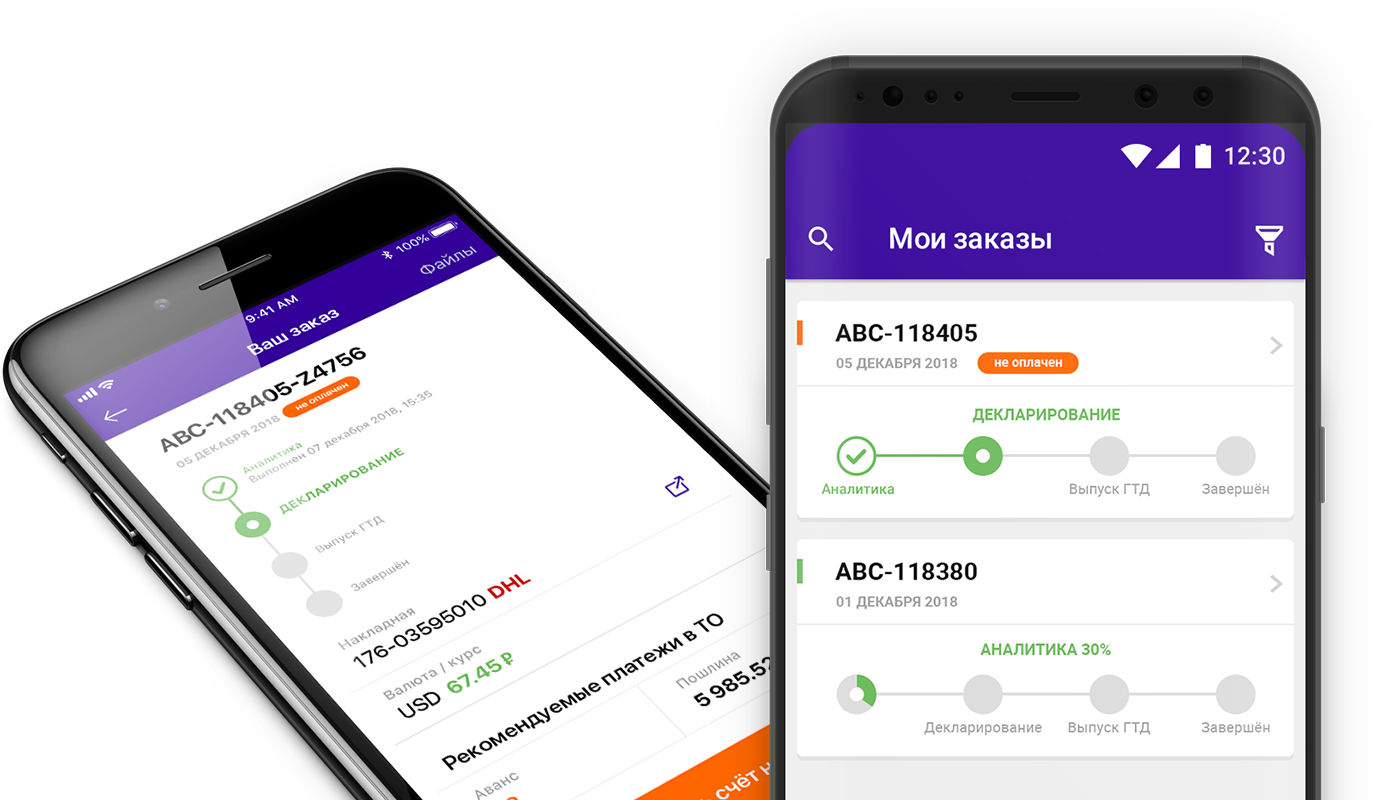
Customs monitoring compares the importer's accounting records with declaration data automatically — and those numbers come straight from your invoice, packing list and certificates
Where your documents create mismatches in the buyer's records
The core condition of participation is the use of a goods accounting system. Formally the requirement sounds soft; in practice it means that your customer's stock balances, goods receipts and production write-offs must match the data declared to customs without manual corrections. And the first entry in that chain is your shipping set: the commercial invoice, the packing list, the specification and the certificates.
Most risk indicators are triggered not by a violation but by different units of measure and different product naming: in the warehouse the item is recorded in pieces under an internal article number, while the declaration shows kilograms and your commercial product name. Until those two catalogues are linked, the automatic check will keep reporting a discrepancy — on every shipment you send.
Typical mismatch points that start on the shipper's side:
- Classification. The same item is declared under different HS codes in different shipments — for example, an assembly described once as a component of heading 84 and once as a finished product. A change of wording in your invoice is often the only reason.
- Units of measure. The supplementary unit in the declaration does not match the unit in the buyer's stock records. Give both: pieces and net/gross weight per line, not per shipment total.
- Customs value. The buyer books the contract price, while the declared value includes freight, insurance and royalties. Show these components separately in the invoice and the contract rather than rolling them into a single price.
- Write-off and processing. Imported raw material goes into production and the link between the import batch and the finished goods is lost. Consistent batch and lot numbers on your packing list keep that link traceable.
- Corrections. A post-entry correction of the declaration has been filed, but the change never reaches the accounting system. Every amended invoice you issue should be numbered and referenced to the original.
Pay particular attention if your goods are released before the customs declaration is filed: there the data enters the accounting system earlier than the final declaration figures, and without reconciliation discipline discrepancies accumulate almost inevitably. A useful exercise for a supplier is to take one recent shipment, ask your buyer for the field-by-field breakdown of the customs declaration, and map each significant field to the corresponding line of your invoice and packing list. It is a boring day of work that removes most future questions — and most requests for clarification that arrive while your container sits at the border.
What the exporter should do
- Ask your Russian buyer whether they plan to join customs monitoring: if yes, your document requirements will be fixed for the next two and a half years.
- Freeze one product description per SKU and use it in every invoice, packing list, specification and certificate — no seasonal rewording of marketing names.
- Map your article numbers to the commercial names that appear in the declaration, and give your buyer that mapping table once instead of item by item.
- Show quantity in both units on every line: pieces and net weight, plus gross weight and the number of packages.
- Break the price down: goods value, freight, insurance, tooling, licence and royalty payments — these are the components most often reconstructed manually and therefore incorrectly.
- Keep the HS code you agreed with your buyer consistent across shipments, and warn them in advance about any change of specification, material or configuration that could move the item to another heading.
- Make sure your certificates and test reports name exactly the same models and modifications as the invoice — see certification if the range has changed.
- Issue corrections formally: a numbered amended invoice with a reference to the original, so the change can be traced in both your records and the buyer's.
- Name a single contact on your side for customs questions: the decision on full monitoring is taken in three working days, and clarifications requested from the supplier are needed fast.
Frequently asked questions
Until when does the experiment run?
The customs monitoring experiment has been extended through 31 March 2029.
Does this apply to me as a foreign supplier?
Not directly — the participant is the Russian importer. But the data being checked is the data you supply, so mismatches in your documents become your buyer's risk indicators and, eventually, your delivery delays.
What happens if the system detects a risk indicator?
The customs authority takes a decision on carrying out full monitoring within three working days. The monitoring ends with a conclusion listing the risks identified.
How often is the data collected?
Quarterly and automatically — no separate requests or manual submission of documents are required for this.
What is needed to take part?
The main condition is the use of a goods accounting system. The form of the decision on participation is still to be approved by the FTS.
Can a mismatch hold my cargo at the border?
The monitoring itself is a post-release procedure and does not stop a shipment. The delay comes indirectly: unexplained risks surface later as additional checks of value, classification and permit documents on the next consignments — when the goods are already at the border.
We will check how your shipping documents line up with the data your Russian buyer has to declare, and put together a set that clears the border without questions.
Expert opinion
 |
Yaroslav Loginov — Expert in logistics and customs clearance with 40 years of experience.
|
"The most common mistake I see is that companies treat monitoring as an IT project. In reality it is a project for the foreign trade and accounting departments — and, on the other side of the contract, for the supplier's documentation team. The software only transfers data; someone still has to explain why the declaration says 1,200 kilograms while the warehouse shows 980 pieces. That explanation always starts with the invoice and the packing list, which means it starts with the exporter. Before anything else I advise taking one quarter of shipments and reconciling it by hand against the accounting records. If it matches without corrections, the documents are in order. If something has to be explained manually every time, the automatic check will show exactly the same discrepancies — only regularly and across the entire range.
Allow at least two to three months of preparation: a week to align the item catalogues between supplier and buyer, a month to bring classification to a single standard across the whole range, and another month for corrections and for the records to start behaving predictably. The extension to March 2029 is what makes this worth doing — before, the rush ate the whole point. And do not postpone the disputed HS positions: they generate the most triggers, and for an exporter each trigger eventually turns into a question asked while the goods are already on their way."
Summary
The Russian customs monitoring experiment has been extended through 31 March 2029, and the FTS is to approve the form of the decision on participation. For a foreign supplier this is not an administrative detail on someone else's side: the accounting data being checked automatically every quarter originates in your invoices, packing lists and certificates. Consistent product naming, both units of measure, a transparent price breakdown and a stable HS code are what keep your buyer's reconciliation clean — and keep your next shipment from being held up for clarifications. Request a consultation and we will go through your specific cargo and document set.
Read also:
- Visa-free factory visits in China: what your Russian buyer will now ask you to hand over
- Where a wholesale marketplace order breaks: what your buyer in Russia will now require from you
- Alloy Steel Scrap Export from Russia: the New Quota, the MinPromTorg Licence and What Your Russian Counterparty Will Ask You For
- Zero Export Duty on Russian Sunflower Oil: What the New Quota Means for Your Shipment