

Russia extends the diesel export ban into October: what it changes for your shipment and what your Russian buyer will ask you for
If you sell into Russia and the CIS, the next few weeks run on two dates at once: the one that is legally in force, and the one that has already been decided but not yet published. The Russian government has extended the export ban on diesel fuel for direct producers to the end of October — the change is being made to Decree of the Government of the Russian Federation No. 954 of 30.07.2026, which introduced the temporary ban on exports of certain types of fuel. In customs practice that means that until the amendment is published, declarations are released under the current wording with an end date of 30 September, and only afterwards under the extended one. You are not the party under that ban — your cargo moves the other way. But the same mechanism decides what happens to your consignment: in Russia the rules applied are the ones in force on the date the declaration is filed, and the customs authority looks at who the party to the deal is, not only at the goods. Below: what your buyer in Russia will now ask you for, which documents have to travel with the cargo, and where the border delay actually comes from.
What is changing, and why it reaches your shipment
This is not a new ban but an extension of a regime that is already running: producers of diesel fuel get one more month of restrictions, from 1 to 31 October 2026. The reason is practical — part of the scheduled refinery maintenance has been moved to the autumn, so additional diesel volumes are held inside the country and stocks are replenished at the same time. October exports of diesel from Russia should therefore not be treated as guaranteed.
For a foreign supplier the consequences are indirect but very concrete. If your buyer is a refinery, a fuel trader or a petrochemical group, their October export programme has just been frozen, and that is what moves their purchasing schedule and payment dates, not your production plan. If you supply equipment, spare parts, reagents or catalysts, the same shift of maintenance into the autumn is what redraws your delivery windows. And if the counterparty asks you to move a shipping date «because of new rules», it is worth knowing exactly which rules are meant — and whether they exist yet.
Note that the restriction is tied to the status of the consignor. It is addressed to direct producers of fuel — that category came under the regime in full from 2026, whereas originally, back in late September 2025, the restrictions covered traders and small refineries with output of up to 1 million tonnes a year. When a declaration is prepared, Russian customs will look not only at the goods but at who the consignor is and on what grounds the consignment is being moved. The same habit applies to your own deals: in Russia the status of the party to the contract is a customs fact, not a commercial detail.
Until the amendments to Decree No. 954 are published, the legally effective date is 30 September, and declarations must be filed under the current wording. Accepting a counterparty's «the decision has already been taken» as a reason to change contract terms in advance is risky: before official publication there is simply no legal basis for the extended period.
HS heading, status of the party and the document pack
An export ban is a non-tariff measure, and it is checked at the moment the goods are placed under the customs procedure. Diesel fuel belongs to group 27 (mineral fuels, oils and products of their distillation); gas oils are classified in heading 2710. The practical difficulty is that the restriction covers specific types of fuel from the list set out in the decree, not the whole group: petroleum products and blends with similar names can have different export regimes. So the first step is not to «find a similar code» but to confirm the classification with a quality passport and a test report for the particular consignment.
That is exactly where a foreign shipper carries the weight. The quality passport, the test report, the mill or batch certificate are issued at your plant, in your wording, and everything downstream is built on them. A loose product description in your invoice, a specification that covers a family of grades rather than the batch actually loaded, a packing list that does not match the weight in the transport document — each of those is resolved not in correspondence but at the terminal, while the cargo stands still. The standard pack for a fuel shipment usually includes the foreign trade contract with annexes, the invoice and packing list, the quality passport for the consignment, documents under the Customs Union technical regulation on petrol and diesel fuel (TR CU 013/2011), transport and shipping documents, and — where grounds for movement are claimed — the documents proving those grounds. The restrictions are not absolute: the decree provides for separate exceptions, in particular for certain supplies under international agreements and humanitarian supplies. But an exception has to be proven with documents, not with a reference to a general clause.
The mechanics are the same as with any other temporary trade measure: the state adjusts the dates and the scope, and business reassembles the document pack under the new wording each time. We looked at the same scenario in detail in our piece on how the export duty on rapeseed and soybeans was extended and what it means for supplies. If you ship petroleum products, oils, reagents or other bulk liquid raw materials, it pays to agree a standing procedure for preparing a consignment with your Russian side in advance — this is the field of customs clearance of chemical products and raw materials, where an error in classification or in the shipping documents costs the most. Where your goods need Russian conformity documents before they can be sold, plan certification on the same timeline as production, not after loading. It is also worth working through the currency side of the deal: the rouble's share in settlements for exports has risen to a record 69.7%, which changes the payment terms your counterparties will propose in contracts across Russia and the CIS.
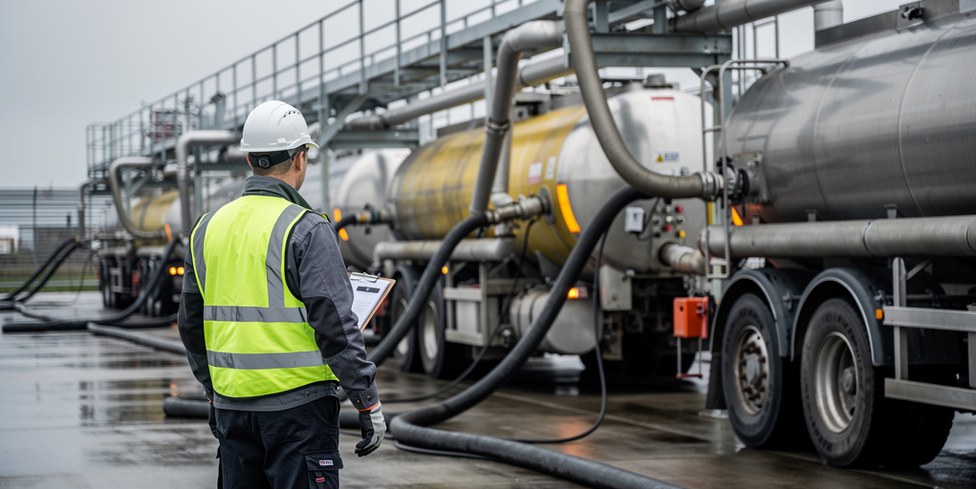
Russia's diesel export ban runs to 31 October 2026: what it changes for shipments to Russia and the CIS
Before and after: the two regimes compared
The table below shows what changes once the amendments to Decree No. 954 are published, and what it affects in customs processing.
| Parameter | Wording currently in force | After the amendments are published |
|---|---|---|
| Period of the ban for diesel producers | until 30 September 2026 | until 31 October 2026 |
| Legal basis | Decree of the Government of the Russian Federation No. 954 of 30.07.2026 | the same decree as amended |
| Who is covered | direct producers of diesel fuel | unchanged — the same category of consignors |
| Exceptions | certain supplies under international agreements, humanitarian supplies | retained, proven by documents for each consignment |
| Petrol exports | a separate restriction until 31 January 2027 | unchanged |
| What it means for you as the shipper | treat your counterparty's October fuel programme as unconfirmed; do not let your own dates depend on it | re-agree delivery windows, confirm in writing which status your counterparty holds in the deal |
Note that the petrol restriction runs on its own deadline and its own logic. The two regimes should not be merged into a single line in your internal compliance sheet — the date is checked separately for each type of fuel.
Onward shipment to Uzbekistan: CT-1 and zero-VAT evidence
Goods rarely stop at the first Russian consignee. Uzbekistan is one of the key destinations for outbound shipments from Russia, and two separate tasks come up there that are regularly confused — including by the partner who will be asking you for paperwork. The first is tariff-related: Uzbekistan takes part in the CIS free trade area, so for preferential import the buyer needs a certificate of origin in form CT-1. It is issued by the chamber of commerce for a specific consignment, and the data in it must match the invoice, the contract and the declaration down to the weight and the description of the goods. A discrepancy in the product name or the quantity is the standard reason a CT-1 certificate is refused on the buyer's side — and the invoice and packing list that everything is checked against are the ones you issued at origin.
The second task is fiscal. Uzbekistan is not a member of the EAEU, so the shipment is processed with a full export declaration rather than the statistical form used in mutual trade inside the union. Confirmation of export to Uzbekistan for the zero VAT rate rests on a set of documents: the contract, the goods declaration bearing the customs authority's marks confirming actual export, and the transport and shipping documents. The window for assembling that set is limited, and if the documents are not collected in time the zero rate is not confirmed and the tax has to be charged at the ordinary rate at the party's own expense. In practice this is why your Russian partner will chase you for clean copies of transport documents and for anything that evidences actual movement — build that into your document routine rather than treating it as a favour.
One point deserves emphasis: holding a CT-1 certificate and correctly confirming export to Uzbekistan do not switch off an export ban. These are different layers of regulation — tariff and tax on one side, a non-tariff prohibition on the other. If the goods and the status of the consignor fall under the restriction, no tax or certification pack grants a right to ship. The checks run in the reverse order: first whether the movement is permitted at all, then origin and VAT.
What to do as the shipper
- Get your Russian counterparty to confirm in writing which status they hold under each contract — fuel producer or trader. That is what determines whether a consignment falls under the ban, and it is the first thing customs looks at.
- Make your own shipping documents describe the actual batch: quality passport and test report per consignment, not a generic specification carried over from a previous order. In group 27, products with similar names have different export regimes.
- Have the wording of Decree No. 954 checked as at the date the declaration is filed, not the date the contract was signed. A contract signed in September does not carry September's rules into October.
- If an exception is being relied on — an international agreement or the humanitarian nature of the supply — collect the supporting documents for that consignment in advance. The exception is proven shipment by shipment.
- Re-agree October shipping windows with your counterparties and fix a force majeure or postponement clause in the contract in case restrictions are extended again.
- For consignments already moved, check that the document set for confirming the zero VAT rate is complete and do not delay collecting the marks confirming actual export.
- For deliveries onward into the CIS, order the certificate of origin early and reconcile its data against the invoice and the declaration before transport is called for loading.
- Plan the paperwork on a horizon of two to four weeks before the loading date, not after it — that is what keeps the consignment off the terminal.
Frequently asked questions
Does this ban apply to my shipments into Russia?
No. It is an export restriction: it covers the movement of diesel fuel out of Russia by direct producers. What it does affect is your counterparty's October programme, and the mechanism itself — a date-bound non-tariff measure checked against the status of the party and the classification of the batch — is exactly how your own consignment is assessed at the Russian border.
Can October shipments be planned now that the decision has been taken?
The decision has been taken, but the legal instrument does not yet exist. Until the amendments are officially published, the deadline of 30 September applies, and October movements cannot be planned as guaranteed — legally the regime is settled only by a published decree.
Does the restriction cover everyone who ships diesel out of Russia?
No. It is addressed to direct producers of diesel fuel. Originally, in 2025, it caught traders and small refineries; the regime was then extended to all producers. That is why the status of the consignor is the first thing checked on a deal.
What about petrol?
That is a separate restriction with its own deadline — until 31 January 2027. The diesel extension does not affect it, and the dates for each type of fuel have to be tracked independently.
Does an exception in the decree remove the ordinary export formalities?
No. Even where grounds for movement exist, the consignment goes through standard declaration: classification, documents under the technical regulation on fuel, confirmation of origin for preferential import by the buyer, and assembly of the set for the zero VAT rate.
Summary
The ban on exports of diesel fuel by direct producers is being extended to 31 October 2026 through amendments to Decree of the Government of the Russian Federation No. 954, but until the document is published the legally effective date remains 30 September. For anyone shipping to Russia and the CIS the lesson carries over to their own cargo: three checks on every deal — the status of the party, the classification of the batch, and documented grounds where an exception is claimed — assessed as at the date of declaration. The tax and certification work, confirming the zero VAT rate and obtaining the certificate of origin for CIS destinations, runs in parallel and never substitutes for the right to move the goods. Request a consultation and we will work through your specific consignment.
Send us the details of your consignment and we will check the HS code, the status of the parties and the grounds for shipment, and prepare the customs documents on the Russian side.
Read also:
- Russia's Food Import Ban Extended to 2028: What It Means for Your Shipment and What Your Russian Buyer Will Ask For
- Russia's record pea season: what it changes for suppliers shipping into Russia and the CIS
- Shipping Beer to Russia: Excise, EGAIS and Digital Marking — What Your Russian Buyer Will Need From You
- Sulphuric Acid Leaving Russia: HS 2807 00 000 1 Now Needs a Government Decision