

Shipping to Russia and the CIS: zero warehouse vacancy, export documents and VAT your buyer will ask you to support
If you ship goods to Russia, Kazakhstan, Uzbekistan or Kyrgyzstan — or your cargo only crosses these countries in transit — the freight rate is no longer the only number to plan around. You also need to know where the consignment can physically sit while a document is being chased. Good warehouse space in the region has effectively run out: vacancy is zero in Kyrgyzstan and Belarus, 1.5% in Uzbekistan and 6% in Kazakhstan. For the sender that changes the arithmetic: a missing certificate, permit or set of originals is no longer a slipped schedule, it is a storage bill and a delay at the border. Below is what your buyer in Russia and the CIS will now require from you, how taxation works on deliveries to Uzbekistan and inside the EAEU, and where the clearance scheme still leaves you some slack.
Why free warehouse space became part of the customs problem
There is still very little quality warehouse supply in Central Asia. The total stock of class A and B space in Kazakhstan is around 2 million square metres, with another 381 thousand under construction. Uzbekistan has 561 thousand square metres and 37 thousand being built, Kyrgyzstan 66 thousand and 24 thousand respectively, Tajikistan roughly 10 thousand square metres. By the end of 2026 regional supply is estimated at 2.9 million square metres. For comparison, warehouse space per capita is 0.85 square metres in China, 0.39 in Russia and 0.2 in Belarus.
The practical conclusion is simple: the region has no buffer where a consignment can "just sit for a few days while the papers catch up". A commercial warehouse and a temporary storage warehouse are not the same thing: until the goods are released they stay under customs control, and the choice between a temporary storage warehouse, a bonded warehouse and the customs transit procedure decides how many days of storage are paid for and at which tariff. When vacancy is close to zero, arranging a place "for a week" on reasonable terms is no longer realistic.
The same shortage explains part of the freight increase out of China: the landed cost of a delivery includes not only sea freight or a truck rate, but also handling, consolidation and storage at intermediate points of the route. Class A rents in the region currently sit in the range of 132–137 dollars per square metre per year, quoted net of VAT although operating expenses and utilities are included.
Shipments to Uzbekistan: the documents behind the declaration
Uzbekistan is not a member of the EAEU, so full customs declaring applies: a goods declaration is filed, the consignment is released under the relevant procedure and the movement across the border is formalised at the crossing point. The basic set your counterparty has to hold before filing comes almost entirely from you: the foreign trade contract with its annexes and specification, the invoice, the packing list, transport documents (CMR or rail waybill), product-specific permits, and a form CT-1 certificate of origin where the buyer counts on preferences under the CIS free trade zone. On the Russian side the contract also has to be registered with the counterparty's bank, which is why contract terms must be final before dispatch: an amendment agreed after loading costs days, not minutes.
Check separately whether your goods fall under non-tariff measures and whether a licence or an opinion from a specialised agency is required. Questions arise most often on equipment and machine tools, chemical raw materials, dual-use items and goods with encryption functions. Classification is worth agreeing in advance: the HS code drives both the set of permits and whether the consignment is pulled into additional control. If the code on your invoice does not match what the declarant files, the cargo stops — and with no storage buffer that stop is expensive. Bringing customs clearance support in at the contract stage, rather than the day before loading, is what keeps that from happening.
Taxation on sales into Uzbekistan from Russia is built around a zero VAT rate: it applies on export and is confirmed by the goods declaration bearing customs marks together with transport documents. If the package is not collected within the period set by the Tax Code — 180 days from the date the goods are placed under the export customs procedure — the tax has to be charged at the normal rate and recovered later through an amended return. For you as the sender this is not an accounting detail: those 180 days run on documents that pass through your hands and your carrier's.
The zero rate is lost in the accounting department, not at the border: the deadline is usually missed because someone is still waiting for original transport documents from the carrier and nobody is tracking the release date from which the 180 days are counted.
If the goods move through consolidation rather than directly, shift part of the work to the dispatch stage: labelling, repacking and completing the consignment are cheaper to do before departure. We use our own consolidation in China for exactly that — the cargo is prepared for carriage there and the document set is checked for completeness before it leaves.
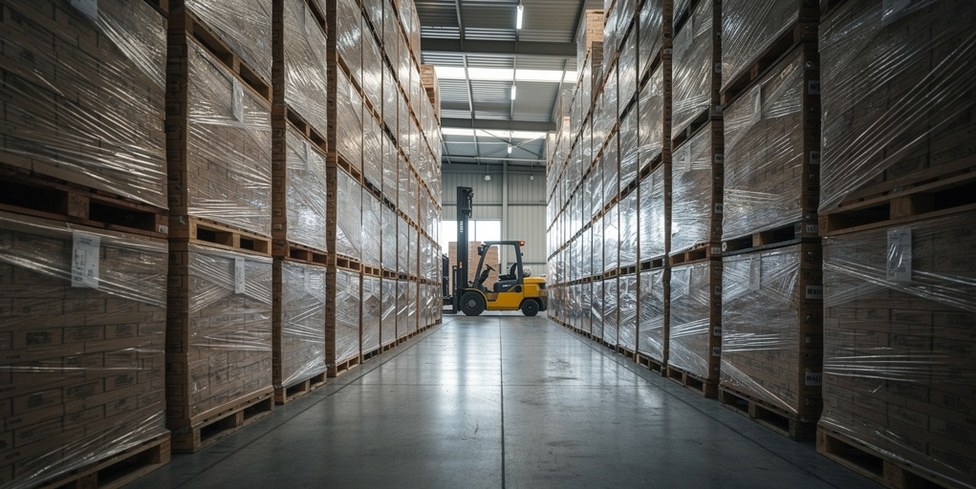
Class A and B vacancy in the region: zero in Kyrgyzstan and Belarus, 1.5% in Uzbekistan, 6% in Kazakhstan — there is no buffer left for cargo waiting on paperwork.
Kazakhstan and the EAEU: no declaration, but VAT still follows your paperwork
Kazakhstan works differently. Together with Belarus, Kyrgyzstan and Armenia it belongs to the EAEU, the customs union countries where there is no customs declaring when goods move between member states. Indirect taxes, however, are paid on the destination principle: import VAT is paid by the buyer in Kazakhstan, and the same buyer files a statement of import of goods and payment of indirect taxes with its own tax authority. The supplier confirms the zero rate with a copy of that statement bearing the mark of the Kazakh tax authority, plus the contract and transport documents.
Without the tax authority's mark the zero rate is not confirmed — somebody's VAT depends on the discipline of the party on the other side of the deal, which is why the handover of documents belongs in the contract as a separate clause with a deadline, in both directions.
The absence of declaring does not remove statistical reporting or the requirements on labelling and certification. EAEU technical regulations apply across the whole territory of the union, and a certificate or declaration of conformity is needed exactly as it is for import into Russia — which means test reports, technical files and samples are requested from the manufacturer, and that is you. If the goods travel further, for instance to Uzbekistan in transit across the territory of the union, the customs transit procedure is opened with a guarantee, and here the delivery deadline to the customs office of destination is critical. An experienced rail carrier and a customs broker on the Kazakhstan–Russia leg close this section together: transit declaration, guarantee, confirmation of arrival.
| Country | Vacant class A and B space | Class A rent | What it means for your shipment |
|---|---|---|---|
| Kazakhstan | 6% | 5,200 tenge per sq m per month, or 137 dollars per year | Space exists but is the most expensive in the region; no declaring on arrival from the union, import VAT is paid by your buyer |
| Uzbekistan | 1.5% | 132 dollars per sq m per year | Full customs declaring; reserve storage before dispatch, not on arrival |
| Kyrgyzstan | None | 135 dollars per sq m per year | Nowhere to store: plan the route wheels-to-wheels, with no buffer for documents sent later |
| Belarus | None | 100 dollars per sq m per year (capital region) | 80% of the stock is in Minsk; outside the capital there is practically no supply |
Rents are quoted net of VAT but include operating expenses and utilities. Class B is lower: 3,500 tenge (92 dollars per year) in Kazakhstan, 96 dollars in Uzbekistan, 108 in Kyrgyzstan, 80 in the capital regions of Belarus.
What the exporter should do
- Agree the HS code with your buyer before the specification is signed — permits, certification and the possibility of preferences all hang off it, and so does the risk of a hold at the border.
- Screen the product range for non-tariff measures: licences, agency opinions, EAEU technical regulations. Collecting a permit while the cargo is already moving is the most expensive option there is.
- Freeze the contract terms before loading. Your Russian counterparty registers the contract with its bank, and every later amendment is days of delay for a consignment that has nowhere to wait.
- Prepare the certification file in advance: test reports, technical documentation and samples come from the manufacturer, and a declaration of conformity cannot be issued without them.
- Hand over originals of transport documents without being asked, and record the customs release date — the 180-day clock for confirming the zero rate starts there, not on the day the goods leave your warehouse.
- Write the document exchange into the contract as an obligation with a deadline, in both directions: the conformity file and originals from you, the statement of import and payment of indirect taxes from the EAEU buyer.
- Agree a storage point on the route in advance — temporary storage warehouse, bonded warehouse or a partner site — and budget storage and handling as a separate line. At zero vacancy nothing becomes available on a phone call, and at current rates these costs are a visible part of the delivery price.
Frequently asked questions
What is the minimum document set for a shipment to Uzbekistan?
Contract with specification, invoice, packing list, transport documents, the goods declaration and product-specific permits; on the Russian side the contract must also be registered with the bank. For preferences the buyer needs a form CT-1 certificate of origin.
How does a delivery to Kazakhstan differ from a delivery to Uzbekistan?
Kazakhstan is in the EAEU: there is no customs declaring when goods move inside the union, but reporting stays mandatory and the zero rate is confirmed through the buyer's statement of import. Uzbekistan is outside the union, so a full export with a declaration and an exit through a border crossing point is formalised.
Who pays import VAT in Kazakhstan?
The tax on import is paid by the Kazakh buyer at its place of registration. The supplier applies the zero rate and confirms it with the documents received from that buyer.
Do I still need certification if there is no customs declaring inside the EAEU?
Yes. EAEU technical regulations apply across the whole union, so a certificate or declaration of conformity is required in the same way as for import into Russia, and the supporting file comes from the manufacturer.
Can the cargo sit in a warehouse in the region while documents are being agreed?
Formally yes, in practice it is difficult: there is no vacant class A or B space at all in Kyrgyzstan and Belarus, 1.5% in Uzbekistan and 6% in Kazakhstan. Space has to be booked before dispatch, and it is better to build the route so that long storage is never needed.
Summary
The shortage of quality warehousing in Central Asia changes not the rent line but the logic of planning a delivery: there is no longer a buffer in which to fix documents. For Uzbekistan prepare the full export file and keep an eye on the deadline for confirming the zero rate; for Kazakhstan and the rest of the EAEU it is the buyer's statement on indirect taxes and compliance with union technical regulations that matter. Agree the storage point and the clearance scheme before loading, not after arrival. Send us your shipment details and we will go through your specific cargo.
Send us your shipment details and we will check the document set and the clearance scheme before the cargo leaves your factory.
Read also:
- Shipping to Russia and the CIS: HS codes, permits and the documents your buyer needs before loading
- Zero VAT and Export Control in Russia: What Your Buyer Will Now Ask You For
- War Risk Insurance in Russian Customs Value: What Your Buyer Will Ask You For
- Electronic Waybills for Shipments to Russia: The Carriage UID, Codes 02015 and 02016, and What Your Buyer Will Ask You For