

Shipping to Russia through the EAEU: how SPOT filings, marking codes and your buyer's reporting must match
If your goods reach Russia by road from Armenia, Belarus, Kazakhstan or Kyrgyzstan — whether you are based in one of those countries or your cargo is released for free circulation there on its way from China — the data your buyer files before the truck departs will be cross-checked against the marking codes on your cartons. Russia’s Federal Tax Service plans to merge SPOT (the system confirming an expected delivery of goods) with Chestny Znak, the mandatory product marking system. The stated goal is to see exactly which marked goods enter Russia. The practical consequence sits on your side of the shipment: a gap between the pre-arrival filing, the cargo actually loaded and the marking codes stops being your buyer’s internal accounting problem and becomes visible before the truck reaches the border. Below — what your Russian customer will start asking you for, and what to fix in your own shipping routine.
What the SPOT and marking link means for your shipment
SPOT went live in 2026 and applies to goods entering Russia from EAEU member states by road. The system is operated by the Federal Tax Service, and Russian customs use the data when controlling the movement of goods. Everything is built around a pre-arrival delivery document (DOPP): before the goods move, the filer reports the parties to the transaction, the goods and their HS code, the quantity, the vehicle and the expected date of crossing the border. Where a security payment is required for the shipment, it is made before import. Once the checks are done, a QR code is generated, handed to the carrier and presented at the border.
Chestny Znak does a different job: it identifies a specific item or pack and tracks its movement through the distribution chain. The integration replaces neither procedure — marking does not cancel tax or customs obligations, and SPOT does not become a marking system. Together, though, they produce an end-to-end picture: the delivery declared before import, the data about the goods and their marking codes, and the operations with that product inside Russia. The launch date of the integration and the technical data-exchange rules have not been disclosed, nor has it been stated whether the exchange will feed directly into the decision to let the goods across the border.
For you as the shipper, the takeaway is simple. Your buyer files the DOPP from the documents you supply — invoice, packing list, specification — and files it before loading is finished. Anything you change afterwards has to travel back to them in time, or the truck arrives at the border described by data that no longer matches it.
Chestny Znak codes on Chinese goods moving through the EAEU
The most exposed pattern is Chinese-made goods released for free circulation in Kazakhstan or Kyrgyzstan and then trucked into Russia. Such a shipment sits inside both loops at once: the DOPP in SPOT and the marking obligation. This is the classic case for clothing, footwear, textiles, perfumery, home appliances and other groups on the mandatory marking lists — and the reason suppliers keep being asked how to obtain Chestny Znak codes for goods and garments made in China.
Practice shows it is cheaper and faster to apply the codes before shipment. Marking at the factory in China or at a consolidation warehouse removes the need to re-mark inside the EAEU and reduces the risk that the product description in the marking system diverges from what was declared in the DOPP. How the procedure works — registration, product card descriptions, ordering and applying the codes, entering goods into circulation — is covered in our guide «How to obtain Chestny Znak codes»; applying codes at a warehouse is described in our article on turnkey marking for imports from China. If the codes are applied on your premises, agree in advance who supplies them, who prints them and who confirms application — it is your line workers who physically put the label on the pack.
Check the contractual side too. The information about the parties in the DOPP must match the contract under which the goods were bought from the EAEU-based seller. If you normally sell to Russian customers directly from China, the paperwork logic changes: the buyer’s counterparty is the company in Kazakhstan, Kyrgyzstan, Armenia or Belarus, not you. Requirements for the document and its mandatory terms are set out in our article on what a foreign trade contract is.

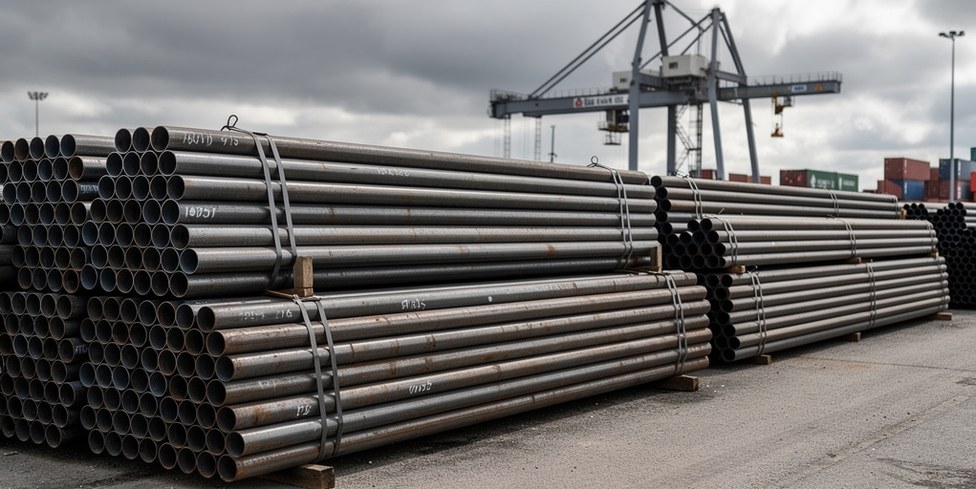
Goods entering Russia by road from an EAEU country: the pre-arrival filing, the truck and the marking codes must all describe the same cargo
Where shipper data and Russian filings drift apart
The more Russian state systems exchange data automatically, the less room is left for discrepancies between stages. A mismatch in quantity, HS code or product description used to surface after the fact — during a desk audit or when the goods were entered into circulation. Now the same gap shows up earlier, and down to the individual unit.
Cargo usually stops not because of marking as such, but because the quantity and the HS code in the pre-arrival filing no longer match the actual load: pallets were added or swapped after the data was submitted, and nobody updated the delivery document.
| Situation | Risk to your shipment | What to do before loading |
|---|---|---|
| The HS code was taken «by analogy» with the previous shipment | It does not match the product group the marking codes were ordered for | Classify the goods before the data is filed, using the sample and technical documentation |
| Marking codes are applied in Russia after the truck arrives | Vehicle demurrage, extra handling, a gap between the declared and the actual goods | Apply the codes at your own warehouse or in China before dispatch |
| The number of packages or units changed during loading | Mismatch with the QR code issued to the carrier | Reconcile the specification with the actual load before departure and send the correction to the buyer immediately |
| The truck or the departure date was changed at the last minute | The vehicle at the border differs from the one declared in advance | Report the change of vehicle and crossing date to the buyer the same day |
| Product cards in the marking system are described incompletely | Product data does not match the delivery data | Check the card attributes against your specification before the codes are ordered |
| A security payment is required but not made before departure | The delivery is not confirmed before the border crossing | Give the buyer the final shipment data early enough to plan the payment against the loading date, not the arrival date |
What your buyer files in Russia and why they need your documents fast
The Federal Tax Service states plainly that SPOT exists to tighten control over imports from the EAEU and to prevent tax evasion. The nuance matters for you: on supplies inside the Union, VAT is not paid at the border but to the tax authority where the buyer is registered. That creates a reporting block that companies used to ordinary import with a customs declaration often overlook.
For the month in which the imported goods are taken onto the books, the buyer files an indirect tax return (VAT and excise) and a statement on the importation of goods and payment of indirect taxes, supported by the shipping documents and the contract with the supplier. Import VAT is deductible only after it has been paid and confirmed by the tax authority. A third layer of data now joins this set: the information declared in SPOT before import and the marking codes of individual units. All three sources must describe the same goods in the same quantity.
This is why your buyer chases clean, final documents so hard. Every unpriced line, every quantity corrected by hand on the packing list and every late specification either delays their VAT deduction or creates a discrepancy that the systems will now surface. The introduction of SPOT has already shifted the emphasis: Russian control on the EAEU route depends less on the moment of border crossing and more on comparing data from before and after import. The marking integration continues that logic.
What the shipper should do
- List the items in your range that go to Russia by road from an EAEU country and fall under mandatory marking. The integration will hit these positions first.
- Confirm the HS code for each such item — it drives both the marking obligation and the correctness of the buyer’s pre-arrival filing. Do not copy codes from an old invoice.
- Move code application as close to the start of the chain as possible: the factory or the consolidation warehouse. For Chinese goods this is the most predictable option and it keeps your cargo off a re-marking line in Russia.
- Agree with the buyer who describes the product cards in the marking system and make sure the attributes match your specification word for word, including model, composition, colour and size scale.
- Freeze the packing list before loading. If anything changes — an added pallet, a substituted article, a different tractor unit, a shifted departure date — send the update the same day, not with the shipping documents.
- Name one person on your side responsible for shipment data going to the buyer, so corrections do not get lost between sales and the warehouse.
- Build the marking lead time into your production schedule: allow time for describing the cards, ordering the codes and applying them, on top of your normal packing time.
- Ask your buyer to confirm that the pre-arrival filing has been submitted and, where required, the security payment made before the truck leaves — both happen before import, not on arrival.
- Watch for publication of the technical and regulatory parameters of the integration: they determine exactly which data will pass between the systems.
Frequently asked questions
Does the integration remove the pre-arrival filing or the marking obligation?
No. The systems serve different purposes, and merging them supplements the existing procedures rather than replacing them. Marking does not cancel tax or customs obligations, and SPOT does not become a marking system.
When does the integration start?
The launch date and the technical data-exchange rules have not been announced. It is a planned merger of information systems, so plan around the readiness of your own processes rather than around a date.
Do Chinese goods need Chestny Znak codes if they travel through Kazakhstan?
The obligation is determined by the product category, not by the route. If the product is on the mandatory marking list, the codes are required regardless of which EAEU country the truck starts from. Such a shipment also falls under SPOT.
Who applies the codes — us or the buyer?
Either is possible, but applying them before dispatch removes re-marking inside the EAEU and cuts the risk that the description in the marking system diverges from the pre-arrival filing. If codes are applied after arrival in Russia, expect vehicle demurrage and cargo handling.
What if we do not ship by road?
SPOT currently applies to road transport from EAEU countries. Other modes are to be brought into the system no earlier than 2027 by government decision. The marking obligation applies in any case.
Summary
The planned merger of SPOT and Chestny Znak creates no new obligations, but it makes old discrepancies visible — between the declared delivery, the cargo actually loaded and the data on marked products. It matters most for goods that fall under both SPOT and mandatory marking: Chinese consumer goods trucked in through Kazakhstan and Kyrgyzstan. Align your HS codes, product cards, specifications and shipping documents with what your buyer files, and do it before the parameters of the integration are published. We handle road delivery of consolidated cargo and customs clearance for shipments to Russia and the CIS, including clothing, footwear and accessories and other marked categories. Request a consultation and we will go through your specific shipment.
Send us your packing list and we will confirm the HS codes, check whether your goods fall under mandatory marking, and arrange code application before the cargo leaves your warehouse.
Read also:
- Toy Marking in Russia from 1 September 2026: What Your Shipment and Your Buyer Now Need
- Chestny Znak marking at a Chinese consolidation warehouse: how the scheme works, who is liable and what your Russian buyer will ask you for
- Transit Through Azerbaijan: What Exporters Shipping to Russia Need to Prepare
- Shipping diesel and petroleum products to Russia: HS code 2710, excise rules and the papers your buyer will now ask you for