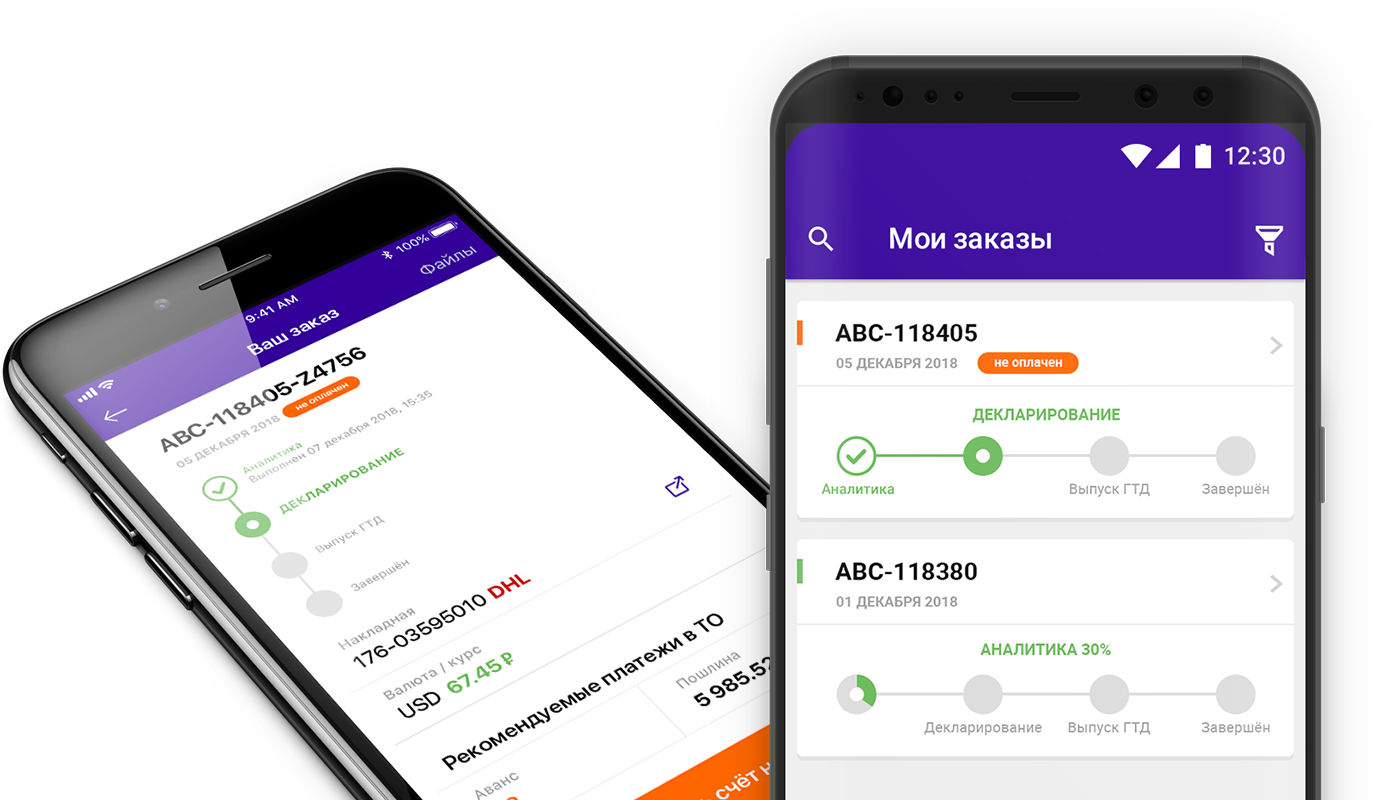


SPOT and QR Codes for Shipments to Russia from the EAEU: What a Foreign Supplier Needs to Do
The import of goods by truck from Kazakhstan, Kyrgyzstan, Armenia, or Belarus now begins not at the border, but at the shipper’s warehouse. The Russian recipient submits information about the upcoming shipment in advance to the System for Confirming the Expectation of Goods Delivery (SPOT); in certain cases, a security deposit is paid, and the carrier receives a generated QR code and presents it upon entry into Russia. According to customs estimates, the mechanism has not caused queues at border crossings, but the cost of errors has shifted to the stage prior to the vehicle’s departure: discrepancies between the declared and actual cargo are detected directly at the border. Below is a step-by-step guide for foreign parties: what the shipper prepares, what the Russian buyer does, when the electronic document and accompanying code are generated, who presents them and where, and what to do if the code has not been generated or cannot be read.
Who Is Affected by the Procedure and What’s New About It
SPOT applies to the import of goods into Russia by road from EAEU countries. The key factor here is not the origin or value of the cargo, but the method and direction of transport: the vehicle enters Russia from Kazakhstan, Kyrgyzstan, Armenia, or Belarus. If this condition is met, information about the shipment must be declared before the vehicle reaches the border crossing. For a foreign shipper, this means that the Russian buyer will request shipment details from them earlier than before.
In practice, this procedure applies to a large number of shipments that are formally originating from Kazakhstan or Kyrgyzstan but are actually of Chinese origin: the shipments are consolidated at warehouses in border hubs and then transported to Russia by truck. A typical shipment consists of mixed-item consolidated cargo: clothing and footwear, auto parts, home appliances and electronics, tools, consumables, and packaging. A particular challenge involves batteries and lithium-ion batteries classified under commodity group 85: these are both cargo requiring permits and Class 9 hazardous materials, so the documentation for them was already cumbersome, and now a preliminary declaration of information has been added.
The essence of the change is simple. Previously, customs received the bulk of the cargo data upon arrival: the truck would arrive, the driver would submit the shipping documents, and then the process of verifying the description, codes, and value would begin. Now, this same data is declared in advance, and verification takes place at the border. For your Russian buyer, this means that the entire preparation process must be moved up by a week or a week and a half. For you, as the shipper, this means that the documents and accurate information about the shipment will be needed not when the transport is already en route, but while the shipment is still in your warehouse.
The second consequence is a redistribution of responsibility within the supply chain. Previously, when information was submitted upon arrival, an inaccuracy in the invoice or an extra box in the truck bed was a minor issue and could be corrected on the spot. Now, any discrepancy between what is declared and what is actually being transported is recorded at the time of entry. Therefore, agreements between the shipper and the Russian consignee regarding what is being loaded and how become part of the delivery process, rather than a polite request.
Third, the procedure does not eliminate any of the usual steps. Declaration, permits, labeling, and payment remain in place. An additional preliminary step has been added: an electronic document regarding the upcoming shipment, a security deposit if necessary, and a tracking code provided to the driver. If this step is handled correctly, everything proceeds as usual; if not, everything else comes to a halt, including your shipment.
Roles: shipper, Russian consignee, carrier, representative
The most common reason for missed deadlines isn’t the complexity of the procedure, but uncertainty regarding roles. The parties assume that someone else is preparing the data. Define areas of responsibility in writing before the first shipment.
What the shipper (supplier) prepares
The supplier or consolidation warehouse compiles the actual details of the shipment. As the shipper, a Russian buyer will most likely request the following from you: a final specification listing item names and part numbers; an invoice with itemized prices and terms of delivery; a packing list showing the number of packages, gross and net weight by item; information about the manufacturer and country of origin, a technical description of the goods sufficient for classification (material, composition, purpose, power specifications, presence of a motor or battery), and photographs of the markings on the packaging. If identification marks are to be applied to the goods, they should be applied at the factory: relabeling at a warehouse within the EAEU is more expensive and takes longer.
Important note: the specification must be final. Not “preliminary—to be finalized upon shipment,” but the one that will actually be used to assemble the pallets. Anything the shipper adds to the cargo hold beyond what’s on the list—samples, gifts, replacements for defective items, or someone else’s supplementary box—becomes a discrepancy at the border, and any resulting shipment delay will affect both you and your buyer.
What the Russian recipient (importer) does
The Russian importer is responsible for the information entered into the system and for ensuring its compliance with Russian law. Their responsibilities include: verifying and selecting HS codes for each item, assessing the need for permits based on the actual code, calculating duties and deciding on a security deposit, preparing a justification of the customs value, concluding and verifying contracts with the carrier, submitting a document regarding the upcoming shipment, and providing the generated code to the carrier. Even if, technically, the submission is carried out by a customs representative in Russia, the substantive responsibility for the accuracy of the information remains with the declarant. For a foreign shipper, this means: the data you provide to the buyer will be declared by the buyer on their own behalf; therefore, the buyer is entitled to demand accuracy from you and prompt responses to follow-up questions.
What the carrier and driver do
The carrier receives the generated code from the Russian importer and ensures that the driver has it physically on hand when the vehicle is presented—both in printed form and on their phone—because cell service near the border crossing can be unreliable. The driver presents the code along with the standard set of shipping documents. Make sure to explicitly clarify with the carrier that the driver is not authorized to load or unload anything en route: any change to the cargo composition after the information has been submitted renders the previously valid document invalid.
What the customs representative does
The representative’s role in this new setup is to manage three key elements simultaneously: data for the system, the set of permits, and the vehicle submission schedule. The value here lies not in the submission itself, but in the fact that discrepancies are identified before loading, rather than at the border crossing. For road transport, we operate by delivering consolidated cargo via trucks and handle the preparation of information prior to the vehicle’s departure, including requesting missing data from the shipper.
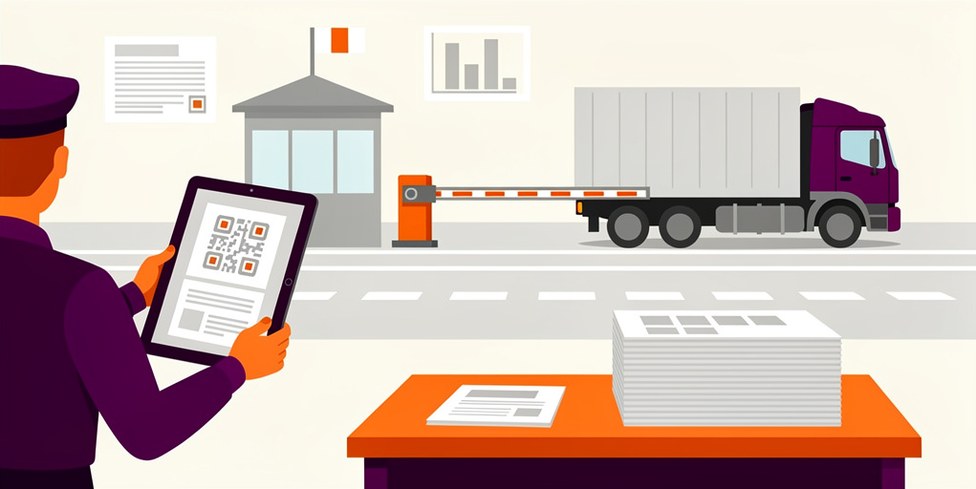
The information is submitted before loading—the driver receives the code as soon as it's ready
What information must match across three sources
The system is based on data reconciliation. Therefore, it is helpful to think of a shipment as consisting of three sets of data that must all say the same thing: the shipping documents carried by the driver, the information entered into the system, and the primary transaction documents—the contract, invoice, payment documents, and the Russian recipient’s receipt records. Your documents, as the shipper, form the basis of all three sets.
Below is a list of items where discrepancies most often occur. This list is not prescriptive; it is a working reconciliation checklist that you should keep in mind when preparing a shipment.
- Product description. The description must be identical in the specification, invoice, packing list, and declared information. Do not use “textiles” in one document and “men’s cotton T-shirts” in another.
- Quantity of goods and number of cargo units. Pieces, pairs, sets—all in the same units as on the invoice. Units—boxes, pallets—are counted separately and also verified.
- Gross and net weight. By line item and for the shipment as a whole. This is the most vulnerable line: it is often entered “approximately,” leading to discrepancies with weight checks.
- HS Code. Selected based on the actual characteristics, not carried over from a previous shipment of similar goods. A Russian buyer may request technical details from you specifically for this purpose.
- Value. Itemized, in the contract currency, with delivery terms according to Incoterms. The total amount must be the sum of the individual line items without manual rounding.
- Sender and recipient. Full names and contact details matching those in the contract. A common mistake with consolidated shipments is that the documents list the consolidation warehouse, while the system lists the end seller.
- Transaction details. Contract, specification, invoice, and transport document numbers and dates. Discrepancies in dates are a common cause for inquiries.
- Transportation. Tractor and trailer numbers, carrier details. If the vehicle was changed at the last minute, the information must be updated before submission at the border crossing.
- Permits and authorizations. Details of certificates and declarations of conformity valid as of the date of import, with a scope of validity covering the actual goods.
- Means of identification. If the goods are subject to mandatory marking, the codes must be applied and the relevant information verified prior to shipment.
The rule from which everything else follows: the information submitted before the vehicle departs is not a draft or a statement of intent, but a declaration of exactly what is being transported in the cargo bed. Any physical discrepancies are resolved at the border, under customs supervision, and result in vehicle downtime. Therefore, the final verification is conducted before loading, not after.
If any terms on the list sound unfamiliar—we’ve compiled general definitions of customs terminology in our glossary, which is a handy resource to give to new employees along with the delivery regulations.
Step-by-Step Procedure: From Order Confirmation to Vehicle Departure
The procedure below is described for a typical consolidated shipment that is consolidated at a warehouse in an EAEU country and transported to Russia in a single vehicle. Specific timeframes for each step depend on the destination and the warehouse, so they are provided as “practical” guidelines. You should confirm the exact details for your specific route with your Russian counterpart. For a foreign supplier, it is important to understand which steps the Russian party will take, what information and documents they will request from you, and at what stage.
- The Russian buyer will determine whether the shipment is subject to this procedure. One criterion: import by road from an EAEU country. This check is performed during the route selection phase, not after the cargo has already been consolidated, because the entire subsequent sequence depends on it. The supplier should clarify this issue with the buyer in advance.
- Agree on the data format with the buyer. Before the first shipment, agree on a template for the specification and packing list: required fields, units of measurement, language of item descriptions, and the requirement to specify the material and intended use of the goods. Typically, spending half a day setting up the template once saves time on every subsequent shipment.
- Prepare a preliminary product list for the buyer. At this stage, it may still change, but this is the list that classification specialists will use as their starting point. The sooner the Russian side sees the list, the more time there will be to address any disputed items.
- Expect questions regarding HS codes. The Russian side assigns a code to each item. Particular attention is paid to equipment, batteries, goods sold as sets or kits, and products made from mixed materials. For disputed items, the buyer will most likely request technical descriptions and photos from you: these are required both when submitting the information and later during the verification process. It’s helpful to prepare them in advance.
- Keep in mind that the Russian authorities will verify the permits against the actual HS code. For electronics and household appliances, these are documents certifying compliance with technical regulations on safety and electromagnetic compatibility. For workwear, gloves, and safety footwear, these are documents certifying the safety of personal protective equipment. Mandatory labeling is required for certain consumer product categories. The certificate must be valid as of the expected date of import, not just as of the date the information is submitted. If the certificate or labeling is your responsibility as the manufacturer or shipper, inform the buyer of their validity periods in advance.
- The Russian recipient will calculate the payments and resolve the issue of a security deposit. A security deposit is required in specified cases, so a decision must be made before the truck is dispatched. Funds should be reserved in advance: transportation that is on hold awaiting payment costs more than money that sits idle for an extra day. It is helpful for the supplier to know that the vehicle’s shipment date may depend on this decision.
- Provide the final documents to the buyer. These include the invoice, packing list, and shipping document. From this point on, the shipment’s contents are considered finalized. Any changes must be communicated to the buyer so they can update the information. Changes must not be withheld.
- The Russian party will reconcile the three sets of documents. They will go through the checklist from the previous section and verify that the shipping documents, the buyer’s shipping information, and the buyer’s source documents match line by line. The reconciliation is done item by item, not by total amounts: the total may match even if there are two errors that offset each other. The supplier should check their documents in the same way, item by item, and be prepared to quickly answer questions about discrepancies.
- The Russian recipient will submit a document regarding the upcoming shipment. In practice, this document is not submitted at the last minute before departure but well in advance: this allows time for technical glitches and clarifications. They follow the consolidation warehouse’s regulations and the transport schedule. It is important for the supplier not to delay the final documents; otherwise, the buyer will lose that buffer.
- The consignee will make a security deposit, if required. They will verify that the payment has been credited to the account and not merely debited from the bank. Until this is confirmed, it is best not to dispatch the vehicle.
- The Russian party will receive the tracking code and then forward it to the carrier. The transfer must be done officially and documented—not sent directly to the driver via a messaging app “privately.” The code is then passed on to the driver via the carrier. If you are hiring the carrier, agree in advance that the code will be sent to them exactly according to this procedure.
- Give the driver a brief briefing. The driver must know what documents to present, in what order, what to do if questions arise, and who to call. Having a single contact number for the person in charge—who answers calls outside of business hours—resolves half the problems at the border crossing.
- Do not release the vehicle until you have received the code. Before arriving at the border, the entire set of documents must be readily available in electronic form to you, the Russian recipient, and the carrier: it may be needed within an hour.

The driver must present the code—generated based on information submitted in advance—upon entry
Accompanying Code: When It Is Generated and Who Presents It
The process consists of three steps. First: the Russian importer submits a document regarding the upcoming shipment in advance. Second: in specified cases, a security deposit is paid. Third: after processing, a QR code is generated, which is provided to the carrier and verified by customs authorities upon the goods’ entry into Russia.
The code is not generated automatically and is not issued to the driver at the border. It is generated only after the information has been successfully accepted: until the document regarding the upcoming shipment is processed, there is no code. This is important for planning the shipment. The vehicle cannot be dispatched simply when the “cargo is loaded,” but only when the “code is in the carrier’s possession.”
The driver presents the code when the vehicle arrives at the border crossing, along with the standard set of shipping documents. Customs authorities conduct the inspection upon entry. The target processing time for a truck at the border crossing is approximately ten minutes. According to customs estimates, the code verification process itself has not created any queues. The time saved is not lost due to scanning, but rather due to resolving discrepancies in the preliminary information. For the supplier, this means that the accuracy of their documents directly affects how long the vehicle is held at the border.
The practical rules for handling the code are simple. First, it must exist in two forms: a printout in the driver’s folder and a file on the phone. Second, the printout must be legible: a standard-quality black-and-white print, not reduced to the size of a stamp, not laminated with a film that causes glare, and not placed across a fold in the document. Third, the person in charge on the Russian recipient’s side must have the same file so they can resend it within a minute. Fourth, the code applies to a specific shipment and a specific vehicle: you cannot use yesterday’s code from a similar trip.
If the code has not been generated, has not arrived, or is unreadable
This situation must be analyzed based on the cause, not the symptom. The symptom is one: the vehicle is stationary. The causes, however, vary, and so do the necessary actions.
The code has not been generated because the information has not been submitted or accepted. This is the worst-case scenario and the most common one: the vehicle was dispatched before the paperwork was finalized. The correct course of action is not to dispatch the vehicle until the code has been received. If the vehicle is already en route, the Russian side must finalize the shipment and submit the information before approaching the border crossing. The driver should be instructed not to enter the queue for customs clearance until he receives confirmation. In this case, it is important for the shipper to provide the missing documents and data as quickly as possible.
The information has been submitted, but the composition of the shipment has changed. There are few options here: the information must be updated before reaching the border. Adding cargo “en route,” replacing an item with a substitute, or replacing a defective item—all of these require resubmitting the information. Attempting to proceed “as is” turns a technical correction into a dispute at the border crossing. Therefore, any change to the shipped consignment must be immediately reported to the Russian recipient.
The code exists, but it didn’t reach the driver. This is an organizational, not a customs, issue: the code got lost in the correspondence, was given to the previous driver, the phone ran out of battery, or the printout was left at the carrier’s office. A strict handoff procedure helps: the code is officially sent to the carrier; the carrier confirms receipt in writing; and the driver confirms before departure that he has the printout.
The code cannot be physically read. The printout may be crumpled or smudged, have a glare from the plastic film, have print that’s too small, or the phone screen may be cracked. That’s why two copies are needed. If both are unusable, the person in charge on the Russian recipient’s side resends the file, and the driver prints it out at the first opportunity or displays it on a functional screen.
A technical glitch on the systems’ end. This happens, and it is no reason to improvise. There is only one course of action: record the time and nature of the problem, contact the customs representative and the carrier, and follow the instructions of the officials at the border crossing. Attempts to “explain the situation on the spot” on your own will not speed things up.
General principle: In any of these situations, the shipment must have one designated contact person with a phone number who is available during the hours when the truck is actually approaching the border, including at night and on weekends. If there is no such person, a half-hour delay can turn into a full day’s delay. A foreign supplier should clarify in advance with their Russian counterpart who fulfills this role and exchange contact information.
Who Does What and When: A Table by Stage
| Stage | Seller / Shipper | Buyer / Importer | Carrier and driver |
|---|---|---|---|
| Before Loading | Prepares the final specification, invoice, and packing list; provides technical descriptions and manufacturer information; applies identification marks, if agreed upon | Verifies HS codes, permits, and labeling; calculates payments; decides on a security deposit; reconciles three sets of data | Confirms the vehicle and license plate numbers, reports the estimated arrival time at the border crossing |
| During loading | Loads strictly according to specifications, records actual quantities and weight, and reports any discrepancies before the vehicle is sealed | Receives final documents, submits a notice of upcoming delivery, and makes a security deposit if necessary | Accepts the cargo based on the documents, verifies the number of units, and does not accept anything beyond what is listed |
| Before departure | Sends scanned copies of the final documents | Receives the tracking code, forwards it to the carrier, and instructs them on how to present it | Confirms receipt of the code, prints it, and saves the file on their phone |
| En route | Does not make any changes to the shipped shipment | Keeps the document package accessible, remains available for communication; if there are changes to the shipment, updates the information before reaching the border | Does not load or unload anything; reports delays and changes in transportation |
| At the border | — | Stays in contact with the representative and the carrier, ready to promptly confirm the details | Presents the code and shipping documents, and follows the instructions of border officials |
| Upon arrival | Provides any missing documentation upon request | Files the declaration, pays the fees, compiles the shipment dossier, and retains it | Delivers the cargo to the unloading point and hands over the original documents |
It’s worth noting two system-level features that affect planning but do not depend on the quality of your documents. First: Starting in May, declarations are automatically distributed among electronic declaration centers throughout Russia. Therefore, relying on “your own” checkpoint or on local arrangements no longer works, and planning must be based on the quality of the document package. Second: the physical throughput capacity of the infrastructure remains a limiting factor. The modernization of border crossing points in the Khabarovsk Krai is scheduled to be completed by the end of 2030, and this timeline is considered too long given the volume of freight traffic with China. Automated systems process information quickly, but queues in the Far East direction must still be factored into delivery times.
Common Mistakes and Their Consequences
Below are situations that recur from shipment to shipment. For each one, we explain the typical outcome for the shipment and how to prevent it. The specific consequences depend on the circumstances and the nature of the discrepancy; therefore, the descriptions provided do not include references to penalty amounts. It is important for foreign suppliers to understand these situations because Russian buyers will most likely request documents and confirmations from them specifically regarding these points.
Discrepancies in the Product List
The cargo turned out to contain items other than those declared: extra boxes from another supplier, a product replaced with a similar item, “gift” samples, or goods added at the last minute. The result: the shipment is held at the border and inspected under customs supervision, leading to vehicle downtime and delayed delivery dates. How to avoid this: Finalize the shipment’s composition upon receipt of the final invoice and obtain written confirmation from the consolidation warehouse that nothing beyond the list has been loaded.
Incorrect Weight
The gross or net weight was carried over from a previous shipment, calculated “by the book” per box, or rounded. Consequences: discrepancies during inspection and the need to explain the difference on-site; in severe cases, reweighing and partial unloading. How to avoid it: Specify the weight from the actual packing slip, not the estimated one, and verify the sum of the individual items against the total on the delivery note.
Expired or Inappropriate Authorization Document
The certificate was valid at the time the information was prepared but had expired by the date of import. Either its scope does not cover the actual model, or it was issued for a different variant. Consequences: the inability to release the goods until the correct document is obtained, cargo storage, and additional expenses. How to avoid this: check the validity period not for today but for the scheduled import date with a margin of time, and verify the scope of validity against the actual specifications rather than the category name. The supplier should agree in advance with the Russian buyer on who will verify these documents and when.
Driver without the required code
The code has been generated but hasn’t reached the driver: it got lost in the correspondence, was sent to the previous trip, the printout is illegible, or the phone is dead. The result: the vehicle cannot clear customs until the code is presented; in effect, this is a delay for no good reason. How to avoid it: use two copies, obtain written confirmation of receipt from the carrier, and ensure a designated contact person is available during the hours when the vehicle approaches the border.
The vehicle arrived before the documents
The vehicle was cleared for the trip with the expectation that the details would be finalized “along the way.” The result: the vehicle is stuck waiting while the data is prepared, and charges accrue the entire time; simultaneously, the risk increases that the rush will lead to errors in the data itself. How to avoid this: Consider the receipt of the code—not the loading—as the starting point, and explicitly include this in the operating procedures with the carrier.
Information is submitted only for one’s own portion of the consolidated shipment
The truck carries shipments from several shippers and recipients, and everyone is focused on their own boxes. The result: the entire truck is held up, including those whose documents are in order. How to avoid this: Check with the consolidation warehouse in advance to determine who is submitting information for the entire shipment, and require confirmation for the entire truck, not just your line item.
The code was selected based on the previous shipment
The goods are similar, so the code must be the same. The result: disputes over classification, payment adjustments, and—in the event of a post-clearance audit—additional charges for the Russian recipient. How to avoid this: Select the code based on the actual characteristics of the goods and keep the rationale for your selection along with the technical description. The supplier can assist by providing an accurate technical description of the goods.
No Justification for the Customs Value
The shipment was released and sold long ago, but the request for the value arrives later. The result: additional charges based on the findings of a post-release audit. In the first half of 2026, customs authorities assessed businesses 35.2 billion rubles in additional duties—25% more than a year earlier—so the likelihood of such a scenario is not zero. How to avoid it: Compile documentation for each shipment immediately, rather than upon request. A Russian buyer will likely ask the supplier for price lists, correspondence regarding price negotiations, and payment documents.

Discrepancies between the actual cargo and the documents are the main cause of issues at the border
Checklist: What to Check Before the Truck Departs
A short list that can be forwarded to the logistics coordinator as is. Each item must be “yes”; otherwise, the shipment will not be allowed to depart.
- The shipment is being transported by road from an EAEU country—this procedure applies.
- The final specification is in place, the shipment composition is locked in, and written confirmation from the warehouse has been received.
- The invoice, packing list, and bill of lading match line by line.
- The gross and net weights are actual, and the sum of the line items matches the total.
- The number of packages has been recounted and matches across all documents.
- HS codes have been assigned to each line item; any disputed codes are supported by a technical description.
- Permits are valid as of the scheduled import date and cover the actual models.
- Markings have been applied if the goods are subject to mandatory identification.
- It has been determined whether a security deposit is required; if necessary, the amount has been paid and recorded.
- The document regarding the upcoming shipment has been submitted and accepted.
- The shipment code has been received, forwarded to the carrier, and receipt has been confirmed in writing.
- The driver has a printout of the code and the file on their phone.
- The tractor and trailer numbers in the records match the actual numbers.
- The driver has been instructed on what to present and whom to call if questions arise.
- A contact person has been designated for the time the vehicle approaches the border; the driver and the carrier both have this person’s phone number.
- The cost justification package has been compiled and stored in the shipment folder.
- For consolidated cargo, it has been confirmed that the information has been submitted for the entire vehicle.
Upon arrival: clearance, document storage, post-clearance inspection
Passing through the border crossing point is not the end of the procedure, but rather the transition to standard customs clearance. Next, the Russian consignee files the declaration and pays the applicable fees. It is important to note the automatic distribution of declarations among electronic declaration centers: since May, they have been distributed nationwide, so you should not count on the usual processing center. The practical conclusion is simple—the quality of the document package is more important than geography: the clearer the description and justification, the fewer inquiries there will be, regardless of which electronic declaration center received the declaration.
The second half of the work after arrival is archiving. The system for pre-declaring information is designed so that a digital trail remains for each shipment: what was declared, when, by which vehicle, and with what specifications. This works both ways. If the documents are consistent with one another, the trail becomes evidence in favor of the parties involved in the shipment. If not, it raises questions for them.
Therefore, for each shipment, it makes sense to maintain a single folder containing: the contract and specifications, the invoice and packing list, the shipping documents, the submitted information and the generated code, payment documents, permits with confirmation of their validity as of the import date, technical descriptions and photographs of the goods for each disputed code, the supplier’s price lists and correspondence regarding price negotiations, and documents related to payments to the supplier. A foreign supplier should expect that a Russian buyer will request some of these materials and be prepared to provide them. Gathering them a year after the transaction, when the supplier has a new manager and the warehouse stock has been sold out, is a nearly hopeless endeavor.
The increase in additional assessments resulting from post-release audits—35.2 billion rubles in the first half of 2026, plus a quarter more than last year—makes this process not a bureaucratic burden, but a form of insurance. Inspections target not those who made the loudest mistakes, but those whose documents do not match up.
We should also note the context in which all this is taking place. The procedure was created, in part, to monitor goods that enter Russia via other EAEU member states, even though they are originally intended for the Russian market. After the system was launched, customs authorities recorded an increase in direct imports and a rise in the volume of goods declared from China. For market participants, this means that the scheme in which goods “lose” their origin along the way has become noticeable, and it makes more sense to structure the supply chain from the outset with transparency in mind: a direct contract, clear pricing, and correct classification.
Post-border reporting: indirect tax declaration and import declaration
SPOT does not replace tax reporting on imports—these are different obligations, and they are often confused. The security deposit guarantees payment of VAT and excise taxes, but the tax itself has not been paid: the obligation to report on the imported goods remains with the Russian recipient.
The indirect tax declaration for imports from the EAEU is filed with the tax office where the Russian importer is registered by the end of the month in which the goods were recorded. Submitted along with it are the application for the import of goods and payment of indirect taxes, as well as the contract, invoices, and shipping documents for the delivery. The supplier needs the tax authority’s stamp on the application: without it, the supplier cannot confirm the zero rate on their records. Therefore, the supplier should agree in advance with the Russian buyer that the buyer will provide the supplier with the stamped application.
This explains the data requirements: the information submitted to the system prior to crossing the border and the data included in the customs declaration must describe the exact same shipment—the same item description, quantity, and value. If the quantity received is less than what was declared or the price has changed, the discrepancy will have to be explained twice: to customs and to the tax authorities. For a foreign shipper, this means that any change in the shipment must be immediately reported to the Russian recipient.
- A single source of shipment data—it is used to generate both the information entered into the system and the customs declaration with the import application.
- The regulations specify who makes the correction when the shipment differs from what was declared and what documents are required to formalize it.
- The system is designed not only for vehicle departures but also for month-end closing: the declaration is tied to the month in which the goods are recorded.
News and observations regarding the system’s operation are covered in a separate article: SPOT for Imports from the EAEU: QR Code, Security Deposit, and Indirect Tax Declaration.
Frequently Asked Questions
Does this procedure apply only to goods from China?
No. It applies to imports by road from EAEU countries, regardless of the goods’ origin. It’s just that shipments from China consolidated in Kazakhstan or Kyrgyzstan are the most common scenario, which is why the procedure is often discussed in this context.
How far in advance of departure should the information be submitted?
The specific deadline depends on the destination and the regulations of the consolidation warehouse, so please check the requirements for your specific route. A practical rule of thumb: the submission must be completed before the vehicle departs on its trip, allowing for technical glitches and clarifications, rather than at the last minute before approaching the border crossing point. The supplier should provide all shipment details in advance so that the Russian side has sufficient time to file the declaration.
Who is liable if there is an error in the information?
Substantive responsibility for the accuracy of the declared information lies with the declarant—that is, the Russian importer—even if the customs representative technically handled the filing. The carrier is responsible for the availability and presentation of documents and the code, while the shipper is responsible for ensuring that the actual cargo matches the agreed-upon specifications. These responsibilities should be clearly defined in contracts to avoid disputes later during downtime.
Are QR codes causing delays for trucks at the border?
According to customs data, there have been no recorded instances where the system’s launch has led to difficulties during import, and there are no lines caused by the codes. The target processing time for a truck is about ten minutes. Delays arise not from the code scan itself, but from discrepancies in the declared information.
Is a security deposit required for every shipment?
No, it is required only in specific cases. The need for a deposit must be determined before the vehicle departs—not once it is already en route—and the amount must be set aside in advance. The supplier should check with the Russian buyer to see if a payment is required for this particular shipment.
What should be done if the cargo has changed after the information has been submitted?
Update the information before the vehicle arrives at the border crossing. Proceeding “as is,” hoping to explain the discrepancy on the spot, is the most expensive possible scenario: the discrepancy is recorded, and the matter must be resolved under customs supervision. The Russian recipient must be notified of the change immediately.
Can you choose which customs authority will process the declaration?
No. Since May, declarations have been automatically distributed among electronic declaration centers nationwide. Plan your customs clearance based on the quality of your documents, not on “your” specific customs post.
We will verify the HS codes and the necessary permits for your shipment from the EAEU and prepare the necessary documentation before the vehicle departs.
Expert Opinion
 | Yaroslav Loginov—An expert in logistics and customs clearance with 40 years of experience.
|
The main mistake the expert sees in practice is the habit of finalizing documents en route. In the past, this was tolerated: the truck would be on the road, and the description of the goods and the code would be clarified along the way. Now, information must be declared prior to import, and any post-facto clarification becomes an issue for the parties involved in the shipment at the border crossing. For a foreign shipper, this means that data preparation should be planned not just for the day before departure, but for the entire week of loading. For consolidated shipments, the most time-consuming part is coordinating the product list with multiple suppliers.
The second thing the expert advises doing once and for all is to agree in advance with the Russian buyer on the document format. This isn’t just about a vague statement like “the supplier will send an invoice,” but about specific fields: how the item name is written, what units are used to indicate quantity, where the weight is derived from, and where the material is specified. According to the expert, nine out of ten discrepancies at the border arise not from malicious intent, but because the warehouse filled out the packing slip however it saw fit.
Third is post-release inspection. The shipment was released long ago, the goods have already been sold, and later an audit regarding value or classification is conducted. A 25 percent increase in additional charges over the first half of the year is not just an abstract statistic—it’s the likelihood that an audit will target a specific Russian recipient, who may then need documents from you. The expert recommends compiling a dossier for each shipment immediately: cost justification, technical descriptions corresponding to the HS code, and permits. It’s nearly impossible to reconstruct this information later through the supplier, so a foreign supplier should retain such documentation for each shipment.
Summary
Importing goods by road from EAEU countries into Russia now begins not at the border, but several days before reaching it: information about the upcoming shipment, a security deposit if necessary, and the accompanying code in the driver’s possession. The procedure itself does not cause delays, but it does not tolerate discrepancies between the declared and actual cargo. Therefore, for a foreign shipper, the starting point of the trip should be considered not the loading of the vehicle, but the receipt of the code. It’s best to define the roles of the seller, buyer, and carrier in writing, cross-check the three sets of data line by line before the truck is loaded, and compile the documentation for each shipment immediately—this will also assist your Russian counterpart during post-clearance inspections. Submit a request for a consultation, and our specialists will analyze your situation regarding the specific shipment.
Read also:
- Cargo Classification and Its Impact on Customs Duties: What Exporters Shipping to Russia Should Know
- Grain export subsidies in Russia: what the new rail and terminal map means for your shipment
- Titanium dioxide to Russia: the anti-dumping duty is on pause — what it means for your shipment and your buyer's documents
- Russia replaces post-release audits with customs monitoring: what it means for your shipments