

Toy Labeling Under TR TS 008/2011: What Foreign Suppliers Need to Know and How to Check Labels Before Shipping to Russia
Starting in late March 2027, toy labeling in Russia will be checked not only for the presence of required information, but also to ensure that the information does not contradict itself. The manufacturer’s label, the importer’s sticker, and the retailer’s description must all provide the same information about the toy: the intended use, age range, warnings, and restrictions on safe use must not differ. If you supply toys to Russia, the most helpful thing you can do in the remaining months is to check the labeling of each item before shipping the batch, rather than after the container arrives. A Russian recipient may request mockups and texts from you specifically for this type of verification. This guide includes a step-by-step audit procedure, a table of typical discrepancies, and a checklist.
What Has Changed in the Technical Regulations and When
By Decision No. 106 of the Council of the Eurasian Economic Commission dated September 9, 2026, an amendment was made to the Customs Union’s technical regulation “On the Safety of Toys” (TR CU 008/2011). Paragraph 5.3 of Article 4, which lists the information required for labeling, has been supplemented with the following provision: Information provided by the manufacturer, an authorized manufacturer, an importer, and/or a seller must not contradict one another, alter the intended use of the toy, its intended age group, warnings, or restrictions on safe use, nor should it mislead the purchaser (consumer) regarding the toy’s intended use and safety.
The decision takes effect 180 calendar days after the date of its official publication. The decision was published in late September 2026, so the deadline will be in late March 2027. The exact date varies by one day across different reference databases (March 27 or 28), so for planning purposes, it is safer to use “the last week of March” and allow for some leeway. There are no separate transitional provisions in the text of the decision: it consists of two points—the amendment to the regulations and the effective date.
We discussed the amendment itself and its practical implications in the article “Importing Toys into Russia: How to Check Markings, Stickers, and Certificates Before Customs.” Here is a detailed guide on how to handle batch labeling so that a foreign supplier and its Russian buyer do not encounter unexpected conflicts.
Who Is Responsible for Marking
The regulation explicitly states that the marking is applied by the manufacturer (or a person authorized by the manufacturer) and the importer, and that they determine the location and method of application. The new regulation goes further and specifies four sources of information that must appear on the toy or next to it: the manufacturer, its authorized representative, the importer, and the seller. This is important: the seller is also held responsible for the information provided.
For foreign suppliers and manufacturers, two practical conclusions follow from this. First: A Russian importer is responsible not only for its own label but also for ensuring that it does not contradict the manufacturer’s labeling. Therefore, the importer may request from you mockups of the packaging, labels, and instructions, as well as confirmation that the texts have been approved. Second: the information that the seller displays alongside the product (in the product listing, on the price tag, or in the catalog) must also not conflict with the labeling. If your Russian partner sells directly to consumers or through marketplaces, this scope is the same for them, and it’s not possible to divide it into “manufacturer” and “Russian” categories.
What Information Must the Labeling Contain
Toy labeling must be accurate, verifiable, clear, easily legible, and accessible for inspection and identification. Section 5.3 of Article 4 of the regulation (as currently in force) specifies the information that must be included in the labeling:
- the name of the toy;
- the name of the country where the toy was manufactured;
- the name and location of the manufacturer (or the person authorized by the manufacturer) and the importer, along with contact information;
- the manufacturer’s trademark (if any);
- the minimum age of the child for whom the toy is intended, or a pictogram indicating the age;
- primary construction material (for children under 3 years of age, if necessary);
- care instructions for the toy (if necessary);
- date of manufacture (month, year);
- service life or shelf life (if specified);
- storage conditions (if applicable).
Section 5.4 adds that, depending on the type of toy, the labeling must include a list of included items (for sets), operating instructions, cleaning instructions, safety precautions, warning information, and assembly instructions. Warning information must include instructions on special precautions for use in accordance with Annex 3 to the regulation. The labeling and technical documentation supplied with the product must be in Russian and in the official languages of the Union states, if their legislation contains corresponding requirements.
The new regulation does not add any mandatory requirements. Instead, it requires that all such information, provided by different participants in the supply chain, be consistent with one another. Therefore, the mere presence of all the information does not mean that the labeling is in compliance.
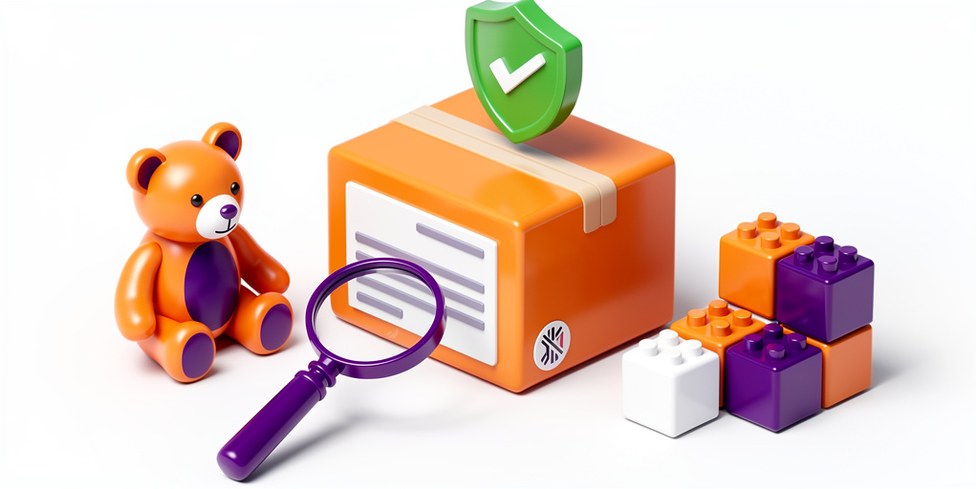
The supplier checks the labeling on the toys before shipping the batch
Where Conflicts Arise
Contradictions are rarely the result of malicious intent. More often, they stem from the fact that each link in the supply chain has its own document and its own description of the toy. Typical areas where different product descriptions may differ:
- Age. The factory box says “3+,” the Russian importer’s sticker says “from 0 years” or “from 6 months,” and the product card says “for toddlers.” Requirements for toys intended for children under three years old are stricter, so discrepancies in age recommendations are the most sensitive issue.
- Intended use. A collectible model or decorative figurine is sold in Russia as a “toy for children,” even though it was positioned differently in the original labeling. The name and intended use must match across all parties involved.
- Warnings. The original packaging includes a warning about small parts or the need for adult supervision, but the Russian sticker does not, because it was created using an abbreviated template.
- Restrictions on use. The toy is labeled “do not use in water,” while the seller’s description states “suitable for bathing.”
- Safety claims. The seller states “absolutely safe” or “eco-friendly materials,” even though the labeling contains no such information. A phrase that misleads the purchaser regarding safety falls under the new regulation.
- Country and manufacturer. The country of manufacture listed on the label differs from that in the accompanying documents, and the manufacturer’s name is spelled differently.
This list is not from the regulation but from batch preparation practice: it shows where to look for discrepancies. The decision itself lists the same four categories of information—intended use, age group, warnings and restrictions on use, and safety information.
Pre-shipment batch audit: a step-by-step procedure
The idea is simple: before shipping to Russia, gather all the product texts and cross-check them against one another. It’s best to do this work during the sample or pre-production mockup stage, before the entire print run of the packaging has been produced. It’s more convenient for the supplier to conduct the audit together with the Russian recipient, who knows how the product will be described and sold in Russia.
- Gather a set of materials for each item. This includes photos or mockups of the box from all sides, the label on the toy itself, instructions in the original language and in Russian, a draft of the Russian sticker, the product listing from a Russian retailer or online marketplace, and the price tag.
- Extract key information from each source: name, purpose, age range, warnings, material, manufacturer, country of origin, date of manufacture, and service life.
- Compare them in a single table. Each source is a column; each piece of information is a row. Discrepancies are immediately apparent. A sample table is provided below.
- Check against the certificate. The toy’s name, model, and intended use as indicated on the labeling must match what is confirmed by the certificate of conformity. Any discrepancy between the certificate and the box poses a separate risk.
- Coordinate corrections with the manufacturer. If there is a discrepancy in the factory labeling, it must be corrected at the factory, not with a sticker applied in Russia. Request a revised design and written confirmation.
- Approve the final sticker design. It must not obscure the original information or contradict it. Record the design version and the approval date; coordinate these with the Russian importer.
- Forward the text to the Russian recipient and seller. Descriptions in product cards and catalogs must be based on the approved labeling, not the other way around. The supplier can assist by providing the exact wording from the original.
- Keep records. Layouts, correspondence with your Russian partner, and the approved label—you’ll need these if a labeling issue arises later.
If you have many product SKUs, start with the most sensitive ones: toys for children under three years of age, sets with small parts, toys with interactive features (sound, light, movement), and products with complex warnings.
What to Check Against: Table
| Information | Where it’s specified | What to check against | Typical Discrepancy |
|---|---|---|---|
| Name and purpose | box, label, sticker, card | certificate, manufacturer’s description | “figurine” on the factory box and “children’s toy” on the card |
| Age | Pictogram or text on the box and on the toy | instructions, sticker, retailer’s card | "3+" on the box, "for toddlers" on the label |
| Warnings | box, toy, instructions | Russian sticker, card | The sticker does not include a warning about small parts |
| Manufacturer, country | label, box | contract, certificate, declaration | Different spellings of the manufacturer’s name |
| Material (for children under 3 years of age) | label | technical description, test reports | "natural wood" in the product description, "plastic" in the labeling |
| Date of manufacture, service life | label, box | batch, manufacturer’s documents | A sticker covers the date or service life |
The easiest way to fill out the table is as a spreadsheet for each SKU: this makes it easy to see where the cells don’t match. It’s also convenient to send this spreadsheet to the Russian recipient.
Importer’s sticker: what the supplier should consider
The Russian-language sticker is the most common source of discrepancies once the goods arrive in Russia. If the stickers are applied by the Russian importer, the supplier should ensure in advance that they do not conflict with the manufacturer’s labeling. Here are a few practical guidelines:
- the label should duplicate and translate the manufacturer’s information, not rewrite it; if the meaning changes (for example, a warning is shortened), this constitutes a discrepancy;
- it must not cover the original warnings, date of manufacture, age, or manufacturer information: the labeling must be accessible for inspection and identification;
- The wording regarding the age should be taken from the original, not “tailored to the buyer”;
- The sticker adds information about the importer (name, location, contact information) rather than replacing the manufacturer’s data;
- The manufacturer and importer have the right to determine the location and method of application, but they must choose options that ensure the text remains legible throughout the product’s service life.
If the labels are applied at the warehouse before shipment to Russia, the design must be finalized and approved prior to shipment. For information on how labeling procedures are organized at the warehouse prior to shipment, see the article on the “Honest Mark” turnkey labeling service.
Related requirements: certificate, “Honest Mark”
Marking in accordance with technical regulations is only part of the package. To import toys into Russia, a certificate of conformity is required; the unified mark for circulation in the Union market is applied after the certificate is obtained, and the product information on the label must match the certificate. Therefore, the Russian recipient may request the data needed for the certificate from the supplier. We have covered confirmation of conformity and the general import process in our overviews “Transportation and Customs Declaration of Toys” and “Customs Clearance of Children’s Products from China,” and the process of obtaining certificates in the “Certification” section.
A separate issue is the mandatory labeling of toys with identification marks in the “Honest Mark” system. This is a separate requirement with its own deadlines; we covered it in the articles “Toy Labeling Starting September 1” and “Import of Children’s Toys: Deadline Postponed to March 1, 2027.” It’s helpful to plan both aspects together: the code is applied to what has already been approved as the final marking, so you won’t have to redesign the packaging a second time.
Timeline: What Needs to Be Done Before the Regulation Takes Effect
As of this article’s publication (early October 2026), there are about five and a half months remaining before the decision takes effect. For a foreign supplier whose goods are manufactured in a factory, this is sufficient time—but only if the process begins before the boxes are printed.
| When | What to Do |
|---|---|
| Now, October–November 2026 | List all product SKUs and compile a set of materials for each one; start with items for children under 3 years of age |
| November–December 2026 | Coordinate changes to the factory labeling with the manufacturer; approve the designs for the Russian stickers together with the Russian recipient |
| January–February 2027 | Inspect the first batches with the new labeling; ensure that product descriptions from Russian retailers and on e-commerce platforms match the labeling |
| By the end of March 2027 | Clear out remaining stock of old packaging runs; ensure there are no discrepancies left |
| From late March 2027 | The new regulation is in effect; all new batches should be audited before shipment |
The text of the decision does not contain separate transitional provisions for batches released into circulation earlier. It is not clear from the decision itself how remaining stock in warehouses and at retail locations in Russia will be assessed. To avoid uncertainty, it is best to get your information in order ahead of time: your Russian business partner will likely be just as interested in this as you are.

Checklist for each item—before shipment, not after the container arrives
Pre-shipment checklist
- All required information under Section 5.3 is present for each item.
- The age rating on the box, on the toy, on the sticker, and in the Russian seller’s description is identical.
- The warnings on the Russian sticker are no shorter than the original ones and are just as prominent.
- The intended use of the toy has not been altered in any of the texts.
- The sticker does not obscure the date of manufacture, age rating, manufacturer, or warnings.
- The name, model, and intended use correspond to the certificate.
- The Russian seller’s description contains no safety claims that are not included in the labeling.
- Layouts, correspondence, and approved versions have been saved.
Frequently Asked Questions
Do I need to update the certificate due to the new regulation?
The regulation itself does not affect the certificates; it changes the labeling requirements. However, if the product’s name or intended use changes as a result of the audit, you should verify them against the certificate. It’s best to discuss this with the Russian recipient.
What should be done with goods produced before the decision took effect?
The text of the decision does not include any transitional provisions. It is safer to bring the information on such goods into compliance by the end of March 2027.
Does the new regulation apply to sellers on marketplaces?
Sellers are explicitly listed among those whose information must not contradict the rest. Therefore, a Russian buyer will most likely ask you for the approved labeling so that the description in the product listing can be based on it.
Can a discrepancy be corrected with a sticker?
If the discrepancy arose due to a Russian sticker, then yes, it can be corrected. If the manufacturer’s labeling is inconsistent, it’s safer to correct the design on the manufacturer’s end.
When exactly does the regulation take effect?
180 calendar days after its official publication; reference databases list the date as March 27 or 28, 2027. Plan your shipments to coincide with the last week of March.
Expert Opinion
 | Yaroslav Loginov — An expert in logistics and customs clearance with 40 years of experience.
|
Summary
The new provision of the technical regulation on toys does not add any new requirements but mandates consistency: the information provided by the manufacturer, importer, and seller must not differ in terms of intended use, age rating, or warnings. The regulation takes effect 180 days after publication, that is, at the end of March 2027. For foreign suppliers, the best way to prepare is to cross-check all descriptions for each item in a single table before shipping the consignment and correct any discrepancies where they arise, including by coordinating with the Russian recipient. Submit a consultation request, and we’ll analyze your specific shipment.
Read also:
- Asian suppliers are opening Russian entities: what changes for your shipment and your buyer's paperwork
- Deferral of Import VAT in Russia: Customs Monitoring Is Open to Almost Everyone, but the Benefit Stays with AEOs
- Release Before DT Filing for AEOs: How Customs Will Check the Declaration Deadline Under Order No. 129n
- Transshipment to Another Carrier After a Customs Warehouse in Russia: When One CMR Becomes Two Shipments and an ETrN Is Required