

TR CU 021/2011 Standards List Updated: What Your Buyer in Russia Will Ask You For
If you ship food products to Russia or another EAEU country, your consignment is cleared against a declaration of conformity with TR CU 021/2011, and that declaration rests on laboratory test reports. The EEC Board has updated the list of standards for this technical regulation: three interstate standards have been added, three national standards of EAEU countries have been removed, and three more documents have been restated in a new edition. The changes take effect 180 calendar days after the decision is officially published. The bottleneck is almost never the customs post — it appears earlier, when your buyer registers or renews the declaration and the laboratory and certification body are already working to the new edition of the list.
What changed in the list of standards for TR CU 021/2011
The document in question is the list of voluntary-application standards for the Customs Union technical regulation «On Food Safety» (TR CU 021/2011), commonly called «the 21st technical regulation». It is the basic food safety document for the whole EAEU and applies together with the regulations covering individual product groups: dairy, meat, oils and fats, juices and food additives.
- Three interstate standards have been added. They were developed under the Programme for the development of interstate standards for TR CU 021/2011, approved by EEC Board Decision No. 67 of 21 June 2021.
- Three national (state) standards of EAEU countries have been removed — the very ones the new interstate standards were based on. In effect, national documents are being replaced by documents common to the entire union.
- Three documents in the list have been restated in an updated edition, because their revision under the Programme is now complete.
The changes enter into force upon expiry of 180 calendar days from the date the Board decision is officially published. The exact date depends on the day of publication, so it is worth tracking. Amendments of this kind are made without public consultation, on proposals from the authorised standardisation bodies and provided that all EAEU countries have acceded to the standards. There was no draft-discussion stage that would have let anyone prepare in advance.
What this means for your shipment and your documents
TR CU 021/2011 covers most goods in HS groups 02–22: meat and fish, dairy, vegetables and fruit, cereals, vegetable oils, confectionery, juices and beverages. To be placed on the EAEU market, such goods need a declaration of conformity. For some categories a state registration certificate (specialised products) or a veterinary and sanitary examination (unprocessed products of animal origin) is required instead.
The declaration is registered by a party established in the EAEU — your importer or your authorised representative. Your side of the work is different, but it is the part that sets the timing: production of the batch the samples are taken from, sampling, shipping the samples, the product specification, the recipe and the composition data, and confirmation of the standard your product is manufactured to. If any of that has to be repeated, the whole chain shifts.
The list of standards is tied directly to the declaration. If the product conforms to standards from the list, the requirements of the regulation are deemed to be met. In addition, the laboratory runs its tests using the methods from the list and issues the test report the declaration is built on. Once a standard is removed from the list and the changes take effect, a report citing it stops being reliable evidence of conformity.
The declarations most at risk are those registered or renewed shortly after the changes take effect. Test reports obtained in advance against removed standards may be rejected — and the samples for new tests have to come from you.
The full cycle — testing, declaration and release — is described on our page about customs clearance of food products; the document side on its own is covered under certification. If the samples have to be sent again, the fastest route is usually air freight, while the commercial batch continues by sea or road.
TR CU 021/2011 also applies to the processes of manufacturing, storage and transport — that is, to your production site and to the conditions in the container, not only to the product itself. Keep the temperature, shelf-life and storage data you give your buyer consistent with what is stated in the declaration and on the label.

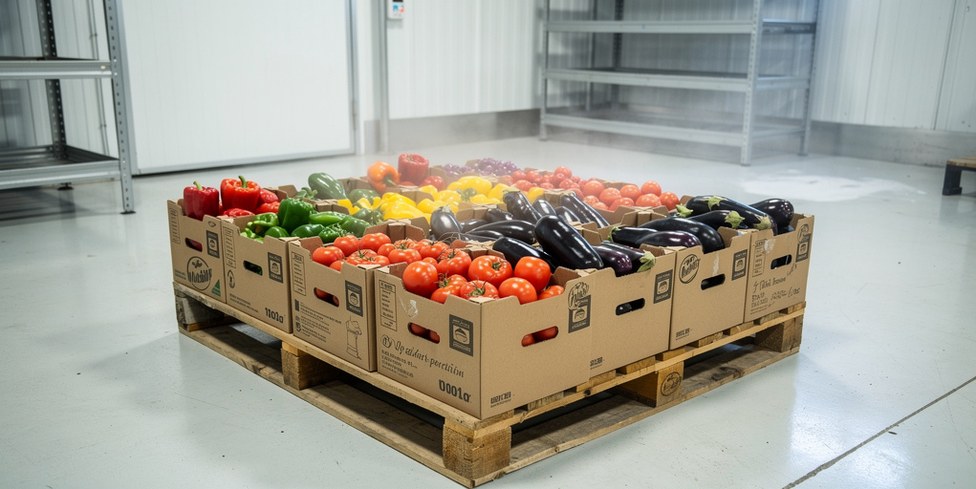
Food shipments to the EAEU: release depends on a valid declaration of conformity, and the declaration depends on the standards cited in your test reports
Labelling: TR CU 022/2011 and standard references on your packaging
Two documents are often confused here. Safety requirements are set by TR CU 021/2011, while label requirements come from a separate regulation, TR CU 022/2011 «Food products in respect of their labelling»: name, composition, quantity, date of manufacture, shelf life, storage conditions, manufacturer and importer, nutritional value and the single conformity mark (EAC).
The updated list of standards for the 21st regulation does not change any labelling requirement. But if your packaging artwork or the specification annexed to the contract names the standard the product is made to, and that standard has been replaced by an interstate one, the reference is best updated before the next print run — reprinting labels takes longer than editing a contract annex, so start with the artwork.
| Situation | Risk for your shipment | What to do |
|---|---|---|
| Your buyer's declaration is already registered and shipments are running | Questions about the test reports when the declaration is renewed or re-issued | Ask the buyer which standards are named in the declaration and the reports, and compare them with the Board decision |
| A new declaration is planned in the coming months | Reports based on standards being removed will be out of date by the registration date | Agree with the buyer and the laboratory now which standards the testing will follow, and plan the sample dispatch around it |
| The test report cites a national standard of an EAEU country (GOST R, STB, ST RK) | That standard may be one of the three removed | Check it against the decision and move to the interstate GOST if needed |
| Your standard has been restated in a new edition | Test methods or parameters may have changed, and your product may need re-testing | Obtain the current edition through the laboratory and compare it with the previous one |
| The standard is printed on the label or written into the contract | An outdated reference in the labelling and in the specification | Update the artwork and the annex to the contract |
| A batch is already in transit and the new declaration is not ready | The goods wait at a temporary storage warehouse while the paperwork is completed | Time the sailing so the declaration is registered before arrival, not after |
What the exporter should do
- Ask your buyer in Russia for the list of your products covered by TR CU 021/2011, with the declarations and test reports in force for each of them.
- Wait for the official publication of the Board decision and record the date the changes take effect — 180 calendar days after publication.
- Compare the standards named in your specifications, labels and contract annexes with the decision: which are added, which are removed, which are restated.
- If you find a match, agree with the buyer and the laboratory which standards the testing for new and renewed declarations will follow.
- Plan the sample dispatch as a separate mini-shipment: production date, sampling, export paperwork for the samples, transit time and testing time.
- Time your commercial shipments so that a container does not arrive while the declaration is still being registered.
- Update the packaging artwork and the specification annexed to the contract if they reference a standard being removed.
- Keep your manufacturing, storage and transport conditions documented — the regulation applies to these processes as well, not only to the finished product.
Frequently asked questions
Does my buyer have to re-issue a declaration of conformity that is already registered?
The change to the list does not in itself require a registered declaration to be re-issued. The question arises when it is renewed or a new one is drawn up: the testing and the references to standards must match the edition of the list then in force.
From what date do the new standards apply?
The changes take effect upon expiry of 180 calendar days from the date the EEC Board decision is officially published. Until then, the previous edition of the list applies.
Do the labelling requirements change?
No. Labelling is governed by TR CU 022/2011, which this decision does not touch. The only thing to check is the standard reference on the label, if there is one.
Will this hold my container at the border?
At release, customs checks that a valid conformity document exists for the goods being imported. If the declaration is properly issued, the change to the list has no effect on release. A shipment is delayed when the new declaration is not ready by the time the batch arrives — for example, because the product had to be re-tested. Until it is ready, the goods sit at a temporary storage warehouse and the costs grow.
Who registers the declaration — the manufacturer or the buyer?
The applicant must be a party established in the EAEU: your importer or your authorised representative. You supply the samples, the specification, the composition data and confirmation of the standard the product is made to.
My product is made to a national standard of my own country, not a GOST. Does this concern me?
Only through the test report. The removals affect national standards of EAEU countries. If your report cites one of them, it needs checking; if the testing was done by methods that remain in the list, nothing changes for you.
Summary
The EEC Board has updated the list of standards for TR CU 021/2011: three interstate standards added, three national ones removed, three documents restated in a new edition. The changes take effect 180 calendar days after the decision is published. For an exporter of food products this means checking which standards appear in the test reports, specifications and labels, agreeing the testing basis with the buyer and the laboratory, and timing sample dispatch and sailings so that no container arrives before the declaration is registered. Send us a request and we will go through your specific shipment.
We handle certification and customs clearance of food products in Russia so your shipment is released on schedule.
Read also:
- Russian Decree No. 867 explained: what changed on 9 August for goods subject to mandatory conformity assessment — and what your buyer will now need from you
- Lemon juice with a preservative falls under HS heading 2009: EEC decision of 04.08.2026 and what your Russian buyer will now ask for
- iCustoms launches a blog on vc.ru: the customs questions your Russian buyer will ask you next
- Toys for Russia: new EAEU marking rules your buyer will check before customs