

Freight Cost to Russia: What Drives the Price of Your Shipment
Your customer in Russia asks three forwarders to quote the very same pallets, and comes back with three different numbers, the highest almost double the lowest. Then the conversation turns to you: can the price be brought down, can the boxes be smaller, can the documents come sooner. None of this is anyone being greedy. A freight price is not a figure taken out of the air, it is a sum of separate cost items, and a surprising number of them are decided at your dock, not at the border. Here is what shipping cost to Russia and the CIS actually depends on, and where you as the sender can move the needle.
Contents
- What the delivered price is made of
- Weight and volume: what the carrier really charges for
- Route and mode of transport
- Cargo type and Incoterms
- Add-on costs and the customs side in Russia
- Seasonality and the market: why rates jump
- What your buyer will now ask you for
- How to cut the cost without losing quality
- Frequently asked questions
What the delivered price is made of
The main mistake when judging a delivery offer is to look at a single figure in the quotation. In reality the price is assembled from several blocks, and understanding that structure immediately explains why offers differ so much and where there is room to save.
Broken down, the final sum normally contains five groups of costs. First, the freight itself, the payment for carriage, which depends on weight, volume, distance and mode of transport. Second, handling operations: loading, unloading, transhipment, storage. Third, customs payments: duty, VAT and the customs fee. Fourth, insurance and packing. Fifth, the services of whoever organises the shipment. Change any one of these blocks and the final figure changes with it.
This is why comparing carriers on the freight rate alone is close to meaningless: with one of them cargo handling and clearance are already inside the price, with another they are separate lines that surface later. It also matters to you as the exporter, because whichever block your buyer feels is too expensive, the request to fix it lands on your side of the deal: repack it, re-declare it, ship it earlier. Below we go through each factor that moves the price and show where the sender has leverage.
Weight and volume: what the carrier really charges for
Intuitively it seems you pay for weight: the heavier the cargo, the dearer the delivery. In practice the carrier charges on the greater of two figures, the actual weight or the so-called volumetric weight. For many shippers that rule turns into a surprise on the invoice.
Volumetric weight is the conversion of the cargo dimensions into notional kilograms. The logic is simple: a light but bulky carton takes up space in a truck or an aircraft that could have been given to dense cargo. So volume is charged for too. It is calculated with a formula in which length, width and height in centimetres are multiplied and divided by a set factor. For air freight the divisor is normally 6000; road and sea carriage have their own factors for converting volume into weight.
What follows from this in practice. If the goods are dense, machine tools or metal for instance, you will be charged on the actual weight. If they are light and bulky, say cushions, packing materials or plastic containers, the charge is calculated on volume and the real weight plays no part at all. The direct conclusion for the shipper: spare air inside your cartons is money thrown away, and tight packing without voids genuinely lowers the bill your customer receives.
The most common money trap in delivery is volumetric weight, and it is created at the packing line, not at the border. The buyer weighs the goods on paper, estimates the price by weight, and then sees a higher invoice because the carrier charged on volume. Always state the exact dimensions of every package in your packing list, calculate the volumetric weight before the booking, and confirm with the forwarder which weight the tariff will be based on. For light and bulky goods it is volumetric weight that sets the price.
Route and mode of transport
Mode of transport is the single biggest lever on price. The same consignment can be moved fast and expensively or slowly and cheaply, and the difference is often several times over.
Air delivery is the most expensive, and it is chosen when deadlines are burning or the goods are valuable and compact. Sea freight has the best rate but the longest transit, and it is ideal for large, heavy consignments. Between them on both price and time sit road transport and rail, which give a reasonable balance, especially for containerised cargo. The choice comes down to a priority: which matters more on this particular order, speed or economy.
The route matters too, and not only through its length. What counts is how many borders and countries the cargo passes: every extra transit means new charges, transhipment and a risk of delay, and delay is money. A direct routing is almost always cheaper than a complex chain of many legs. That said, multimodal schemes sometimes save the day, with the cargo covering the main distance by the cheap mode and the short final leg by a faster one. That is how the strengths of different modes are combined into the best-priced link. For you as the sender this is the point at which the port or airport of departure you offer stops being a formality: naming a departure point that sits on a direct service is worth more to your customer than a small discount on the goods.

The price of delivery to Russia is an itemised estimate, not a single freight rate — and almost every line of it starts at the shipper's dock
Cargo type and Incoterms
Not every consignment travels on the base tariff. If the goods require special handling, surcharges are added to the price, sometimes substantial ones.
- Dangerous goods under the ADR classification require special vehicles, permits and particular packaging, and that costs more than ordinary carriage.
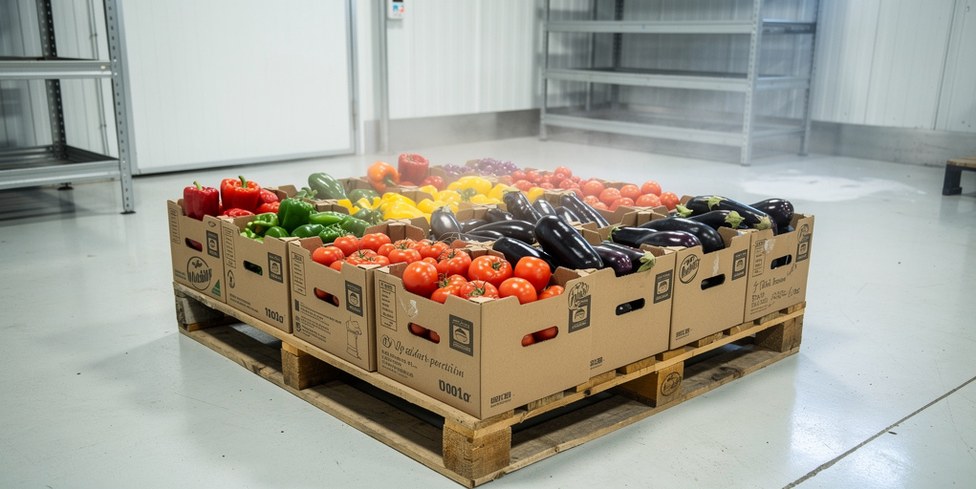
- Perishable goods travel in a reefer with temperature maintenance, and hiring such equipment costs more.
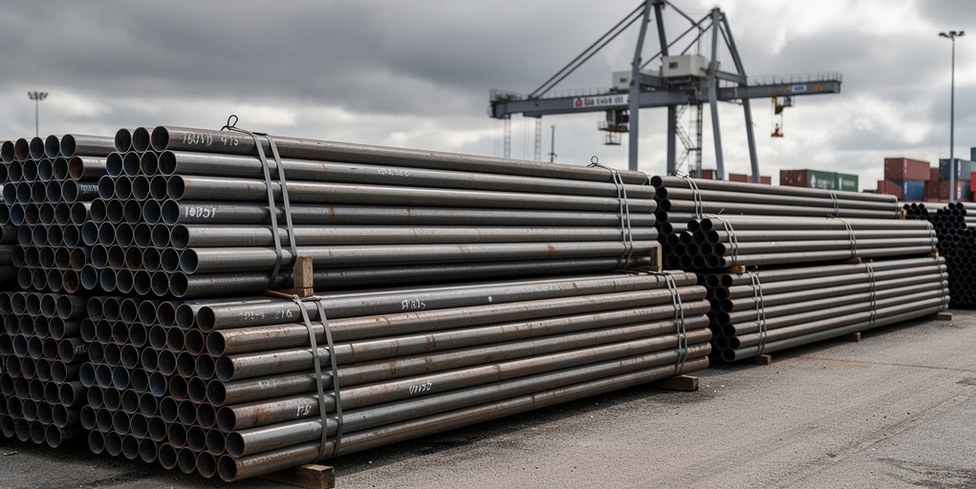
- Out-of-gauge and heavy-lift cargo requires separate equipment and sometimes route approval, which also enters the estimate.
- Fragile cargo needs reinforced packing and careful handling, and that is priced in.
The Incoterms rules deserve a separate word, because they decide exactly which stretches of the journey and which costs fall on you. Under the EXW group the buyer collects the goods straight from your warehouse and pays for the whole logistics chain, from the first mile to customs clearance. Under DDP it is the opposite, the seller takes on almost everything including duties, but that care is already built into the price of the goods. There is no universally cheap option here: the only question is whether delivery is paid for directly as a separate line or through the price of the goods. Knowing precisely what your terms include matters so that the same stretch is not paid for twice, and so that a quotation you send as EXW is not later compared against a competitor's DDP price as if the two were the same number.
Add-on costs and the customs side in Russia
Besides freight, a turnkey delivery price includes a number of other compulsory items. They are often underestimated at the start, yet together they visibly affect the budget of the shipment, and therefore the price your buyer is willing to pay for the goods themselves.
| Cost item | What it depends on |
|---|---|
| Freight (carriage) | Mode of transport, distance, weight and volume of the cargo |
| Loading and unloading | Weight, handling method, equipment required |
| Temporary storage warehouse | Length of storage and cargo weight, per each 100 kg |
| Customs payments | Duty, VAT at 22 per cent, customs fee |
| Insurance | Value of the goods, usually from 0.1 to 0.5 per cent |
| Organisation services | Complexity of the shipment and the set of tasks |
The customs payments stand apart, and in 2026 there are important changes there. The standard VAT rate rose from 20 to 22 per cent on 1 January 2026, while the reduced 10 per cent rate on socially significant goods remains. The customs fee for clearance has gone up as well: under the updated rates it starts at 1,231 roubles for small consignments and reaches 73,860 roubles for consignments worth more than 10 million roubles. This is not a broker's fee but a compulsory charge for the customs operations themselves. Your buyer pays these amounts, not you, but they land in the same landed-cost calculation as your invoice price, which is why importers push back hard on freight and packing before they touch anything else. Calculating and correctly declaring these payments is the job of a customs clearance service.
The same group includes storage at a temporary storage warehouse. Until the goods are released they sit at such a warehouse, and that is charged for every 24 hours and every 100 kilograms. The longer clearance drags on, the more accumulates, so the speed at which documents are prepared is also a matter of money. And here the clock starts on your side: a declaration cannot be lodged from a set of documents you have not sent yet.
Seasonality and the market: why rates jump
The cost of carriage is not static, it breathes with the market. The same route in a quiet month and in the high season can cost noticeably different amounts, and that is normal market behaviour rather than a quotation error.
Demand puts the strongest pressure on rates. The classic peaks are the period before Chinese New Year, when everyone tries to get goods out before the factories stop, and the pre-holiday season at the end of the year, when cargo flows are at their maximum. In those weeks there is little free space on transport and prices go up. Add Golden Week in early October, when China stops for almost a week, and sales events such as 11 November that accelerate shipments. If your dispatch falls into one of these windows, expect both a higher rate and a possible shift in transit time, and warn your customer about it before the purchase order is confirmed rather than after the booking is refused.
More general things play a part too. Fuel prices move carriers' fuel surcharges. The exchange rate matters as well: freight is often calculated in foreign currency while the final figure is converted into roubles, so currency swings feed straight into the rouble price of delivery. Neither you nor your buyer controls this, but both of you can allow for it by planning orders in advance and not walking into the most expensive season without a reason.
What your buyer will now ask you for
Everything above turns into three practical demands that a Russian importer will put to the supplier, and they are worth meeting before they are asked.
- Exact figures per package. A packing list with length, width, height and gross weight for every box or pallet, not an average for the consignment. These are the numbers the chargeable weight and the whole freight quotation are built on, and a rough estimate here becomes a surcharge later.
- A consistent document set. The commercial invoice, contract, packing list and transport documents must agree with each other on the description of the goods, quantity, value and delivery terms. A discrepancy between papers is one of the ordinary reasons a declaration is not accepted at once, and every extra day of that sits on the storage meter at 100-kilogram increments.
- Documents sent ahead of the cargo. Scans dispatched at the moment of shipment let the broker prepare the declaration while the goods are still in transit, so clearance starts on arrival rather than after it. This is the cheapest thing an exporter can do for a shipment, and it costs nothing but attention.
Beyond that, ask your buyer early whether the goods need permits or conformity documents for the Russian market, and whether product data, technical files or samples are needed from you as the manufacturer. Preparing that in parallel with production is a normal part of a certification project; discovering it when the truck is already at the border is not. The pattern is the same for dangerous, temperature-controlled or oversized cargo: the permits and special equipment mentioned above have to be arranged before the booking, not during it.
How to cut the cost without losing quality
The good news is that most of the price factors can be influenced. Here are the working ways to make delivery cheaper without sacrificing transit time or the safety of the goods.
- Consolidate shipments. Several small consignments are cheaper collected into one groupage load and cleared together than moved separately. That saves on freight and on charges alike. If you ship to the same customer every few weeks, agreeing a consolidation schedule is usually worth more than a discount.
- Match the transport to the task. Do not pay for air freight where sea or rail will comfortably make the date. Urgency costs more, and there is no sense in overpaying for it needlessly.
- Fight the air in your packing. Tight stacking without voids lowers the volumetric weight, and with it the price for light, bulky goods.
- Build in a time buffer. When the deadline is not burning, cheaper options are available. Planning to the last day removes that choice and forces expensive express delivery.
- Count the full cost, not one rate. The cheapest freight offer often grows extra charges and ends up dearer than an honest all-in quotation.
And the main systemic lever: running the carriage and the clearance through a single operator. When one contractor answers for the whole journey, you do not pay double mark-ups at the handover points and you do not lose money on idle time caused by a mismatch between the carrier and the broker. It is simpler to manage and more predictable for the budget of the entire shipment, and for an exporter it means one point of contact instead of a chain of explanations across a border and a language.
Frequently asked questions
What has the greatest effect on the cost of carriage?
The strongest influences on price are the mode of transport, the weight and volume of the cargo, and the distance. Air is the most expensive, sea the cheapest, road and rail sit in between. After that come the nature of the goods, the Incoterms rules, the accompanying costs of handling and storage, customs payments and seasonal demand. The final price is the sum of these factors, not a single freight rate.
What is volumetric weight and why is it charged for?
Volumetric weight is the conversion of the cargo dimensions into notional kilograms. Light but bulky cargo occupies a lot of space, so the carrier charges on the greater of two figures, the actual or the volumetric weight. It is calculated from length, width and height divided by a set factor. For light, bulky goods it is volumetric weight that determines the price, and the real weight plays no part, which is why your packing dimensions are a commercial decision and not just a warehouse one.
Why is the cheapest rate not always the best deal?
Because a low freight rate often excludes handling, storage, clearance and insurance, and those items surface as surcharges along the way. What looked attractive at first turns out dearer than an honest all-in offer where every cost is named up front. What should be compared is the full turnkey delivery cost, not a separate figure for carriage.
What can an exporter do to reduce delays at the Russian border?
Send the document set as soon as the goods are shipped, keep the invoice, contract, packing list and transport documents consistent with one another, give exact dimensions and weights for each package, and clarify in advance whether the goods require permits or conformity documents. Clearance time is paid for in daily storage charges per 100 kilograms, so documents that arrive early and match each other are the cheapest form of insurance against a delay.
Summary: a delivery price is an estimate, not a price tag
I always compare the cost of carriage to an estimate rather than a price tag. A newcomer sees one final figure in an offer, while I see the lines: freight, handling, storage, charges, insurance. And I know where each of them came from and which of them can be moved. In forty years in logistics I have become convinced that almost any delivery can be made cheaper without losing quality, provided you take it apart into those lines and work on each one.
My advice to a supplier is simple. Do not let the conversation with your customer turn into a hunt for the lowest freight rate; look at the full cost of the shipment to their warehouse. Confirm which weight the tariff will be based on, fight surplus volume in your packing, and do not pay for urgency where you do not need it. Try to step around the expensive seasons in advance by agreeing order dates with a margin. And send your documents the day the goods leave, because from that moment the clock at the temporary storage warehouse is running against both of you.
One more thing worth remembering: logistics torn between different contractors is almost always dearer than a single chain. When one operator handles both the carriage and the clearance, the extra mark-ups and the idle time at the handover points simply disappear. We are ready to cost out your shipment as a whole, from your factory gate to your customer's warehouse, and to propose the best-priced route. Request a consultation and we will break down the delivery cost for your specific cargo.
Send us the dimensions, weight and Incoterms of your next consignment and we will calculate the full delivered cost to your buyer in Russia.
Read also:
- Baltic Grain Transit Ban: What the Route Shift Means for Your Shipment to Russia
- FTS register of customs representatives: how to check your buyer's broker and keep your shipment moving
- Shipping to Russia: how your logistics choices decide what happens at customs
- Dangerous Goods, Medicines and Food Shipped to Russia: What Your Buyer Will Ask You For