

Russia's Digital Customs: What Online Clearance Means for Your Shipment
Customs clearance in Russia used to be a physical process: a trip to the customs post, folders of paper, queues, and a run between government agencies for certificates. The internet has removed almost all of it. Today the importer deals with customs through an online account, pays online, and government agencies exchange data among themselves. That may sound like the buyer's side of the deal — but the shift moved the bottleneck upstream, to the documents you issue as the shipper. Here is what digital clearance in Russia actually changes for your shipment.
Contents
- Clearance without a visit: what the internet changed
- Your buyer's customs account and what it pulls from you
- The electronic signature on the Russian side
- Duty payments no longer hold up the release
- Single window: permits checked electronically
- Remote release: goods at the border, declaration elsewhere
- What this means for your shipment
- Preparing a shipment for digital clearance
- Frequently asked questions
Clearance without a visit: what the internet changed
The main thing the internet brought to customs is remote interaction. Every step used to be tied to a place: documents could be filed only at one specific post, duties could be paid only through that post's account, a certificate could be obtained only at the issuing agency. All of it cost time, travel and paper.
Now there is a single entry point, and it is a browser. The declaration is filed online, payments go through online, status is visible online, and agencies exchange information among themselves without the importer taking part. In effect, the movement of paper and people has been replaced by the movement of data — and that data starts life in your invoice, your packing list and your transport documents.
The scale of the change is significant. The electronic declaration became effectively the only accepted form in Russia more than ten years ago, and online services have kept growing since: payments, live statuses, interagency exchange, remote release. Customs clearance in Russia today is largely a matter of feeding clean data into these digital tools. Which means the quality of your document set is no longer a formality on the far end of the chain — it is the input the whole procedure runs on.
Your buyer's customs account and what it pulls from you
At the centre of the system is the personal account of a foreign trade participant on the Federal Customs Service website. It is a free online service through which a Russian company handles almost all of its customs business. Access is granted through the state services portal or an electronic signature.
What it covers:
- filing declarations and documents with no paper exchange, using templates for import, export and transit
- advance notification that a consignment is arriving
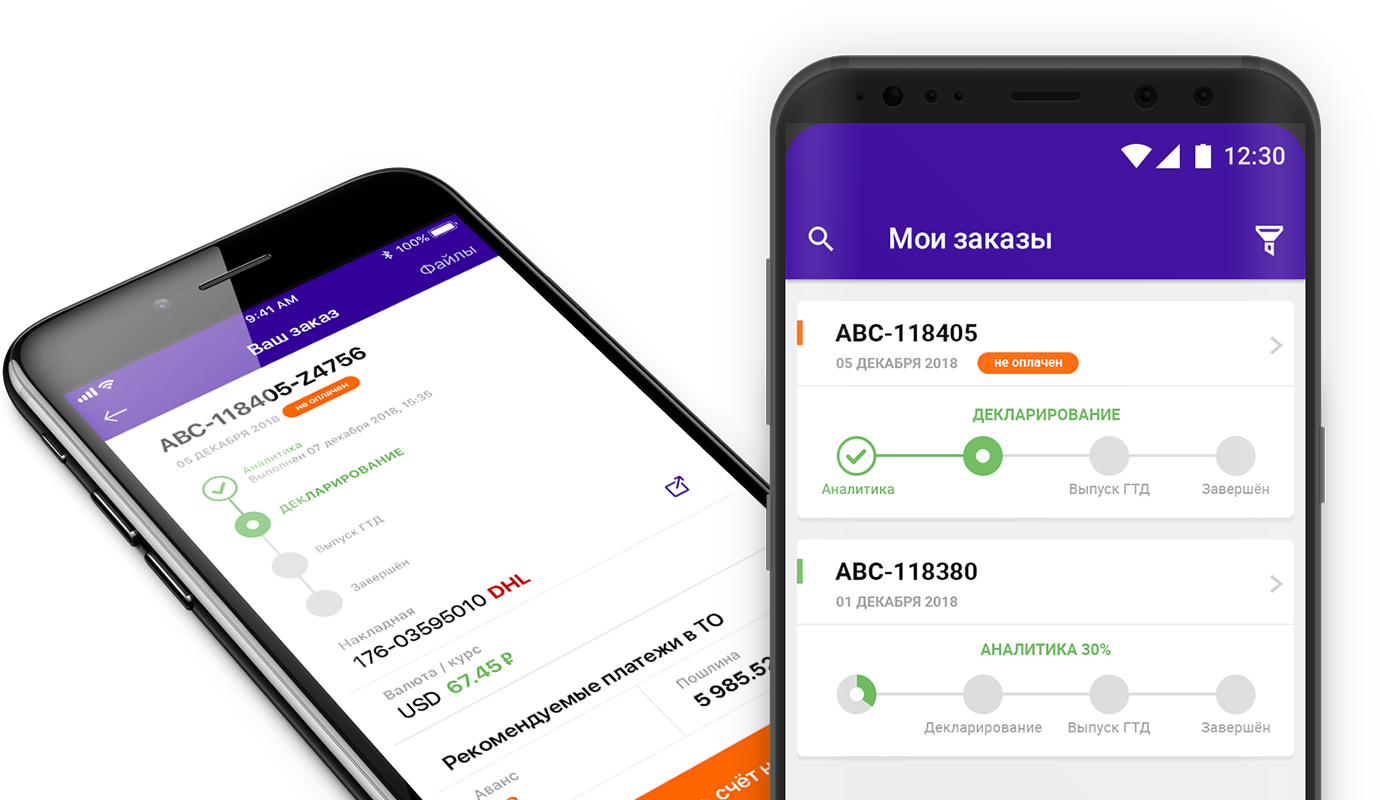
- real-time declaration status: which stage the clearance has reached
- management of the unified customs account and payment control
- checking outstanding duties and penalties
- an electronic document archive and change notifications
Two of those lines concern you directly. First, declarations are completed from templates and scanned copies of the contract, invoice and certificates are attached to them — those scans are your documents, read by a customs officer on a screen. If a description is vague, a value is inconsistent or a stamp is illegible in the scan, the problem is yours to resolve, remotely, while the cargo sits still.
Second, advance notification is filed before the goods reach the border. In practice that means your document package has to be in the buyer's hands earlier than the truck, container or aircraft — not on the day of arrival.
The rest of the account works in your favour. Because status, the payment ledger and the searchable electronic archive are all in one place, your buyer can tell you exactly where the consignment stands without phoning anyone, and can forward you a customs query the same day it appears.
The electronic signature on the Russian side
Every legally meaningful online action rests on an electronic signature. It confirms who sent the document and replaces a wet signature with a company seal. Without it, a declaration or application has no legal force.
Signatures are issued by accredited certification authorities. Some applications, such as a refund of advance payments, can even be signed from a phone through a dedicated state app. Once the signature is set up, the whole toolkit opens up.
Why this matters to a supplier: the signature is not a one-off formality but a working key. It has an expiry date, and it is tied to one named person at one company. If your buyer's certificate lapses, or the responsible employee leaves and the signature has not been reissued, the declaration cannot be filed — even if your goods are already at the border and every document is perfect. For a first shipment with a new counterparty, it is a fair question to ask during the pre-shipment call: who signs, and is the certificate valid through the arrival window?

Customs paperwork now travels as data: the invoice you issue goes straight into an electronic declaration in Russia.
Duty payments no longer hold up the release
Payments moved online too, and the key instrument here is the unified customs account. It works as a wallet on the customs side: the importer tops it up in advance, and duties, taxes and fees are debited from it.
This used to be painful. The account was tied to a specific customs post, its code went on the payment order, and an error in that code sent the money nowhere. A company clearing goods in several cities had to run a separate account and separate reconciliation statements for each post.
The unified account removed all of that. Money is transferred under a single code and can be used at any customs office in the country. The account opens automatically with the first payment, and the balance, three years of transaction history and every debit are visible online, refreshed every fifteen minutes.
The effect on speed is direct. Because customs sees the funds in real time, release no longer waits for money to physically arrive and be reconciled by hand. A buyer who keeps a reserve on the account never stalls on the financial step. For you, the practical conclusion is uncomfortable but useful: money is rarely the reason a shipment sits at the border any more — documents are. When something is stuck, the cause is far more likely to be a discrepancy in your paperwork than a payment issue on the Russian side.
Single window: permits checked electronically
The least visible but most important technology is electronic interagency exchange. Imports often involve more than customs: sanitary control, veterinary supervision, certification. The importer used to carry paper certificates between these bodies and then on to customs.
Now the single-window principle applies: information is submitted once, and government agencies exchange it among themselves through a unified interagency system. Customs requests what it needs from other authorities electronically and receives it online. In Russia this mechanism already covers most foreign trade procedures and links customs with certification and control bodies.
In practice it looks like this. Sanitary, veterinary or phytosanitary control applies to categories such as food products, cosmetics and machinery and equipment. Customs sees the permit data from the supervising agencies in the system itself; nobody has to walk a paper original from one window to another. The principle that data already held by one authority cannot be demanded again is written into Russian law on state services.
For the exporter this has a very concrete consequence. The permits and certificates your buyer registers are issued on the basis of what you provide: product composition, technical specifications, manufacturer details, test samples. Those documents now need to exist before the shipment, not after it — because customs will look for the corresponding entry in the system at the moment the declaration is filed.
Under the single window, data is entered once and then propagates to every system at once — and so does an error in it. A mismatch between your invoice, packing list and transport document no longer waits for someone to compare papers by hand: it surfaces the moment the declaration is submitted, with the cargo already at the border. The cheapest place to correct your documents is your own office, before the goods leave it.
Remote release: goods at the border, declaration elsewhere
One more convenient technology is remote release. The declaration is filed with one customs body while the goods are held at another, near the border. The two interact electronically, and the declarant does not need to be present at the release point. Clearance has been concentrated in specialised electronic declaration centres, which made the process faster and more standardised.
A whole ecosystem of online services has grown up around customs as well. Commodity codes under the Russian HS nomenclature can be checked online, duties estimated in a calculator, counterparties and foreign trade status verified. Documents move to and from banks, carriers and partners through electronic document exchange, without couriers or originals sent by post. It all comes together on one screen.
What this changes for a shipper is the shape of a problem. Nobody walks over to the warehouse to look at your box. If the officer has a question about the description, the value or the origin of the goods, it arrives as an electronic query, and the answer has to come back as a document — usually from you. The declaration is being processed hundreds of kilometres from your cargo, but every hour of that correspondence is an hour your container spends accruing storage and demurrage. A named contact on your side who can produce a corrected invoice or a technical sheet the same working day is worth more than any amount of paperwork sent afterwards.
What this means for your shipment
The benefits are obvious and they reach you as well. Clearance that used to take days and journeys now runs from an office. Less paper, fewer intermediaries, transparent status and controlled payments. The entry threshold into foreign trade has dropped noticeably, which is one reason smaller Russian buyers are now able to import directly.
But every online tool has an input, and most of those inputs come from the sender. Here is how the two sides line up.
| Tool | What it does online | What it needs from you |
|---|---|---|
| Foreign trade personal account | Filing of declarations, live status, archive | Legible scans of contract, invoice and certificates, sent ahead of the cargo |
| Unified customs account | Payment and balance from anywhere in the country | Invoice values and delivery terms that match the contract exactly |
| Single window and interagency exchange | Agencies exchange permit data themselves | Composition, specifications, manufacturer data and samples for certification |
| Remote release | Declaration in one place, goods in another | A contact who can answer a document query the same day |
| Paperless exchange with partners | Documents move without couriers or postal originals | Clean scans and one consistent set across all documents |
The main caveat is simple. All of this convenience only switches on when the digital side is properly set up: a valid electronic signature, an open customs account, accurate data. And transparency runs both ways — what is visible to the importer is equally visible to customs, so any inconsistency shows up immediately rather than quietly passing through.
There is also the question of competence. The interfaces are not always friendly and the cost of a mistake in a declaration is high. That is why many companies, especially at the start, do not try to master it all themselves but bring in a customs representative who takes on the technical side: filing, payments, dealing with the systems. If your buyer in Russia is new to importing, suggesting a broker is not a criticism of them — it is the normal route, and it protects your delivery schedule as much as theirs.
Preparing a shipment for digital clearance
- Agree the commodity code early. Send the product description and technical data to your buyer before production is finished, so the code and the applicable requirements are confirmed while there is still time to react.
- Check whether the goods need permits. Food, cosmetics, equipment and similar categories fall under sanitary, veterinary or phytosanitary control. Certification takes time and starts with your documents and samples.
- Make the document set internally consistent. Contract, invoice, packing list and transport document must agree on names, quantities, weights, values and delivery terms. One figure out of step is enough to trigger a query.
- Send scans ahead of the cargo. Advance notification is filed before arrival, so the buyer needs readable copies in advance, not on the day the truck reaches the border.
- Confirm the Russian side is ready. Valid electronic signature, funds on the customs account, permits registered in the system. A short checklist call prevents a long wait.
- Nominate a responsive contact. Someone on your team who can issue a corrected document or a technical sheet within one working day while the declaration is under review.
Frequently asked questions
Do I still need to courier original documents to Russia?
For the customs procedure itself, far less than before. Declarations are filed with scanned copies attached, and documents move between banks, carriers and partners through electronic exchange rather than by post. Agree with your buyer in advance which originals, if any, they still need and when.
When should my document package reach the buyer?
Before the goods reach the border. Advance notification of arrival is filed ahead of time, and the declaration is prepared from your documents, so anything that arrives with the cargo arrives late.
What is most likely to delay my shipment at the border now?
A discrepancy in the data. Because information is submitted once and shared across agencies, an inconsistency between your invoice, packing list and transport document is visible immediately. Payment is rarely the obstacle, since customs sees the buyer's account balance in real time.
Who obtains the certificates and permits, me or the buyer?
They are registered on the Russian side, but on the basis of what you supply: composition, specifications, manufacturer details, samples. Customs then sees the permit data in the system without paper originals being carried between offices.
Can clearance be handled entirely online?
In most cases yes. Declarations, payments, dealings with supervising agencies and status tracking all run through the personal account with an electronic signature. Physical contact remains mainly at the inspection stage, if an inspection is assigned.
Summary: online saves time for those who come prepared
The internet did not abolish customs, it moved customs into a browser window. In my working life I have watched a procedure that took days and journeys compress into a few actions on a screen. But the other side of that coin is this: when everything runs on data, the data has to be right the first time. There is no longer a paper stage where an inconsistency gets quietly smoothed over.
My advice to suppliers is straightforward. Treat your document set as a technical component of the delivery, not as an accounting afterthought. The commodity code, the description on the invoice, the declared value, the certificates — these are what the Russian system reads, and they either match or they do not. Exporters who get this right have their goods released while the ones who do not are still answering queries by email.
And remember that your buyer's digital readiness is part of your delivery time, whether you like it or not. If the Russian side would rather not deal with the technical layer, it can be delegated. We handle electronic declaration, duty payments and communication with the supervising agencies, and we work with the supplier directly on documents when that speeds things up. Request a consultation and we will get your shipment through the digital side without either party losing days at the border.
Shipping to Russia or the CIS? iCustoms handles the electronic declaration, duty payments and agency approvals on the Russian side, so your cargo does not wait at the border.
Read also:
- Grain export subsidies in Russia: what the new rail and terminal map means for your shipment
- Choosing a Customs Broker in Russia: What It Means for Your Shipment
- DOPP Status and Duplicate DOPPs: How to Report Them on the Indirect Tax Return for Imports from the EAEU
- Medical Devices in the EAEU as of October 28, 2026: Authorized Bodies May Suspend Approval Without a Manufacturing Inspection Report