

Shipping to Russia: how to protect your delivery time and your cargo
Two suppliers ship identical goods to Russia from the same plant. The first consignment is on the buyer's shelf in Moscow three weeks later; the second spends two months on the road and arrives short. The difference is not luck, and it is not even the mode of transport — it is what was done before the goods left the factory gate: which documents were prepared, how the cargo was packed, and who is legally answerable for it in transit. Below is how the delivery clock is actually built up, where consignments lose time and money, and what your Russian buyer will now ask you for at each stage.
Contents
- Where the weeks actually go: a stage-by-stage table
- Your paperwork has to be finished before the cargo moves
- The four-hour rule: what clean declaring gives your shipment
- Routes and seasonality: when each mode is actually faster
- Packing and consolidation: damage happens at transshipment
- Insurance: a real policy versus a forwarder's promise
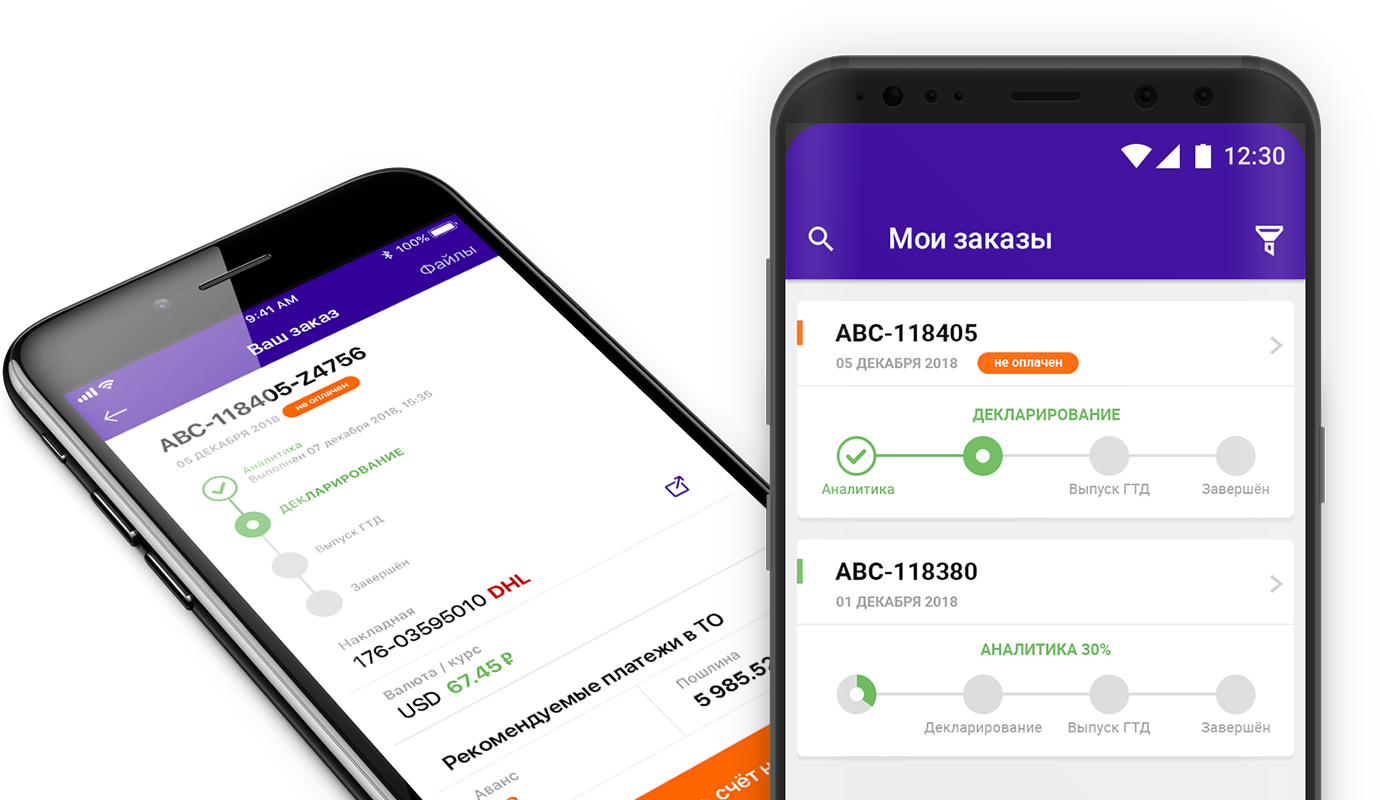
- Visibility in transit: tracking and control points
- Pre-shipment checklist for the shipper
- Frequently asked questions
Delivery speed is usually discussed in terms of transport: sea is slow, air is fast. In practice the transit leg is only part of the clock. A consignment can wait a week at a consolidation warehouse for other cargo to fill the truck, stand another week at the border during peak season, and then spend several days at a temporary storage warehouse in Russia because of one missing document — a document that, more often than not, is issued by the exporter.
Cargo safety works the same way. Goods are lost and damaged not only in transit, but at transshipment points, through careless packing, and inside grey schemes where nobody is legally responsible for the shipment at all. Both problems are decided on your side of the chain, before loading.
Where the weeks actually go: a stage-by-stage table
A full delivery cycle to Russia runs through six stages, and each has its own typical delay. Here they are together with the part you, as the shipper, actually control.
| Stage | Where time is lost | What the shipper controls |
|---|---|---|
| Production and release for shipment | The plant misses the dispatch date | A realistic ready date in the contract and an honest warning if it slips |
| Consolidation | Cargo waits at the warehouse for other consignments | Handing over to a carrier with a fixed departure schedule |
| Export clearance in the country of origin | The seller has no export entitlement | Export licence or registration confirmed before the contract is signed |
| Border crossing | Queues in peak season | Choosing the crossing point for the season, booking slots in advance |
| Russian customs | Requests for documents, physical inspection | A complete, self-consistent document set sent to the buyer in advance |
| Last mile | Cargo waits to be collected from the warehouse | Accurate ETA updates so transport is booked before arrival |
Your buyer plans backwards from the shelf: they fix the date the goods must be in their warehouse, then subtract customs clearance, transit, consolidation and production. The number that falls out of that calculation is the date they will hold you to — the factory-ready date. If you can give a firm ready date early, the buyer can still choose a cheaper mode; if the date is vague, they either pay for air freight or move the order elsewhere.
Your paperwork has to be finished before the cargo moves
The most expensive mistake in this trade sounds harmless: "we will sort the documents out while the goods are on the way." The container then reaches the border before the invoice is worded correctly, before the packing list matches the actual contents, before the permits are issued and before the customs code is agreed. Every missing document means idle time at a temporary storage warehouse, and that is billed by the day.
The practical rule is that four things are closed by the moment the cargo leaves your plant.
Classification data. The declaration in Russia is filed under the EAEU commodity nomenclature (TN VED). Your buyer cannot invent the code — it follows from material, composition, function and technical parameters, and that information comes from you. Send the technical description, specification and datasheets early; the code determines both the duty rate and the list of permits required, so a late or vague description turns into either an overpayment or an additional assessment after release.
Permits. Conformity certificates, declarations of conformity and exemption letters are issued on the Russian side, but the input is yours: samples, technical documentation, manufacturer's letters and production details. Ask your buyer which of them certification requires for your product group and supply them before shipment, not after arrival.
Commercial documents. Invoice and packing list must be reconciled against what is physically in the boxes.
Transport documents. Prepared by the carrier for the route actually chosen.
Check consistency across the set separately. A weight in the packing list that differs from the waybill, two different spellings of the consignee, invoice amounts rounded "by eye" — each of these is a reason for customs to request further documents and open a deeper check. These discrepancies originate in the exporter's office, and they are the cheapest delays in the whole chain to eliminate.

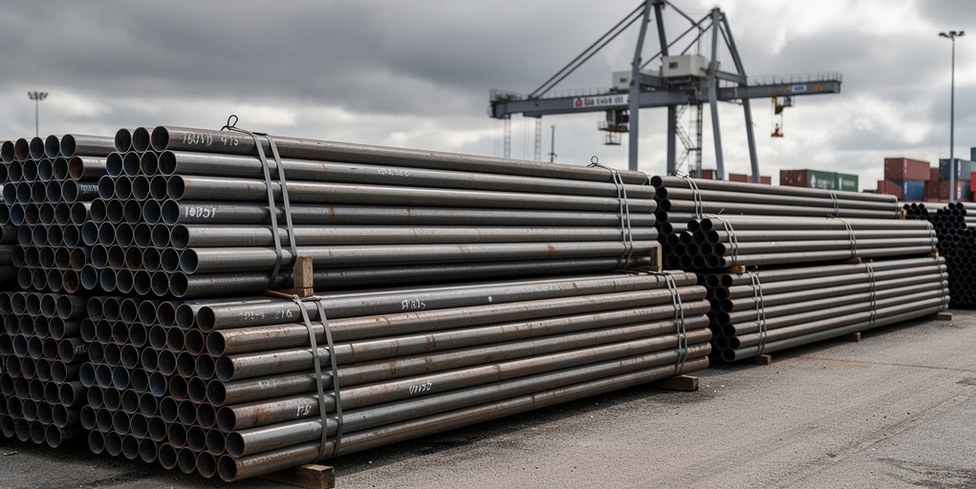
Cargo bound for Russia: the clock starts long before the container reaches the border
The four-hour rule: what clean declaring gives your shipment
Under the EAEU Customs Code, release of goods must be completed within four hours of registration of the declaration — that is the baseline in Article 119. Registration itself is carried out by the customs authority within an hour of filing. If the inspector requests additional documents or orders a physical inspection, the deadline shifts, but even then release is completed no later than the following working day.
In other words, a properly documented shipment clears Russian customs in hours, not in the weeks that sellers of grey schemes like to describe. Consignments with transparent documents and no risk profiles are routinely released on the day the declaration is filed, which is why experienced buyers budget a day or two for customs clearance, not a week.
Two tools speed this up further, and both depend on you. The first is advance declaration: the declaration is filed before the cargo arrives, so by the time the truck or container reaches the border, customs has already processed the data. That is only possible if your document set is complete before departure. The second is electronic declaring through electronic declaration centres, now the standard in Russia, which removes paper handling entirely — again, provided the scans you send are legible and final.
The single deadline that matters for an exporter is not the border date, it is the date your documents reach the buyer. Documents that are complete before loading turn Russian customs into a four-hour formality; documents that follow the cargo turn it into daily storage charges and an inspection.
Against that background, the grey "cargo rate per kilogram" that some intermediaries offer only looks fast. Depersonalised cargo moves outside the queue right up to the first check, and then it is lost in full — no documents, no consignee on record, no compensation. If a counterparty asks you to issue an invoice with an understated value or a generic goods description, understand what is being requested: your consignment is being stripped of its legal identity, and with it of any claim you or your buyer could ever make.
Routes and seasonality: when each mode is actually faster
The baseline transit times to Russia are well known: air freight delivers in 3–10 days, rail in 18–30, road transport in 15–25, and sea freight in 30–55. What matters for your planning is what moves those numbers.
The first factor is season. If you ship from China or through Chinese plants and ports, factories stop for two to four weeks around Chinese New Year, and rates and queues rise across all directions in December and January. There is a second pause at the start of October, during Golden Week. Add the peaks before the 11.11 sales and the year-end season, when containers and slots at border crossings are booked months ahead. A consignment promised for late January is, in practice, a consignment shipped in March.
The second factor is the specific border crossing. The bulk of road and rail traffic into Russia moves through Zabaikalsk and the Kazakh direction, and in peak months the queue at a popular crossing can absorb up to a week. Experienced carriers redistribute volumes between routes in advance and book slots, so when your buyer or forwarder quotes a transit time, ask which crossing it assumes — not just which mode.
When the deadline is tight, the working combination is a split: the main volume travels by rail as the balance of price and speed, while a starter volume for the sales launch flies. The split costs more than a single shipment and less than a missed season — and as the shipper you are the one who has to physically separate and label the two parts, so agree it before packing, not after.
Packing and consolidation: damage happens at transshipment
Most damage occurs not in transit but at transshipment. Consolidated cargo is reloaded three to five times on the way to a Russian warehouse: the consolidation warehouse, the border, sorting, domestic delivery. Every reload is a risk for boxes that the factory packed "as usual" — single-wall cardboard with no protection.
This is where an exporter is judged. Reinforced cartons, corner protection, palletising with stretch wrap, and wooden crating for fragile and heavy goods cost a few per cent of the consignment value and eliminate most breakage and denting claims. Marking of individual packages matters just as much: at consolidation, unmarked boxes are what end up on somebody else's route. If your buyer has written packing requirements, treat them as part of the specification, not as advice — a claim for damaged goods is settled against the shipper first and the carrier second.
Product neighbourhood also matters in groupage. Electronics should not travel pressed against liquids, textiles should not travel next to strong-smelling chemicals. Careful operators have consolidation rules; the cheap per-kilogram ones put everything in one trailer. If your goods are sensitive, say so explicitly on the shipping instruction.
For container and road shipments, add sealing. The seal number is recorded in the documents and its integrity is checked at every transshipment and on delivery. Together with a recount of packages at key points, this answers the question "where did the box go missing" before it is ever asked — and it protects you from claims for shortages that happened after your gate.
Insurance: a real policy versus a forwarder's promise
A carrier's liability under international conventions is calculated from the weight of the cargo, not from its real value: compensation for a lost box of electronics works out roughly the same as for a box of nails. Only an insurance policy protects the actual value of the consignment.
Classic cargo insurance with an insurance company costs fractions of a per cent of the consignment value — a guide range of 0.1 to 0.5 per cent depending on the goods and the route. The policy covers damage, loss, theft and force majeure over the whole journey from the factory warehouse to the buyer's warehouse. For a consignment worth several million roubles, it is the cheapest protection available.
Do not confuse a policy with the "insurance" offered by grey cargo operators at 1–3 per cent of a declared value. There is no insurance company behind it: it is the forwarder's internal fund and his word. Small losses get compensated while business is good, but in a major incident, or if the forwarder himself runs into trouble, there is nobody to claim from and no document to claim under. Agree with your buyer in writing who arranges the policy and from which point of the route it starts — this is a normal Incoterms conversation, and it is far cheaper to have before shipment than after.
Visibility in transit: tracking and control points
Safety is also visibility: both you and your buyer should know where the cargo is at every stage. A normal carrier provides tracking with control points — purchase confirmed, cargo received at the warehouse, dispatched, border crossed, released by customs, handed over for delivery. If statuses are updated once a fortnight in reply to a messenger question, that is not control, it is guesswork.
Agree in advance how often reports are issued and who notifies whom about incidents, and in what timeframe. A delay at the border, opening for inspection, damaged packaging: these should be reported on the day they happen, not on delivery. Photographing the condition of the cargo at key transshipment points is standard practice too — ask for it before dispatch.
The final control point sits with the consignee: acceptance with photo and video of the unpacking and a discrepancy report on the day of receipt. Encourage your buyer to do exactly that. It sounds like a procedure aimed at you, but it works in your favour: it turns any future dispute over shortages or damage from "my word against yours" into a matter of dated evidence, and it stops claims for losses that occurred after the goods left your control.
Pre-shipment checklist for the shipper
Run through this list before the consignment leaves your plant:
- The ready date is confirmed in writing and takes account of production and seasonal shutdowns.
- Technical descriptions and specifications for classification under the EAEU nomenclature have been sent to the buyer.
- Samples and manufacturer's documents required for certification or a declaration of conformity have been provided.
- Invoice, packing list and transport documents are reconciled with each other and with the actual contents.
- Your export licence or export entitlement is confirmed and shared with the buyer.
- The route and mode match the deadline; where the deadline is tight, a rail-plus-air split is agreed and the volumes are physically separated.
- Packing and product-neighbourhood requirements are fixed in writing, and every package is marked.
- Cargo is covered by an insurance company policy, not by a forwarder's fund, and the start point of cover is agreed.
- Tracking with control points and an incident notification procedure are agreed with the carrier.
Each item costs minutes of negotiation and a rounding error against the value of the consignment. Together they produce the "fast and safe" delivery that grey schemes only promise.
Frequently asked questions
How early does my buyer need the technical description of the goods?
Before the cargo leaves your plant. The EAEU commodity code determines both the duty rate and the list of permits, and permits take time to issue. A description that arrives while the container is at sea leaves no room to fix a classification problem.
My documents are correct — can customs still hold the shipment?
Yes, an inspector may request additional documents or order a physical inspection. But even then, under Article 119 of the EAEU Customs Code, release is completed no later than the following working day. Weeks at the border are a symptom of missing or contradictory documents, not of normal procedure.
Who pays for storage if one document is missing?
The temporary storage warehouse charges by the day and bills the consignee — but the cost lands in the commercial conversation with you, alongside the delayed launch it caused. This is the most common source of friction between exporters and Russian buyers, and the easiest to avoid.
Is the carrier's liability enough to cover my goods?
No. Under international conventions it is calculated from weight, not value. Only an insurance policy covers what the consignment is actually worth.
Will air freight rescue a late order?
Partly. Air delivers in 3–10 days against 30–55 by sea, so it can recover transit time — but it recovers nothing lost to missing permits or a disputed classification, because those hold the cargo after arrival, whichever way it travelled.
Summary: speed is bought with preparation, not with a freight rate
Over the years I have arrived at a simple rule: shipments miss their dates not because transport is slow, but because nobody is ready for the next stage. The cargo arrives and the documents do not. The container is at the border and the certificate "will be ready in a few days". The fastest deliveries belong to the exporters who finish the paperwork before the consignment leaves the factory.
Cargo safety follows the same logic. Packing, an insurance policy, clearly allocated carrier liability and control points in transit add up to roughly one per cent of the value of the consignment. A lost shipment, or a season spent at a temporary storage warehouse, costs incomparably more. That one per cent is not an expense — it is the price of being a predictable supplier, and predictability is what makes a Russian buyer place the next order with you rather than with someone closer.
iCustoms works on the Russian side of your shipment: classification and permits prepared before dispatch, consolidation under product-neighbourhood rules, insurance, fully compliant customs clearance with advance declaration, and control of the cargo at every stage. Ask your buyer to bring us in early, or see what we handle end to end — we will calculate the route and the realistic timeline for your consignment.
iCustoms handles classification, permits and customs clearance on the Russian side, so your consignment is released in hours rather than sitting at a temporary storage warehouse.
Read also:
- SPOT checks at the Russian border: what your buyer in Russia will now require from your shipping documents
- Shipping to Russia: how your logistics choices decide what happens at customs
- DOPP Status and Duplicate DOPPs: How to Report Them on the Indirect Tax Return for Imports from the EAEU
- Medical Devices in the EAEU as of October 28, 2026: Authorized Bodies May Suspend Approval Without a Manufacturing Inspection Report