

What a Russian Electronic Declaration Centre (CED) Means for Your Shipment
The declaration for your cargo in Russia is not processed at the border crossing where the truck, the container or the pallet actually is. It is processed by a CED — a Centre of Electronic Declaration, a customs post that works only with electronic documents and only remotely. The officer who decides whether your goods are released may sit in another region or even another federal district, and will never see the shipment. Everything that decision rests on comes from the paperwork you issued as the shipper.
1. What a CED is and why the exporter should care
A Centre of Electronic Declaration is a customs post that carries out clearance exclusively in electronic form and at a distance. The goods and the declarant — your buyer or their broker — can be at any border post, while the customs officer handling the file works from a completely different part of the country.
For you as the shipper this changes one thing, and it changes it fundamentally: nobody at the deciding end of the process looks at your cargo. They look at your invoice, your packing list, your contract, your certificates and the transport document. If the goods are perfectly packed and correctly labelled but the invoice contradicts the packing list, the officer sees only the contradiction.
2. Who reads your documents inside the CED
As Ruslan Davydov, First Deputy Head of the Federal Customs Service of Russia, explained, a CED is an office staffed by customs officers of two categories.
- Inspectors who release the declarations that were not cleared automatically.
- Functional departments working on specific areas: control of the customs value, the commodity code, and prohibitions and restrictions.
Those three areas are worth reading twice, because all three are generated on your side of the deal. The customs value starts with your invoice and your terms of delivery. The commodity code is derived from your description of the goods, their composition and their function. Prohibitions and restrictions mean licences, permits and certification documents for the product you are shipping. A vague product description in an invoice is not a small stylistic matter in this system — it is the input for a code and a duty rate, and the whole clearance is built on it.
3. Where your cargo is physically inspected
CED inspectors do not carry out physical customs control themselves. X-ray scanning, customs examination and inspection of the goods are not done in that office — it has no cargo in front of it.
If such a procedure turns out to be necessary, it is carried out by the staff of the border customs post where the goods physically are. The instruction to do so is transmitted to them electronically as well.
This is the mechanism that turns a paperwork question into lost days: a doubt raised remotely over a document you issued becomes an electronic order to the border post, and your truck or container stands there for scanning or examination while the question is settled.
The practical consequence for a supplier is that the cost of a sloppy document is no longer a polite request for a corrected copy. It is demurrage, storage at the crossing, a missed delivery slot and a buyer asking why the goods are still at the frontier.

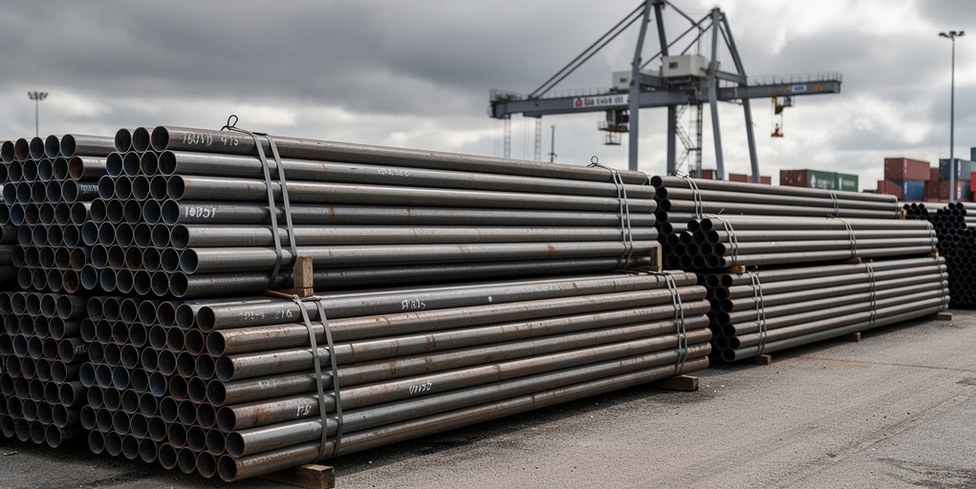
At a Russian electronic declaration centre the officer never sees the cargo — only the documents you issued
4. Which CED will handle your shipment
Since 1 February 2021 declarations have been distributed between the centres automatically. Which centre gets the file depends on how the goods arrive and on the buyer, not on your preferences as a shipper — but knowing the routing helps you understand which transport document becomes the critical one and who your buyer will be chasing.
| How the goods arrive | Where the declaration goes | What it means for you |
|---|---|---|
| By road or by rail | The centre attached to the place where the buyer’s company is registered (by its INN or KPP) | The deciding office may be thousands of kilometres from the crossing your truck uses; only your scans travel there |
| By sea | The maritime Centre of Electronic Declaration | The bill of lading and its consistency with the invoice and packing list carry the file — worth checking before the vessel sails |
| By air | The aviation Centre of Electronic Declaration | The air waybill data must match the commercial documents exactly; air shipments are usually urgent, so a hold costs more |
| Excisable goods | The Central Excise Customs | A separate route with its own specialists — tell your buyer early if your product falls into this group |
5. What your Russian buyer will ask you for
Because the officer works from a screen, your buyer needs a complete, self-consistent document set before the goods reach the border — not after a question arrives. In practice that means the following steps on your side.
- Send scans in advance, not on arrival. The declaration is prepared and submitted electronically, so the buyer needs legible copies of the invoice, packing list, contract and transport document while the goods are still moving.
- Make the documents agree with each other. Quantities, weights, numbers of packages, marks and the description of the goods must be identical across the invoice, the packing list and the transport document. There is no counter to explain a discrepancy across.
- Describe the product so a code can be built from it. Material, composition, function, model — enough detail for the commodity code to be defended, since a functional department checks exactly that.
- Be ready to support the price. Customs value is a separate line of control at the CED; questions about the price come to your buyer, and the answers have to come from you.
- Confirm what permits your product needs. Prohibitions and restrictions are checked in the same office; certificates and declarations of conformity are usually obtained on the Russian side, but the technical data, formulations and samples they rest on come from the manufacturer.
- Flag excisable goods early. If your product falls into that group, the declaration goes down a separate route, and your buyer should plan for it before the shipment leaves.
6. Frequently asked questions
My buyer says the declaration is being processed in another city. Is that normal?
Yes. That is exactly how a CED works: the goods are at one customs post, the officer handling the declaration is at another, in a different region or federal district.
Does anyone still physically look at my cargo?
They can. CED inspectors do not perform X-ray scanning, customs examination or inspection, but they can order it electronically, and staff at the border post where the goods actually are will carry it out.
Does the border crossing we choose determine where the declaration is handled?
For road and rail shipments, no — the file goes to the centre tied to the buyer’s registration. Physical control, if it is ordered, still takes place at the crossing where the goods are.
Everything is electronic now — do the documents still matter that much?
More than before. The officer has nothing except what has been uploaded, so the quality, legibility and internal consistency of your documents are the entire basis of the decision.
We can check your HS codes, customs value documents and certification before the goods leave your warehouse.
7. Expert opinion
 |
Yaroslav Loginov — Expert in logistics and customs clearance with 40 years of experience.
|
«The mistake I see most often on the supplier side is treating shipping documents as an accounting formality. When clearance was done face to face at the border, a small inconsistency could be talked through in ten minutes. In a centre of electronic declaration there is no ten minutes and no conversation — there is a file, and either it holds together or it raises a question, and the question travels back to the border as an order to open the container.
My advice to any exporter shipping into Russia and the CIS is to build time for documents into the schedule, not into the buffer at the end. Send your document set to the buyer while the goods are in transit, keep the description of the product detailed enough to defend a commodity code, and keep whatever supports your price within reach. A shipment held at a crossing over a wording problem costs far more than the hour it takes to check the papers before loading.»
Summary
A CED is a customs post that clears goods only electronically and only remotely, while physical control stays with the border post where the cargo is. Its functional departments check customs value, commodity code and permits — the three things that grow out of your documents. Since 1 February 2021 declarations are distributed automatically: by the buyer’s registration for road and rail, to the maritime or aviation centre for sea and air, and to the Central Excise Customs for excisable goods. Request a consultation, and we will go through your document set for a specific shipment.
Read also:
- Customs clearance in Russia through 2030: what faster border control and post-release audits mean for your shipments
- Electronic Consignment Note in International Transport: The Documents Your Shipment to Russia Will Need
- DOPP Status and Duplicate DOPPs: How to Report Them on the Indirect Tax Return for Imports from the EAEU
- Medical Devices in the EAEU as of October 28, 2026: Authorized Bodies May Suspend Approval Without a Manufacturing Inspection Report